
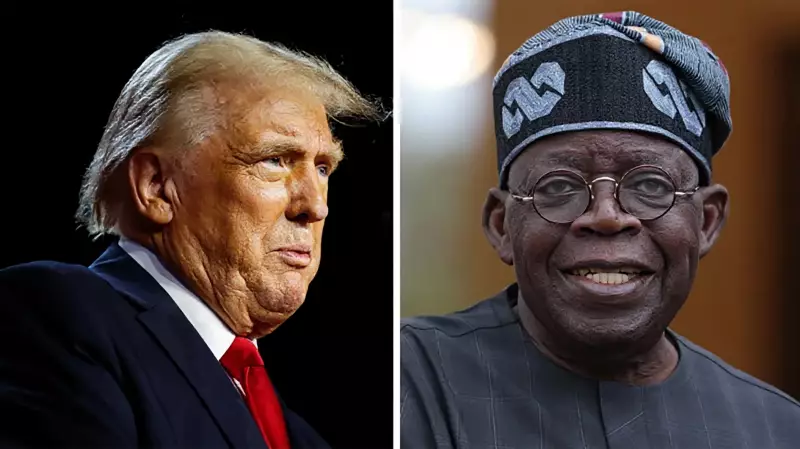
The United States government has entered into a significant five-year health partnership with Nigeria, formally announced on Saturday, December 21, 2025. The bilateral agreement is designed to bolster Nigeria's health infrastructure, with a pronounced focus on supporting healthcare providers affiliated with the Christian faith.
Details of the Bilateral Health Agreement
According to a spokesperson from the US State Department, the United States will channel nearly $2.1 billion into the Nigerian health sector. This substantial funding will target critical areas including the fight against HIV, tuberculosis, malaria, and polio. The agreement also encompasses initiatives dedicated to enhancing maternal and child health outcomes across the nation.
In a reciprocal commitment, Nigeria, Africa's most populous country, has pledged to increase its own national health expenditure by an additional $3 billion over the same five-year timeframe. A distinctive feature of this pact, as highlighted by the State Department, is its "strong emphasis on promoting Christian faith-based health care providers."
Geopolitical and Security Context
This health cooperation announcement arrives during a period of intensified US scrutiny regarding the safety of Christian communities in Nigeria. Just last month, President Donald Trump stated that the United States was ready to consider military intervention in Nigeria in reaction to attacks targeting Christians, remarks that garnered worldwide attention.
President Trump has frequently characterized Christianity as facing an "existential threat" within Nigeria and other nations, situating the issue within a broader narrative of global Christian persecution. His administration has reinstated Nigeria on a US watchlist of countries of "particular concern" regarding religious freedom and has implemented visa restrictions for certain Nigerian nationals.
The State Department clarified that the health deal was negotiated alongside reforms initiated by the Nigerian government, led by President Bola Tinubu, which aim to prioritize the protection of Christian populations from violence.
Nigeria's Stance and Broader Conflict
Nigeria, with a population roughly divided between a predominantly Christian south and a largely Muslim north, has consistently maintained through its federal government in Abuja that it does not condone religious persecution. Officials argue that the nation's pervasive insecurity is driven by broader socio-economic and criminal factors rather than systematic religious targeting.
The country has been grappling with a severe jihadist insurgency since 2009, concentrated in the northeast. United Nations estimates indicate this conflict has resulted in at least 40,000 fatalities and displaced approximately two million people, with both Christians and Muslims counted among the victims.
This new agreement with Nigeria follows a similar $2.5 billion health assistance deal signed between the United States and Kenya earlier in December 2025. These pacts represent a shift in US foreign aid strategy under the revived Trump administration's "America First" policy, which involved dismantling the US Agency for International Development (USAID) and favoring direct bilateral arrangements that align with American strategic and political priorities.




