
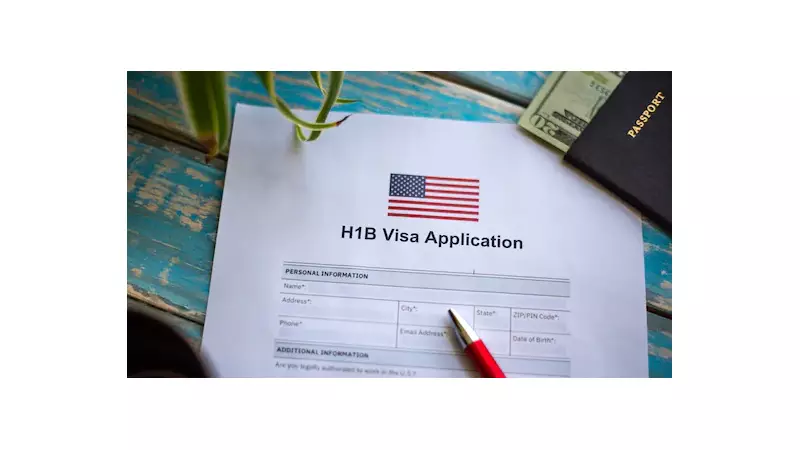
California, alongside nineteen other American states, has initiated a major legal battle against former President Donald Trump's administration. The lawsuit aims to stop a controversial new rule that imposes a staggering $100,000 fee on new H-1B visas for highly skilled foreign professionals.
Legal Challenge Mounts Against Presidential Order
The case, filed in a federal court in Boston, represents at least the third legal action challenging the fee announced by Trump in September 2025. The order dramatically increases the cost of securing H-1B visas, which currently require employers to pay between $2,000 and $5,000 in standard fees. The lawsuit argues that President Trump overstepped his authority.
California Attorney General Rob Bonta, a Democrat, stated that the President lacks the legal power to unilaterally impose such a fee. His office contends the move violates federal law, which permits immigration authorities to collect only fees necessary to cover the actual costs of administering visa programs. Bonta's release emphasized that the $100,000 fee far exceeds processing costs, making it an unlawful revenue-generating measure reserved for Congress under the U.S. Constitution.
Economic and Sectoral Impact of the Fee Hike
The H-1B visa program is a critical pipeline for U.S. employers, especially in the technology sector, to hire foreign talent in specialty occupations. Many major tech companies are headquartered in California, making the state particularly reliant on this program. Attorney General Bonta warned that the exorbitant fee would place unnecessary financial burdens on vital service providers.
"This fee would cripple employers in sectors like education and healthcare," Bonta argued, suggesting it would worsen existing labor shortages and potentially lead to cuts in essential services. The coalition of states joining California in this suit includes New York, Massachusetts, Illinois, New Jersey, and Washington.
Diverging Views and Broader Legal Fights
The White House, responding to previous lawsuits, has defended the fee as a lawful exercise of presidential power. Officials argue it is designed to discourage employers from abusing the H-1B program. Critics of work visas often claim they are used to replace American workers with cheaper foreign labour.
However, business groups and major corporations counter that H-1B workers are essential to address a shortage of qualified American candidates in specialized fields. The U.S. Chamber of Commerce, the nation's largest business lobby, has filed a separate lawsuit alongside a coalition of unions, employers, and religious groups. A judge in Washington, D.C., is scheduled to hold a hearing in the Chamber's case next week.
Trump's order specifically bars new H-1B visa holders from entering the United States unless their sponsoring employer pays the $100,000 fee. The administration has clarified that the rule does not apply to existing H-1B holders or those who applied before September 21, 2025. The order invokes presidential powers under federal immigration law to restrict entry of foreign nationals deemed detrimental to U.S. interests.




