
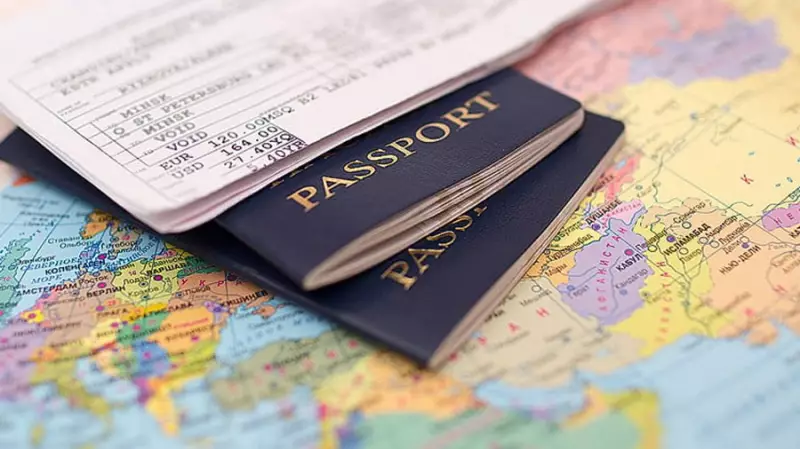
In a move that reshapes America's relationship with Africa, new travel restrictions signed by President Donald Trump have placed Nigeria in a precarious spotlight. The presidential proclamation, enacted on December 16, 2025, imposes partial entry limits on Nigerian nationals, citing concerns over screening and information-sharing protocols. While not a full ban, the policy introduces significant hurdles for ordinary Nigerians seeking to engage with the United States.
Understanding the New Visa Landscape
The core of the proclamation focuses on future applications. Crucially, all valid U.S. visas held by Nigerians before January 1, 2026, will remain honoured. This means current visa holders can continue to travel, work, or study until their document expires. The seismic shift begins at the point of renewal or a first-time application.
From the start of 2026, Nigerians applying for or renewing non-immigrant visas in key categories will face a transformed process. Business (B-1), tourist (B-2), student (F-1), and exchange visitor (J-1) visas will be subject to intensified scrutiny, prolonged processing times, and a substantially higher rate of refusal. The pathway for approval narrows dramatically, reserved largely for those who might secure a rare case-by-case waiver.
This transforms what was once a routine renewal into a daunting, uncertain obstacle. Families planning reunions, students aiming for postgraduate studies, and professionals on international assignments will now contend with a system that views their nationality as a primary risk factor.
Broader Consequences for Education and Economy
The impact on Nigeria's educational pipeline to the U.S. promises to be severe. For decades, Nigerian students have been a cornerstone of African enrollment in American universities, contributing billions to the U.S. economy. This new policy threatens to sever that talent conduit, depriving U.S. campuses of diversity, tuition revenue, and intellectual vitality. Future doctors, engineers, and innovators who often return to Nigeria with enhanced skills may now be blocked at the source.
The economic and professional fallout extends beyond academia. Nigerian entrepreneurs and corporate employees will find business travel—for investor meetings, conferences, or internal transfers—mired in delay and unpredictability. Global firms may reconsider posting Nigerian talent to U.S. offices or offering stateside opportunities, effectively restricting mobility and career growth in an interconnected world.
A Diplomatic Statement and a Path Forward
More than an administrative adjustment, these restrictions constitute a stark diplomatic signal. By grouping Nigeria with nations deemed to have governance failures, Washington has indirectly cast a shadow on Nigerian institutions. This perception could dampen investor confidence and affect bilateral relations beyond consular affairs.
However, the proclamation does not represent a permanent dead end. It outlines a mechanism for review and potential lifting of restrictions based on improved cooperation, as seen with countries like Turkmenistan. This presents a clear, albeit challenging, pathway for Nigeria.
The moment calls for strategic action over mere outrage. Nigeria must prioritize and demonstrably upgrade its documentation integrity, data-sharing frameworks, and identity management systems. Concurrently, aggressive diplomacy, structured lobbying in Washington, and clear communication of reforms to U.S. authorities are imperative.
At its heart, this policy risks conflating systemic challenges with individual merit, punishing students and professionals for flaws in systems they did not create. For a partnership between the U.S. and Nigeria to thrive on mutual respect and security, engagement must ultimately prevail over exclusion.




