
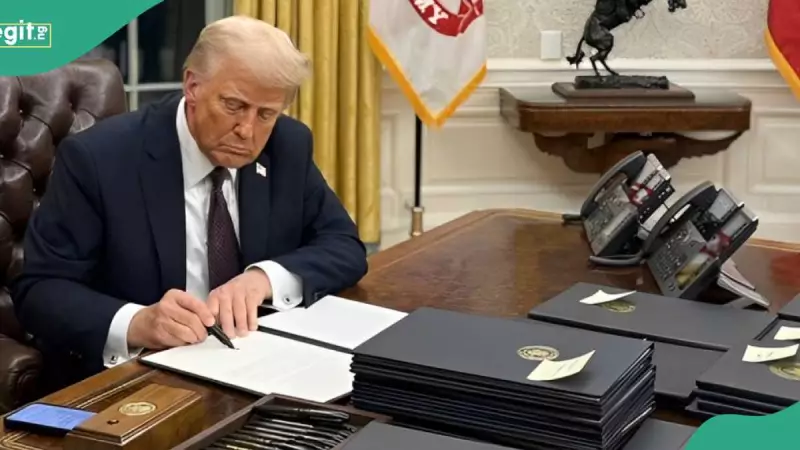
Nigerians holding valid United States visas have been plunged into a state of uncertainty following the recent announcement of new travel restrictions targeting the country. The proclamation, signed by President Donald Trump, suspends the issuance of new visas in key categories, sparking widespread concern among students, business travelers, tourists, and families.
Which US Visas Are Affected by the Suspension?
The new policy, formally announced on Tuesday, December 17, 2025, halts fresh applications for several popular non-immigrant visa classes. The affected categories include B-1 and B-2 visas for business and tourism, F and M visas for academic and vocational students, and J visas for exchange programmes. These visa types account for the majority of short-term travel from Nigeria to the US.
Importantly, the entry of Nigerian nationals under these specific visa categories is suspended until further notice. Furthermore, US consular officers have been directed to reduce the validity periods of other non-immigrant visas issued to Nigerians where permitted by law.
Key Exemptions and Relief for Current Visa Holders
Despite the broad scope of the announcement, the proclamation provides crucial clarifications that offer relief to many. Nigerians who already possess valid US visas as of the effective date of the order are not barred from traveling. This means existing visa holders with plans to visit the United States can still proceed.
Other groups explicitly exempt from the restrictions include:
- Lawful permanent residents of the United States (Green Card holders).
- Athletes attending major sporting events.
- Certain US government employees and their families.
- Dual citizens traveling on a passport from a country not listed under the ban.
White House Cites Security and Overstay Concerns
The White House listed multiple justifications for including Nigeria in the expanded travel restrictions, which affect 15 countries in total. Primary reasons centered on security concerns related to extremist groups and identified screening and vetting challenges.
Additionally, visa overstay rates were a significant factor. US authorities cited a 5.56% overstay rate for Nigerian holders of B-1 and B-2 visas and a much higher 11.90% rate for those on F, M, and J visas as key justifications for the policy shift.
This latest development compounds ongoing strain from earlier measures. In July, the US embassy in Abuja had already reduced the validity and entry allowance for most non-immigrant, non-diplomatic visas issued to Nigerians, limiting stays to three months with a single entry, citing visa reciprocity issues.
As of now, the US embassy in Abuja has not issued a detailed response to the latest suspension. While diplomatic discussions continue, the outlook for new visa applicants from Nigeria remains uncertain. The situation underscores a period of heightened scrutiny for US-Nigeria travel relations.




