
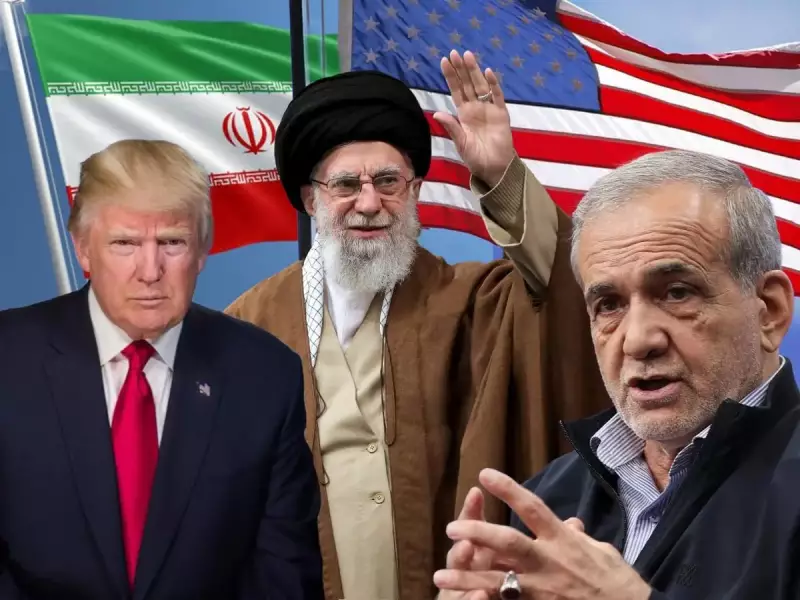
United States President Donald Trump is actively evaluating a series of potential military responses to the escalating and deadly protests in Iran, according to information from two American officials. This deliberation follows his public threats to strike the Iranian regime if it continues using lethal force against its own civilians.
Military Options and Internal Concerns
The president has received briefings in recent days on various intervention plans. This comes as widespread violence across Iran has resulted in dozens of deaths and mass arrests. Several of the proposed options specifically focus on targeting Iran's security services, which are at the forefront of suppressing the demonstrations.
However, there are significant concerns within the Trump administration that direct military strikes could have the opposite of the intended effect. Officials worry that such action might inadvertently strengthen public support for the Iranian government or provoke a military retaliation from Tehran.
Alternatives to Direct Military Action
As part of a broader strategy to support the protesters, Trump is also reviewing measures short of an armed attack. These alternatives include sophisticated cyber operations aimed at disrupting Iranian military or government-linked systems, potentially hindering their ability to crack down on the unrest.
Other measures under serious consideration involve imposing new sanctions against senior Iranian regime figures or key sectors of the nation's economy, such as energy and banking. The administration has also explored providing technology like Starlink to improve internet access in Iran, helping demonstrators bypass government-imposed information blackouts. Similar connectivity support was offered by the US during the 2022 protests in Iran.
Regional Tensions and Human Toll
Iran has issued a stern warning that it would retaliate if the US intervenes militarily. The country's hardline parliamentary speaker stated that US military and commercial facilities would be considered legitimate targets in the event of an attack. Tehran has further signaled it would not wait for the US to strike first, raising fears of a wider regional conflict.
The human cost of the protests continues to mount. Human rights groups report widespread arrests and killings since the demonstrations began. Figures provided to CNN by Human Rights Activists in Iran indicate that more than 10,600 people, including children, have been arrested in the past 15 days. The same group reports that at least 490 protesters have been killed, though these figures have not been independently verified.
Multiple US agencies are involved in developing options for the president, with more formal briefings expected soon. Trump is scheduled to meet with senior national security officials on Tuesday to decide on a course of action. While he has not made a final decision, officials confirm he is seriously considering action as the death toll rises. A senior White House official clarified that the options under review do not include deploying US ground troops to Iran.
President Trump has repeatedly voiced support for the protesters on social media, stating Iran is "looking at freedom, perhaps like never before," and affirming US readiness to help. He has warned that the US would act if Iranian authorities use deadly force, emphasizing any response would avoid "boots on the ground" and instead target the regime "where it hurts."
US officials have also held discussions with key allies, including Israel, about the ongoing unrest. Israeli leaders are closely monitoring the situation as the protests enter their third week.




