
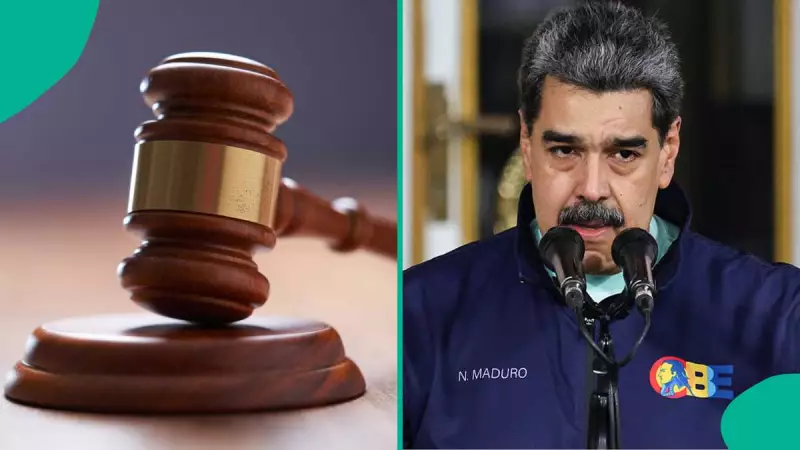
In a dramatic turn of events that has sent shockwaves through international politics, Venezuela's Supreme Court has moved to appoint an acting president following the stunning capture of the country's leader by United States forces.
Supreme Court Acts to Ensure Continuity
On Saturday, January 3, 2026, the Constitutional Chamber of Venezuela's Supreme Tribunal of Justice issued a landmark ruling. The court ordered that Vice President Delcy Rodríguez immediately assume the role of Acting President of the Bolivarian Republic of Venezuela.
This decisive legal action came in direct response to the forced absence of President Nicolás Maduro, who was detained earlier that same morning in a raid by U.S. military forces. The court's ruling emphasised the urgent need to "guarantee administrative continuity and the comprehensive defense of the Nation."
The judgment granted Rodríguez the authority to exercise, in an acting capacity, all the powers, duties, and attributes of the presidential office. This step was described as essential to maintain the functions of the state and protect national sovereignty during the crisis.
US Forces Detain Maduro, Trump Announces Oversight
The political earthquake began with an early morning military operation. U.S. forces successfully detained President Nicolás Maduro on Venezuelan soil and subsequently flew him out of the country. A plane carrying the detained leader landed at Stewart Airport in New York just before 5 p.m. local time, according to sources familiar with the operation.
Later on Saturday, former U.S. President Donald Trump held a press conference at his Mar-a-Lago estate in Florida. He announced that the United States would temporarily oversee Venezuela until a leadership transition could be organised.
"We're going to run the country until such time as we can do a safe, proper and judicious transition," Trump stated. He expressed a desire to avoid a return to the political situation that had persisted for years.
Trump outlined a plan focused heavily on Venezuela's vital oil sector. He proposed deploying major American oil companies to repair the country's damaged oil infrastructure. Notably, he stated the U.S. would maintain its embargo on Venezuelan oil while executing this plan and keep U.S. military forces on alert.
Legal Framework and Sovereignty at Stake
Back in Caracas, the Supreme Court acknowledged that its Saturday ruling was an immediate measure. The court indicated that further debate would be required to establish a complete legal framework for the acting presidency under these extraordinary circumstances.
The chamber stated it would continue deliberations to "determine the applicable legal framework to guarantee the continuity of the State, the administration of government, and the defense of sovereignty." This highlights the unprecedented constitutional challenge posed by the capture of a sitting head of state by a foreign power.
This development marks a severe escalation in Venezuela's long-running political and economic crisis. The nation now faces a deeply fractured leadership landscape, split between domestic institutions upholding the constitution and an external intervention led by Washington.
The situation remains fluid and tense, with Venezuela's vice president, legislature, and military having publicly opposed the U.S. action. The coming days will be critical in determining the path forward for the South American nation.




