
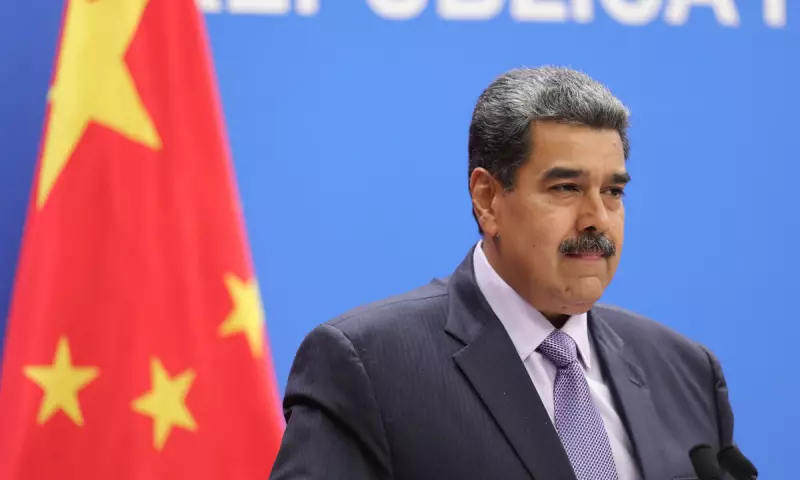
Venezuela has been plunged into a profound constitutional and political crisis following the dramatic capture of President Nicolas Maduro by United States special forces. In a swift response, the nation's Supreme Court has moved to appoint Vice President Delcy Rodriguez to temporarily assume the powers of the presidency.
Court Ruling and Constitutional Uncertainty
In a late-night ruling on Saturday, January 3, 2026, Venezuela's Supreme Court directed Vice President Delcy Rodriguez to assume all presidential duties in an acting capacity. The court's order aimed to guarantee administrative continuity and the nation's defence following the shocking arrest of President Maduro.
Critically, the court stopped short of declaring Maduro permanently absent from office. This legal nuance avoids triggering a constitutional clause that would mandate new presidential elections within 30 days, leaving the country's leadership in a state of deliberate ambiguity.
The Dawn Raid and US Custody
The crisis began in the early hours of Saturday with a large-scale US military operation. Residents of Caracas reported explosions and military helicopter activity shortly after 2:00 am local time, as air strikes targeted a major military base and an airbase for nearly an hour.
US General Dan Caine revealed that the operation involved 150 aircraft and was based on months of intelligence, including details of Maduro's daily routines. He stated that Maduro and his wife were taken without resistance and that there was no loss of US life during the mission.
By Saturday night, the 63-year-old Venezuelan leader was held in a New York jail, awaiting arraignment on drug trafficking and weapons charges. The White House released footage showing a handcuffed Maduro in sandals being escorted through a US Drug Enforcement Administration facility.
Competing Claims and International Fallout
The power vacuum has led to competing claims for authority. US President Donald Trump confirmed the operation, stating Washington would stay involved to oversee a "proper transition" and suggested deploying US troops if necessary. He expressed a willingness to work with Acting President Rodriguez, claiming she was willing to "make Venezuela great again."
Rodriguez, however, forcefully rejected any collaboration, demanding Maduro's immediate release and vowing to defend Venezuela. Meanwhile, US-backed opposition leader Maria Corina Machado declared "the hour of freedom has arrived," urging opposition candidate Edmundo Gonzalez Urrutia to assume the presidency—a move Trump dismissed.
International reaction has been largely critical. China strongly condemned the US action, while France warned that political solutions cannot be imposed from outside. United Nations Secretary-General Antonio Guterres expressed deep concern that international law was not respected. The UN Security Council is scheduled to meet on Monday at Venezuela's request to discuss the crisis.
President Trump also outlined plans for Venezuela's oil sector, indicating that large US oil companies would be invited to invest billions to fix infrastructure and resume large-scale oil sales.
As daylight broke over Caracas, the city fell into an uneasy silence, with police guarding public buildings and smoke still in the air. The nation now faces an uncertain future defined by foreign intervention, internal division, and an unresolved constitutional dilemma.




