
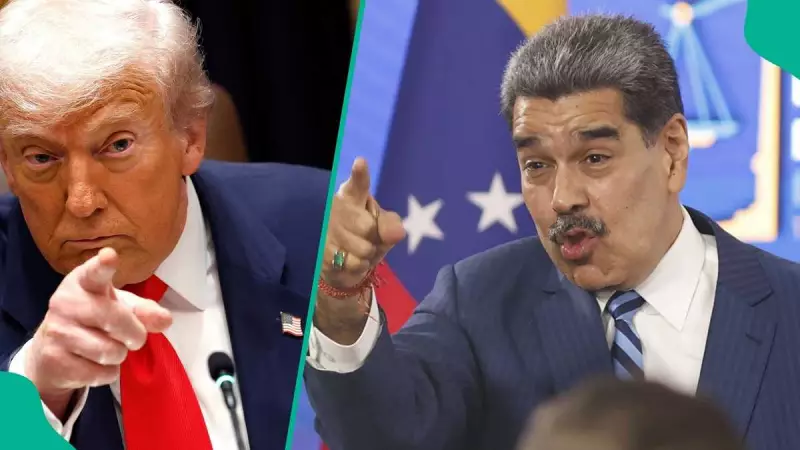
In a significant political move following the dramatic capture of its leader, Venezuela's interim president has dismissed the general in charge of the presidential honour guard. This action comes just days after United States forces seized former President Nicolás Maduro in Caracas.
Guard Chief Dismissed After Security Failure
General Javier Marcano Tábata, the commander of the elite military unit responsible for protecting the head of state, was removed from his post. The order for his dismissal was issued by Venezuela's new interim president, Delcy Rodríguez, who was sworn in by the National Assembly on Monday, January 5, 2026.
Rodríguez, previously Maduro's vice-president and considered a close ally, assumed power after Maduro was taken to New York to face narco-terrorism charges. Analysts suggest the general's removal is directly tied to the honour guard's failure to prevent the US operation that captured Maduro, which has left the government feeling humiliated.
US Pressure and Heavy Casualties Mount
The raid by US elite forces resulted in heavy casualties. The Venezuelan military reported that 23 of its personnel, including five generals, died during the strikes. Furthermore, Cuba, a key ally of Venezuela, stated that 32 of its nationals embedded within the presidential guard were also killed. Members of the honour guard were among the dozens believed to have perished.
In the aftermath, the United States has applied intense pressure on the interim government. US President Donald Trump warned that Rodríguez would face a "fate worse than Maduro's" if she failed to comply with Washington's demands. A central US demand involves control over Venezuela's vast oil reserves.
President Trump declared that Venezuela would be "turning over" up to 50 million barrels of oil to the US, though the interim government in Caracas has not officially commented on this statement.
Political Reshuffle and Human Rights Concerns
Rodríguez appointed Gustavo González López, the former head of Venezuela's national intelligence service (Sebin), as the new head of the presidential guard and the military counterintelligence unit (DGCIM). This move is seen as an attempt by Rodríguez to surround herself with trusted allies amid the threat of further US military action.
The appointment raises concerns, as both the DGCIM and Sebin have been accused of severe human rights abuses. A United Nations Fact-Finding Mission documented cases of torture, sexual violence, and degrading treatment in DGCIM facilities. Sebin controls the notorious Helicoide prison in Caracas, where abuses against opposition figures have been reported.
Pressure is not limited to Rodríguez. Reports indicate that the Trump administration has also warned Venezuela's interior minister, Diosdado Cabello, to fall into line. The US has long accused Cabello of narco-conspiracy and has offered a $25 million reward for information leading to his capture.
President Trump has stated that US forces prepared a second wave of strikes and has repeatedly warned that non-compliance would mean the interim leader would "pay a very big price." Rodríguez's public statements have oscillated between defiance, calling Maduro's capture an "illegal kidnapping," and conciliation, expressing a willingness to work with the US on an agenda of cooperation.




