
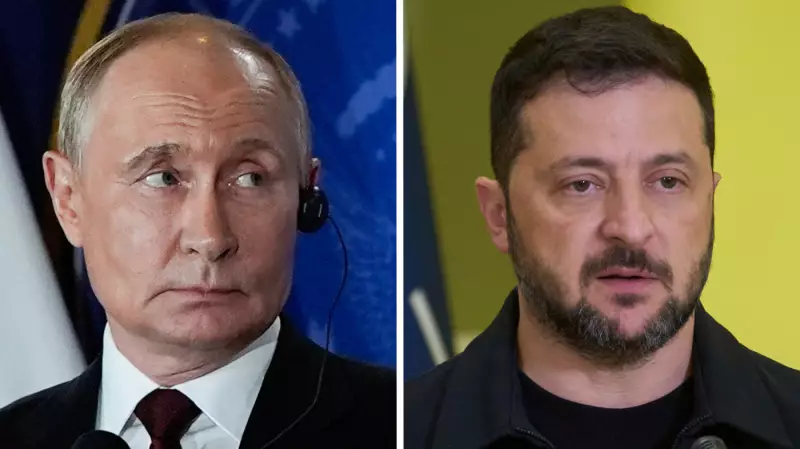
President Volodymyr Zelensky has publicly disclosed the details of a new United States-led draft plan aimed at ending the Russian invasion of Ukraine. The 20-point proposal, negotiated between American and Ukrainian officials, is currently under review in Moscow, though significant obstacles remain regarding territorial control and political concessions.
Key Concessions and Sticking Points in the Draft
In a detailed two-hour briefing with journalists on December 24, 2025, Zelensky presented a highlighted version of the document. He acknowledged that the plan contains elements he dislikes, but highlighted crucial victories for Kyiv. The immediate demands for a full Ukrainian withdrawal from the Donetsk region and the formal recognition of Russian-seized land have been removed.
Furthermore, the draft no longer requires Ukraine to legally renounce its ambition to join the NATO alliance. "Our choice has been made," Zelensky stated, confirming that proposed constitutional changes barring NATO membership were discarded.
However, the plan introduces complex mechanisms for potential troop redeployments. It recognizes the current frontline in Donetsk, Luhansk, Zaporizhzhia, and Kherson regions as the de facto line of contact. A working group would then determine the necessary force movements to end the conflict and define parameters for future special economic zones.
This framework suggests a delayed and conditional approach to two previously red-line issues for Ukraine: troop withdrawals and the creation of demilitarized zones. Zelensky framed it as a search for a "format that could satisfy both sides," with the US mediating between Ukrainian positions and Russian demands for a Donetsk withdrawal.
Major Hurdles: Referendums, NATO, and Nuclear Control
The path to any agreement is fraught with domestic and international challenges. Zelensky firmly stated that any decision involving Ukrainian troops pulling back from territory would require a national referendum. This applies specifically to proposals for creating demilitarized free trade zones in areas Ukraine might vacate.
While the plan protects Ukraine's formal right to seek NATO membership, its prospects are dim. The United States has effectively ruled out Ukraine's admission to the bloc for the foreseeable future. Moscow continues to cite NATO expansion as a primary reason for its 2022 invasion, making this a perennial flashpoint.
Another critical point of contention is the Zaporizhzhia Nuclear Power Plant, Europe's largest, which is occupied by Russian forces. The draft proposes joint US-Ukrainian-Russian management of the facility, a point Zelensky opposes. He expressed clear reluctance to accept any form of Russian oversight over the plant.
On the political front, Zelensky confirmed that presidential elections in Ukraine would only be held after a final agreement is signed. This addresses pressure from both Russian President Vladimir Putin and US President Donald Trump for elections amidst the ongoing war.
Russian Response and the Road Ahead
The Kremlin's reaction has been cautious and non-committal. Spokesman Dmitry Peskov said Moscow is "formulating its position" and declined to comment on the specifics. Russian officials have previously criticized attempts to amend earlier US drafts that were more favorable to Moscow's demands.
President Putin has shown no public willingness to compromise, insisting on sweeping Ukrainian withdrawals and political concessions that Kyiv views as capitulation. With Russian troops making incremental advances and continuing nightly missile attacks on Ukrainian infrastructure, the military pressure persists.
The conflict, now in its fourth year, has resulted in tens of thousands of deaths, devastated eastern Ukraine, and displaced millions. Despite this new diplomatic flurry, the positions of Ukraine and Russia remain far apart. The failure of direct talks in Istanbul earlier this year underscores the deep deadlock that this latest US-mediated plan attempts to break.




