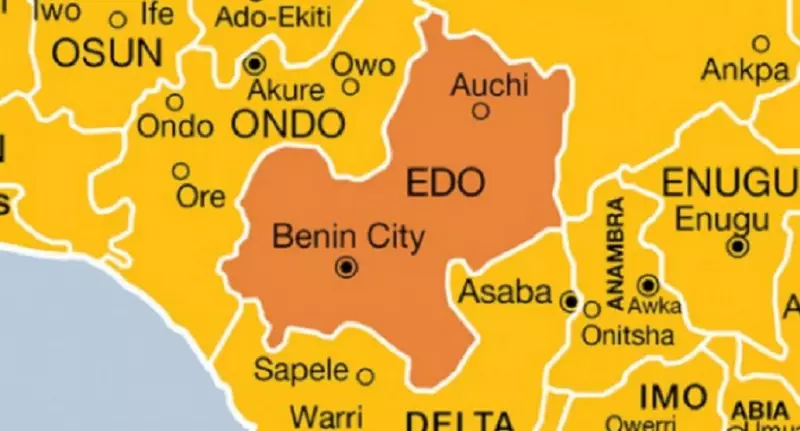
The Edo State Government has provided a detailed justification for its proposed fiscal plan for the coming year, a massive ₦939.85 billion 2026 Appropriation Bill. Officials state the budget is strategically crafted to spur significant infrastructure development, generate employment, and enhance social services for residents across the state.
Strategic Focus on Infrastructure and Core Sectors
Commissioner for Finance, Emmanuel Okoebor, addressed the press in Benin on Sunday, December 21, 2025, outlining the details of the budget presented by Governor Monday Okpebholo to the State House of Assembly. Okoebor emphasized that the plan is a departure from routine spending, aligning instead with the governor's SHINE Agenda—a framework concentrating on Security, Healthcare, Infrastructure, Natural Resources and Agriculture, and Education.
"The 2026 budget represents a strategic shift from routine fiscal planning to impact-driven public finance," Okoebor stated. The administration has deliberately prioritized sectors expected to boost productivity, reduce inequality, and integrate underserved communities into the mainstream economy.
The lion's share of the allocation, a whopping ₦420.62 billion, is dedicated to infrastructure. A significant portion of this, over ₦305 billion, is earmarked specifically for road construction and rehabilitation. The government believes enhanced road networks will lower transportation costs, facilitate the movement of people and goods, and improve access to crucial services like healthcare and education, particularly in rural areas.
Investing in People: Jobs, Agriculture, and Welfare
Beyond concrete and asphalt, the budget places a strong emphasis on human capital and livelihood. A substantial ₦68 billion is allocated to agriculture to bolster food security, create jobs, and ensure rural stability. This funding includes support for livestock development through a dedicated ministry, a move aimed at mitigating farmer-herder conflicts and strengthening agricultural value chains.
Direct job creation is another cornerstone, with ₦116.46 billion set aside for employment-related programmes. The government anticipates that jobs will be generated through the execution of infrastructure projects, agricultural initiatives, and expanded government activities. Furthermore, ₦8.9 billion is provisioned for social welfare programmes targeting women, youths, children, and other vulnerable groups to promote inclusive growth.
Education and healthcare also receive prioritized attention, with provisions for recruiting more teachers and health workers. Continued investment in school and health facility upgrades is intended to tackle manpower shortages and improve the quality of service delivery state-wide.
Funding and Accountability Mechanisms
Tagged the "Budget of Hope and Growth," the proposal outlines total expenditure of ₦939.85 billion, with a strong bias towards capital projects. Capital expenditure takes ₦637 billion (68%), while recurrent expenditure is ₦302 billion (32%).
Governor Okpebholo outlined the following funding sources:
- Internally Generated Revenue (IGR): ₦160 billion
- Federation Account Allocation Committee (FAAC): ₦480 billion
- Capital Receipts and Grants: ₦153 billion
- Public-Private Partnerships (PPPs): ₦146 billion
On transparency, Commissioner Okoebor highlighted strengthened oversight through improved procurement processes, the adoption of e-procurement systems, regular publication of budget implementation reports, and the activation of a Project Monitoring Unit.
The administration expressed confidence that upon passage by the Assembly, the 2026 budget will translate into tangible outcomes: completed roads, new jobs, and markedly improved public services for all citizens of Edo State.