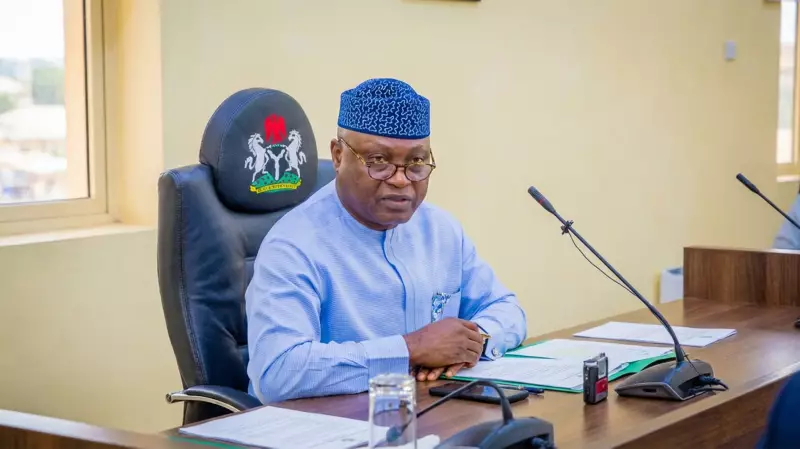
Governor Biodun Oyebanji of Ekiti State has officially enacted the state's financial plan for the 2026 fiscal year, signing a total budget of N415,572,070,139.44 into law. The signing ceremony, which took place on Monday, December 22, 2025, followed the bill's passage by the Ekiti State House of Assembly.
Details of the 2026 Appropriation Act
The governor presented the 2026 Appropriation Bill, dubbed the 'Budget of Sustainable Governance', to the state legislature on October 10, 2025. After legislative scrutiny and approval, Governor Oyebanji gave his final assent, setting the stage for the state's financial operations in the coming year.
The budget structure prioritises recurrent expenditure, which takes 53 per cent of the total sum, while capital projects are allocated 47 per cent. Governor Oyebanji emphasised that the fiscal document resulted from extensive consultations with Ekiti citizens and was crafted in alignment with global best practices.
"It is worthy of note that the fiscal document is a product of wide consultation with the good people of Ekiti State and prepared in line with global best practices," the governor stated. He announced that a detailed breakdown of the budget would be presented to the public by the Commissioner for Budget and Economic Planning in the following days.
Historic Revenue Law and Other Assents
In a significant move for fiscal policy, Governor Oyebanji also signed two critical bills into law. The first is the Ekiti State Revenue Administration Law, 2025. With this assent, Ekiti becomes the first state in Nigeria to align its internal revenue laws with the four new National Tax Reform Acts enacted by the federal government.
The governor explained that this new law repeals the outdated Ekiti State Board of Internal Revenue Law 2019. It brings the state into full compliance with national legislation and adopts the State Harmonized Taxes and Levies list. This reform is also a key part of implementing the State Action on Business Enabling Reforms (SABER) programme.
"Revenue Administration and Tax laws are changing at the national and sub-national levels, and Ekiti must lead that change," Oyebanji declared. He noted that the Joint Tax Board views this law as reinforcing Ekiti's reputation as a reform-driven and business-friendly state, setting a benchmark for others to follow.
The second bill signed was the Ekiti State College of Technology, Ijero Ekiti Law, 2025, which provides a legal framework for the institution.
Economic Impact and Future Projects
Governor Oyebanji used the occasion to reaffirm his administration's commitment to economic growth and job creation. He highlighted the ongoing Ekiti Knowledge Zone (EKZ) project, which is projected to create over 26,000 direct and indirect jobs and inject more than $14 million annually into the state's economy.
Speaking recently at a stakeholders' workshop in Ikogosi, represented by his Chief of Staff, Mr. Niyi Adebayo, the governor described the EKZ as a strategic initiative to position Ekiti to benefit from the global technological shift. He stressed that such engagements are proactive steps to foster collaboration, build trust, promote innovation, and ensure long-term project success.
Governor Oyebanji also commended President Bola Tinubu for his transformative national leadership and strong support for Ekiti State's development agenda.