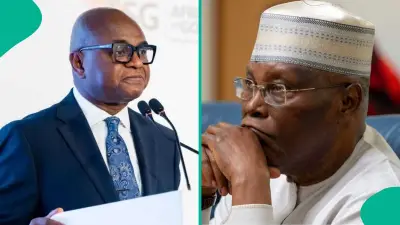
The House of Representatives has given its approval to significantly revised budget frameworks for the 2024 and 2025 fiscal years, marking a major step in the federal government's ongoing fiscal restructuring. The legislative chamber passed the Repeal and Re-Enactment Appropriation Bill on Tuesday, December 23, 2025, during a plenary presided over by Speaker Tajudeen Abbas.
Revised Figures and Presidential Request Approved
With this approval, the House has endorsed President Bola Tinubu's request to extend the implementation period for the capital component of the 2025 budget until March 31, 2026. This move follows the transmission of the Appropriation (Repeal and Re-Enactment) Bills for both years by the President last week.
The new legislation repeals the existing Appropriation Acts and establishes fresh expenditure plans designed to reflect current economic realities and the government's execution capacity. The revised 2024 budget now stands at N43.56 trillion, up from the initial N35.06 trillion. Conversely, the 2025 budget has been adjusted downward to N48.31 trillion from the previously approved N54.99 trillion.
Detailed Breakdown of the 2025 Budget
The approved N48.31 trillion budget for 2025 is allocated across four major sectors:
- Statutory Transfers: N3.64 trillion for constitutionally recognised bodies.
- Debt Service: N14.31 trillion for domestic and foreign obligations.
- Recurrent (Non-Debt) Expenditure: N13.58 trillion for MDAs' operations.
- Capital Expenditure: N16.76 trillion for development projects.
Hon. Abubakar Kabir Abubakar, Chairman of the House Committee on Appropriations, presented the report which was adopted clause-by-clause. He explained that the committee consulted with the President's economic team, including Finance Minister Wale Edun and Budget Minister Atiku Bagudu, to understand the rationale behind the revisions.
A key revelation was the rollover of N16.76 trillion from the 2025 capital allocation to the 2026 fiscal year due to funding constraints. Abubakar Bichi, who addressed lawmakers, stated this initiative aims to make the budget more effective and reduce governance costs, anticipating higher revenues in the coming year.
Addressing Fiscal Discipline and Allocation Details
Bichi acknowledged that the previous practice of overlapping budget cycles—such as implementing the 2024 budget deep into 2025—undermines budget clarity and weakens fiscal discipline. The new framework is intended to balance urgent spending needs with robust legislative oversight and fiscal responsibility.
The total approved expenditure for 2024 is N43,561,041,744,507. This sum is distributed as follows:
Statutory transfers of N1.74 trillion will fund bodies like the National Judicial Council (NJC), Independent National Electoral Commission (INEC), National Assembly, and the Universal Basic Education Commission (UBEC).
Debt service, consuming N8.27 trillion, covers servicing for both domestic and foreign debts, including Ways and Means advances.
Recurrent expenditure of N11.27 trillion is earmarked for the day-to-day operations of Ministries, Departments and Agencies (MDAs), covering personnel costs, pensions, overheads, and social investment programmes.
Capital expenditure receives the largest share at N22.28 trillion, prioritising infrastructure in highways, railways, power, agriculture, healthcare, education, and water resources.
New Legal Framework and Accountability Measures
The bill establishes a clear legal process for fund disbursement. The Accountant-General of the Federation can only release money from the Consolidated Revenue Fund upon warrants issued by the Finance Minister, strictly for purposes outlined in the Act.
To enhance accountability, the bill mandates all MDA accounting officers to submit quarterly reports to the National Assembly detailing internally generated revenue and all grants received. The Finance Minister is required to ensure timely release of funds, with deferred quarterly releases prohibited unless the National Assembly grants a waiver.
Furthermore, the National Assembly is empowered to issue corrigenda to correct errors in project costing or MDA assignments, provided the total appropriated sum remains unchanged. The bill also stipulates that any excess revenue from crude oil sales above the benchmark price must be documented and can only be spent with legislative approval.
This comprehensive legislative action repeals the 2024 and 2025 Appropriation Acts and authorises fresh withdrawals from the Federation's Consolidated Revenue Fund, aligning government spending with prevailing fiscal realities and priorities for the period ending December 31, 2025.