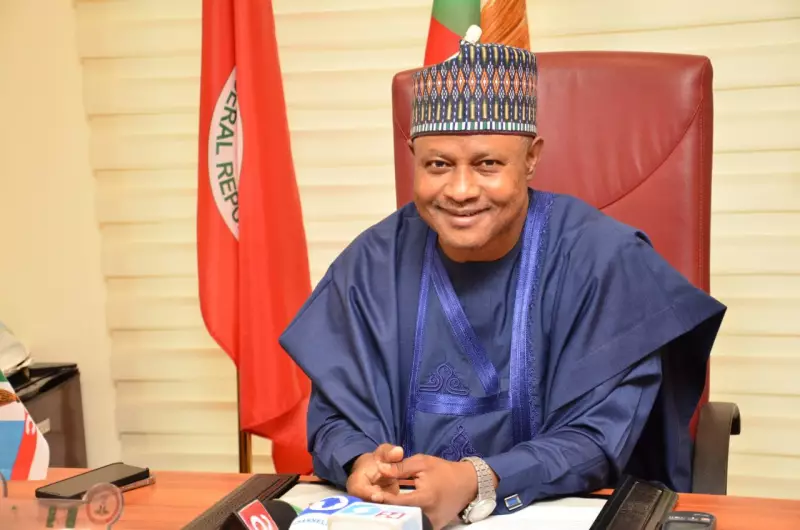
Kaduna State Governor, Senator Uba Sani, has formally presented a proposed budget of N985.9 billion for the 2026 fiscal year to the State House of Assembly. The presentation, made on Monday, 1st December 2025, at the Lugard Hall, was described by the Governor as a people-centred financial plan designed to solidify ongoing reforms across critical sectors.
A Budget Forged Through Widespread Consultation
Governor Sani emphasized that the 2026 Appropriation Bill was the product of one of the most extensive public consultation exercises in the state's history. He revealed that traditional rulers, civil society organizations, women's and youth groups, academia, business leaders, and vulnerable populations from all 23 local government areas contributed to the draft.
Inputs from farmers, traders, teachers, artisans, persons with disabilities, and widows directly shaped the final document, reinforcing principles of participatory governance and public accountability. The Governor framed the budget not merely as a constitutional duty but as a "solemn civic engagement" built on transparency, equity, and citizen welfare.
Breakdown of the N985.9 Billion Proposal
The draft budget outlines N734.2 billion in recurrent revenue and N251.6 billion in capital receipts. A significant highlight is the allocation of 71% of the total budget to capital expenditure, underscoring the administration's development focus.
The sectoral allocations are as follows:
- Education and Infrastructure: 25% each
- Health: 15%
- Agriculture: 11%
- Security: 6%
- Social Development: 5%
- Governance: 5%
- Climate Action: 4%
In a landmark move for grassroots development, Governor Sani announced that each of the state's 255 wards will receive N100 million for community-chosen projects through Ward Development Committees, calling it Nigeria's largest such model.
Reviewing 2025: Achievements Amid Challenges
While presenting the future plan, Governor Sani also reviewed the outgoing year, 2025, which he said would be remembered for "remarkable achievements and resilient advancement" despite economic and security pressures.
On security, he acknowledged evolving threats like banditry and kidnapping but noted that enhanced collaboration with federal agencies through the Kaduna Peace Model was yielding results. He reported that reconciling communities, reopening farmlands, and resuming school activities in previously troubled areas were key successes.
In infrastructure, the administration is executing 140 road projects covering 1,335 kilometres, with 64 already completed. The transport sector is undergoing a major overhaul, featuring the upcoming first Bus Rapid Transit (KBRT) system in northern Nigeria, complete with CNG buses and a digital ticketing system. The Kaduna Light Rail project is also advancing, with Phase I targeting the Rigachikun–Sabon Tasha corridor.
In education, the government reopened 535 schools and returned over 300,000 out-of-school children to classrooms in 2025. It also slashed tuition fees in state-owned tertiary institutions by 40%, constructed 736 new classrooms, and renovated 1,220 others.
The health sector saw the upgrade of all 255 Primary Healthcare Centres to Level 2 status, the renovation of 15 General Hospitals, and the commissioning of the 300-bed Bola Ahmed Tinubu Specialist Hospital.
Legislative Response and Next Steps
In his response, the Speaker of the Kaduna State House of Assembly, Hon. Yusuf Liman, commended the budget as "ambitious, comprehensive and aligned with the state’s development priorities." He praised the Governor for involving legislators in constituency projects and for fostering a productive synergy between the executive and legislature.
Speaker Liman assured that the Assembly would conduct a thorough and transparent review of the appropriation bill and work closely with the executive to ensure its speedy passage, enabling the envisioned development to reach every home and community in Kaduna State.