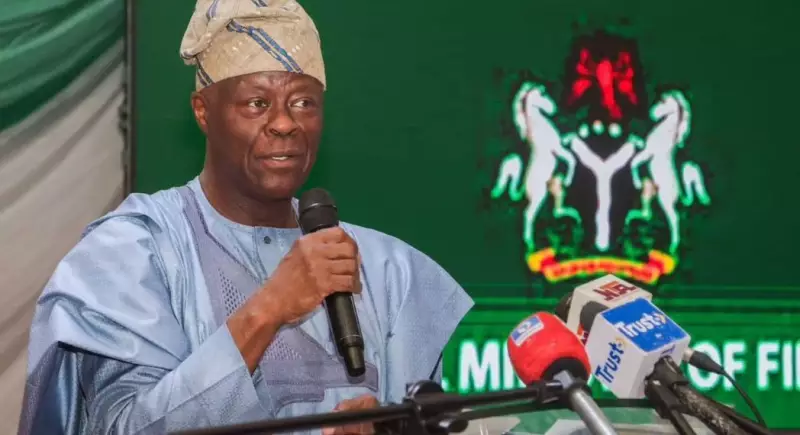
The Federal Government of Nigeria is facing a significant revenue shortfall, with projections indicating it may miss its 2025 target by a staggering 30 trillion naira. This revelation was made by the Minister of Finance and Coordinating Minister for the Economy, Wale Edun.
Minister's Disclosure Before Lawmakers
Edun presented this sobering assessment during an interactive session with the House of Representatives committees on Finance and National Planning. The session, held in Abuja, focused on the 2026 to 2028 Medium Term Expenditure Framework (MTEF) and Fiscal Strategy Paper (FSP).
He detailed that while the government had projected a revenue of 40.8 trillion naira to fund the 2025 budget, the current financial trajectory suggests actual earnings will be far lower. "The current trajectory indicates that federal revenues for the full year will likely end at around N10.7 trillion, compared to the N40.8 trillion projection," Edun stated.
Causes of the Massive Revenue Gap
The minister attributed the alarming gap to several key factors. The primary driver is the weak performance in oil and gas revenues, specifically citing underperformance in petroleum profit tax and company income tax collections.
Edun also noted that there has been significant underperformance across other major revenue streams. This situation has forced the government to rely on what he termed "prudent treasury management" and "creative handling" of available resources to meet its core obligations.
Despite the massive shortfall, the minister assured that the government has continued to pay salaries, statutory transfers, and service both domestic and foreign debts through these measures.
Calls for Fiscal Caution and Flexible Planning
Edun issued a strong caution against making rigid expenditure commitments based on uncertain revenue forecasts, especially those tied to the volatile oil sector. He emphasized the critical need for flexibility in national spending plans.
"We must be ambitious, but given the experience of the past two years, spending linked to these revenues must depend on the funds actually coming in," he advised lawmakers and economic planners.
Also speaking at the session, the Minister of Budget and National Planning, Atiku Bagudu, provided insight into the government's oil production assumptions for future planning. He stated that while the 2026 budget projection is for 2.06 million barrels per day, a more conservative estimate of 1.84 million barrels per day would be used for revenue calculations to ensure realism.
Bagudu added that the MTEF and FSP were developed through extensive consultations with various government agencies and the private sector.
Reacting to the disclosures, the Chairman of the House Committee on Finance, James Faleke, urged his fellow lawmakers and the nation's economic managers to engage in critical analysis to avoid making imprudent economic decisions that could exacerbate the fiscal challenges.