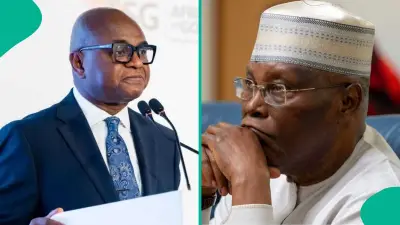
The Nigerian Senate has issued a strong rebuke against the federal government's recurring practice of implementing multiple budgets within a single fiscal year. This condemnation came alongside a directive to significantly increase the revenue target for the Federal Inland Revenue Service (FIRS).
Senate's Firm Stance on Fiscal Discipline
During a crucial interactive session on Monday, December 15, 2025, the Senate Committee on Finance, led by Chairman Senator Sani Musa (Niger East), expressed deep dissatisfaction with the budget rollovers witnessed in 2025. Lawmakers argued that this practice severely disrupts economic planning and the execution of vital projects.
Senator Danjuma Goje (Gombe Central) was unequivocal, stating that the "ugly situation" of multiple budgets must end as it is unacceptable to Nigerians. His colleague, Senator Olalere Oyewumi (Osun West), emphasized that unrealistic budgetary proposals inevitably lead to non-implementation and the problematic cycle of multiple budgets in subsequent years.
Revealing the N30 Trillion Revenue Shortfall
The Minister of Finance and Coordinating Minister for the Economy, Wale Edun, provided a sobering account of the nation's fiscal performance. He revealed that while the 2024 budget capital components were fully funded with N26 trillion in revenue, the 2025 fiscal year has experienced a drastic shortfall.
Out of a projected N40 trillion revenue for 2025, only N10 trillion has been realized, creating a massive N30 trillion deficit. Consequently, 70% of capital projects planned for 2025 have been pushed into the 2026 budget. Edun attributed the gap to structural revenue challenges, noting the government's reliance on treasury management to bridge funding gaps.
He outlined ongoing efforts to improve collection through automation, digitalization, and enforcing direct remittances to the Treasury Single Account (TSA) by revenue agencies.
Pushing FIRS to a N35 Trillion Target for 2026
In a move to bolster revenue generation, the Senate Committee directed FIRS Chairman, Zaccheus Adedeji, to raise the service's 2026 revenue target to N35 trillion, up from the earlier projection of N31 trillion.
Adedeji reported that FIRS collected N20.2 trillion in 2024 and N25.2 trillion in 2025. However, he pointed out a critical issue: the gains from revenue collection are often eroded by the practice of implementing multiple budgets within a year, making the funds insufficient for government needs.
Chairman Musa assured that budget normalization would begin in 2026. He also announced a three-man ad hoc committee to ensure local contractors for 2024 projects are paid before the budget expires on December 31.
Defending the 2026 Budget Assumptions
The Minister of Budget and Economic Planning, Senator Atiku Bagudu, and the Minister of State for Petroleum, Senator Heineken Lokpobiri, defended the parameters for the proposed N54.4 trillion 2026 budget. They stated the assumptions are realistic and critical for planning.
The key assumptions include:
- Oil production: 1.84 million barrels per day
- Oil price benchmark: $64.85 per barrel
- Exchange rate: N1,512 to the US dollar
Finance Minister Edun reiterated that the government's focus is shifting from borrowing to broad-based revenue mobilization, savings drives, and public-private partnerships to foster sustainable economic growth.
The Senate's interventions highlight a growing urgency for structural fiscal reforms. By demanding realistic budgets, timely implementation, and higher revenue targets, lawmakers are pushing for strengthened fiscal discipline to ensure government projects are executed efficiently for the benefit of all Nigerians.