In a significant move to reshape Nigeria's fiscal landscape, the National Assembly has given its approval to a series of critical financial bills, headlined by a N58.47 trillion budget for the 2026 fiscal year. This action, taken just days after President Bola Tinubu's initial proposal, marks a pivotal step in the government's ongoing economic reforms.
Revised Budgets for 2024 and 2025 Get Green Light
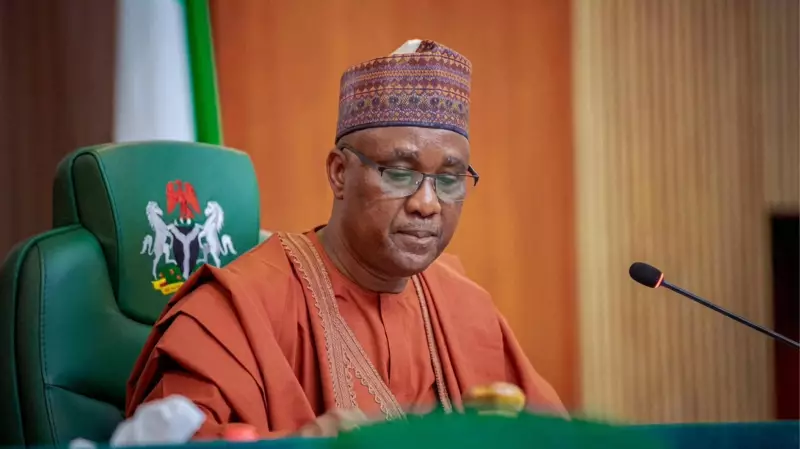
The House of Representatives, during a plenary session presided over by Speaker Tajudeen Abbas, passed the Repeal and Re-Enactment Appropriation Bills. This legislative action formally approves a revised N43.56 trillion budget framework for the 2024 fiscal year, replacing the initial N35.06 trillion. Simultaneously, the House passed a revised N48.31 trillion budget for 2025, a reduction from the earlier N54.99 trillion estimate.
These revisions follow President Tinubu's request to align government expenditure with current fiscal realities and execution capacity. The breakdown for the 2025 budget allocates N3.64 trillion for statutory transfers, N14.31 trillion for debt service, N13.58 trillion for recurrent (non-debt) expenditure, and N16.76 trillion for capital expenditure.
Crucially, the House's approval grants the President's request to extend the implementation of the capital component of the 2025 budget to March 31, 2026. This move is part of a broader strategy to eliminate the inefficiencies caused by multiple concurrently running budgets and to strengthen planning and accountability.
Senate Adjusts 2026 Proposal Upwards
While the House focused on past budgets, the Senate turned its attention to the future. It passed the 2026 Appropriation Bill for a second reading, but not before making a key adjustment. The Senate increased the budget size from President Tinubu's proposed N58.18 trillion to N58.47 trillion, adding approximately N292 billion.
Senator Adeola Olamilekan, Chairman of the Senate Committee on Appropriations, clarified that the discrepancy stemmed from minor miscalculations in the President's presentation speech. He emphasized that the official figure for legislative deliberation is the one contained in the appropriation bill itself, which stands at N58.472 trillion. This figure aligns with the amount earlier approved by the Federal Executive Council (FEC).
Leading the debate, Senate Leader Opeyemi Bamidele described the 2026 proposal as a "budget of consolidation" designed to stabilize the economy and deepen ongoing reforms. The Senate praised the budget's strong capital component and its focus on security and economic consolidation.
Rationale and Fiscal Responsibility
The process for revising the 2024 and 2025 budgets involved detailed scrutiny. The House Committee on Appropriations, chaired by Abubakar Kabir Abubakar, met with the President's economic team, including Finance Minister Wale Edun and Budget Minister Abubakar Bagudu, to understand the justifications.
Committee member Bichi explained that the re-enactment aims to balance responsiveness with fiscal responsibility. A significant revelation was that N16.76 trillion was reduced from the capital allocation for 2025 and rolled over to the 2026 fiscal year due to funding constraints. This ensures urgent expenditures do not weaken legislative oversight or undermine long-term fiscal health.
The passage of these bills repeals the existing 2024 and 2025 Appropriation Acts. It authorizes fresh withdrawals from the Consolidated Revenue Fund in line with updated government spending priorities and the prevailing economic situation.