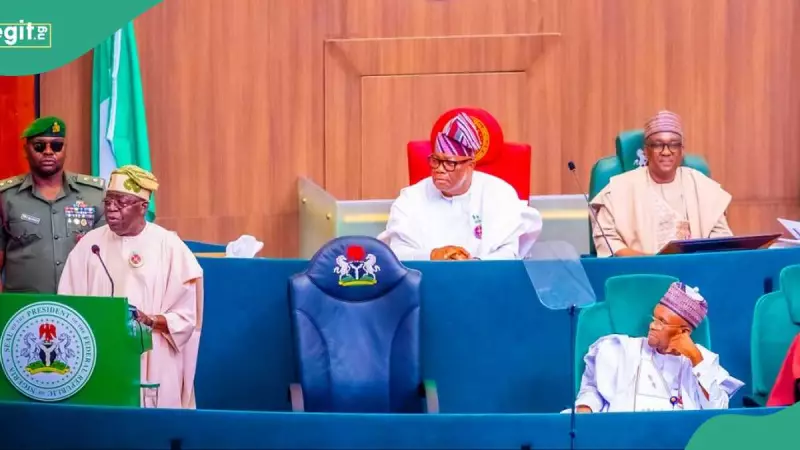
President Bola Ahmed Tinubu is set to present the 2026 Appropriation Bill to the National Assembly, marking a significant step in the country's fiscal calendar. The presentation is scheduled for a joint session of the legislature on Friday, December 19, at 2:00 pm.
Security and Logistics for the Budget Presentation
Ahead of the President's address, security will be tightened around the National Assembly complex in Abuja. A notice from the Office of the Clerk to the National Assembly, signed by Essien Eyo Essien, has informed lawmakers, staff, and accredited officials of restricted access from late morning. All authorized personnel have been directed to be at their duty posts by 11:00 am to ensure a seamless session. Officials stated these measures are crucial for managing logistics and security during this important national event.
Details of the 2026 Fiscal Proposal
The proposed 2026 budget is projected at a substantial N54.4 trillion. This figure is based on the approved 2026 to 2028 Medium Term Expenditure Framework and Fiscal Strategy Paper (MTEF/FSP). The scale of the proposal indicates the government's continued commitment to expansive spending as it navigates development goals amidst ongoing fiscal pressures.
In a parallel move, President Tinubu has asked the National Assembly to repeal and re-enact the 2024 Appropriation Act. Separate letters conveying this request were read on the floor of both the Senate and the House of Representatives during plenary on Wednesday, December 17.
Rationale Behind Repealing the 2024 Budget
The proposed legislation, titled the "Appropriation Repeal and Re-enactment Bill 2024," seeks approval for a total expenditure of N43.56 trillion for the year ending December 31, 2025. According to the President, this action is designed to address critical issues in budget implementation.
The primary objectives are to:
- End the practice of running overlapping budgets.
- Improve capital budget performance.
A detailed breakdown of this proposed spending includes:
- N1.74 trillion for Statutory Transfers.
- N8.27 trillion for Debt Service.
- N11.27 trillion for Recurrent (Non-Debt) Expenditure.
- N22.28 trillion for Capital Projects and Development Fund Contributions.
Expert Analysis and Economic Implications
Economic analysts have expressed concerns that repeated budget extensions and rollovers could lead to duplication of projects, weaken coordination, and ultimately reduce investor confidence in the nation's fiscal management.
However, Dr. Muda Yusuf of the Centre for the Promotion of Private Enterprise (CPPE) offered a different perspective. He described the President's move to repeal the 2024 budget as a corrective step rather than an abandonment of existing commitments.
"This approach offers an opportunity to reset the system and finally break the recurring cycle of capital budget rollovers that weakens development impact and erodes confidence in public finance," Yusuf stated.
He further emphasized that for any budget to perform effectively, sustainable debt management and realistic revenue assumptions remain absolutely critical. The coming days will see intense scrutiny and debate in the National Assembly as lawmakers begin their work on both the revised 2024 and the proposed 2026 appropriation bills.