The Nigerian government's proposal to operate two separate federal budget cycles concurrently in 2026 has intensified concerns over the management of the nation's public finances. This unusual practice, which has become a recurring theme, threatens to undermine fiscal discipline and economic stability.
A History of Budgetary Overlaps and Extensions
This dissonance in fiscal management is not new. The situation was notably exacerbated in 2024 when the National Assembly approved multiple overlapping budgets. This led to the country operating three budgets simultaneously that year: the N21.8 trillion 2023 budget from the Muhammadu Buhari administration, a N2.17 trillion supplementary budget prepared by President Bola Tinubu in 2023, and the N28.7 trillion 2024 appropriation act.
The trend persisted into 2025. The capital component of the 2024 budget, originally scheduled to end in December 2024, was extended twice—first to June 2025 and then to December 2025. These repeated extensions and overlaps are widely seen as injurious to a smooth and transparent budgetary process.
Tinubu's 2026 Proposal and the Request for Re-enactment
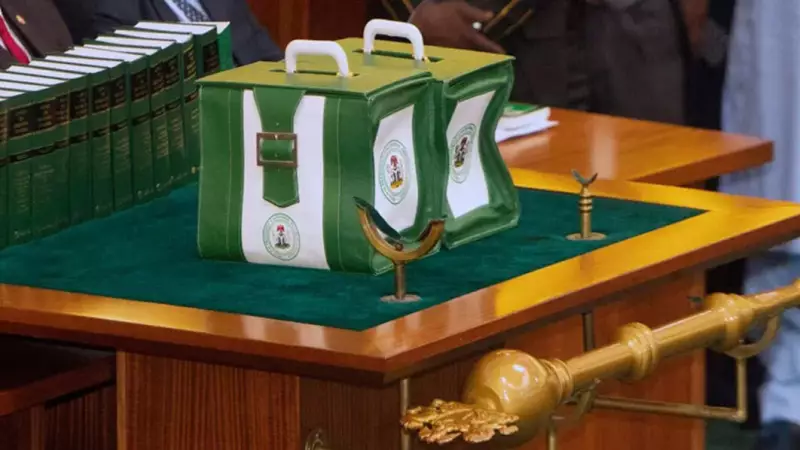
The current administration appears oriented towards continuing this practice. On Friday, December 19, 2025, President Tinubu presented the 2026 Appropriation Bill, themed “Budget of Consolidation, Renewed Resilience and Shared Prosperity,” with a staggering value of N58.18 trillion to a joint sitting of the National Assembly.
In a move that raised eyebrows, the President simultaneously requested approval to extend the implementation of the 2025 budget to March 31, 2026. He transmitted Appropriation (Repeal and Re-Enactment) Bills for both the 2024 and 2025 budgets to the legislature. His rationale was to align the budgets with "current fiscal realities and execution capacity."
Under this proposal, the 2024 budget of N35.06 trillion would be replaced with N43.56 trillion, an increase of over N8 trillion. Conversely, the 2025 budget of N54.99 trillion would be scaled down to N48.32 trillion, a reduction of over N6 trillion. This has been met with scepticism, as it introduces uncertainty in an area where stability should be paramount.
Consequences: Two Budgets Running at Once
The direct implication is stark. If the National Assembly approves the President's request to extend and re-enact the 2025 budget while also passing the 2026 budget into law, Nigeria will effectively operate two budget cycles simultaneously in 2026. This creates overlapping budgets, contradicting the administration's stated goals of streamlining fiscal planning and improving accountability.
Further compounding the issue are conflicting reports from the executive arm. Finance Minister Wale Edun stated that only about N10.7 trillion was generated in revenue in 2025, far below the projected N40.8 trillion. He attributed the shortfall to weak performance in the oil and gas sector and underperforming revenue streams. However, the Presidency offered a contradictory narrative, claiming the government achieved its entire revenue target for the year.
Another critical area of concern is the government's reliance on borrowing. For the 2025 budget, the government borrowed about N14.1 trillion, yet total inflows were insufficient to fully fund the N54.9 trillion plan. The 2026 budget continues this trend, indicating a proposed deficit of N23.85 trillion, equivalent to 4.28% of GDP. Debt servicing is expected to consume N15.52 trillion, or about 26.7% of total expenditure, overshadowing allocations to key sectors.
While the administration points to positive macroeconomic data, such as inflation easing below 15% and GDP growth reaching 3.98% in Q3 2025, many Nigerians continue to struggle. There are widespread fears that new tax reforms in 2026 may worsen economic circumstances for ordinary citizens.
Ultimately, the repeated budget overlaps, extensions, and re-enactments highlight a troubling pattern in public financial management. Nigerians deserve a budgetary process characterized by diligence, integrity, and a genuine concern for delivering value from the humongous sums being appropriated.