The House of Representatives has provided a detailed explanation for its recent legislative action to repeal and subsequently re-enact the 2024 and 2025 Appropriation Acts. The move, according to the chamber's deputy spokesperson, is a strategic step towards major fiscal reforms.
Aligning Budgets with Global Best Practices
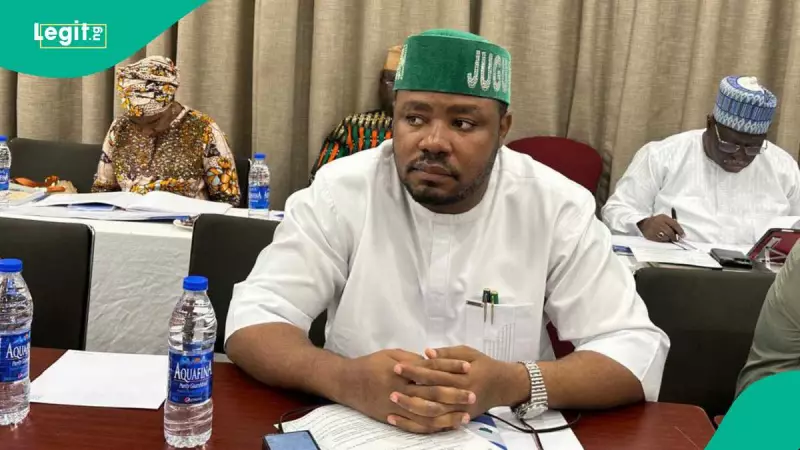
In a press briefing held on Friday, December 26, Hon. Philip Agbese, the Deputy Spokesman of the House, outlined the primary motivations behind the decision. He stated that the core objective is to bring Nigeria's budgeting framework in line with international best practices.
Agbese emphasized that the repeal and re-enactment are designed to enhance transparency and strengthen accountability across all tiers of government. Furthermore, the action aims to address and reduce the significant implementation challenges and oversight burdens that have historically plagued budget execution in the country.
"Fundamentally, this is about aligning our national budgeting system with global standards. It is also to ensure transparency and accountability at all levels and to lessen the burden of oversight during implementation," Agbese explained.
Pathway to a Single National Budget Cycle
A significant outcome of this legislative revision is its role in paving the way for a unified national budget cycle. Agbese confirmed that this process is set to be fully realized after March 31, 2026.
He elaborated that operating a single budget will enable the executive arm to execute projects more efficiently, without the complications of managing multiple, overlapping budgets. "By adopting a single budget after March 31, 2026, the Executive will be able to execute the budget without much hassle. When there is a single funding system, it becomes easier to manage cash flow and ensure timely releases," he noted.
Agbese commended the Abubakar Bichi-led House Committee on Appropriations for their swift work in processing the re-enactment bill, which was transmitted by President Bola Tinubu. Their expediency allowed for the bill's consideration and passage before the lawmakers adjourned for the Christmas and New Year holidays.
Leadership and Political Reactions
The Deputy Spokesman also praised President Bola Ahmed Tinubu for his leadership in supporting these crucial fiscal reforms. He described the President as a "listening leader" whose commitment to budget discipline and economic stability is reassuring.
Agbese pointed out that the President's public commitment to ending the era of multiple budget implementations by March 2026 was a direct response to calls from lawmakers and economic experts.
However, the broader fiscal landscape remains contentious. The President's recently presented ₦58.18 trillion 2026 budget has faced sharp criticism from the opposition Peoples Democratic Party (PDP). The PDP has labeled it a "Budget of Consolidated Renewed Sufferings," arguing that it fails to address widespread poverty, high living costs, and insecurity affecting ordinary Nigerians.
Despite the political debate, the House of Representatives maintains that the technical repeal and re-enactment of the 2024 and 2025 budgets are necessary foundational steps for achieving a more transparent, accountable, and efficient budgetary process for Nigeria.