
It is always a delight to test the ideas of a politician against those of a political scientist. Both are concerned with politics and governance, especially how a state ought to be governed and how government dynamics affect citizens' lives and flourishing. As Nigeria once again focuses on politics and governance to mark June 12 Democracy Day, what better contribution can one make? I have argued elsewhere that there is a tendency to favor the active politician over the academic political scientist, reasoning that the politician deals with the practical dimensions of politics while the academic theorizes its essence. However, the equation becomes even better when the politician is also a political scientist. When this is juxtaposed with the persistent predicament of the postcolonial Nigerian state and the task of national integration and development, the challenge for both becomes immense.
The Challenge of Governing Nigeria
Since independence, governing the fundamentally divided multinational Nigerian state has remained a fundamental challenge for consecutive governments. The question is how the state should be governed to articulate and implement a development plan that improves Nigerians' lives. In more seminal terms: how can Nigeria become a developmental state with an ideological direction for governance? As Africa's most populous country and a critical geopolitical figure, Nigeria's statist dynamics demand fundamental attention from its politicians and political scientists. As political elites, both should gamble on development by engaging in ideological discourses that yield development bargains—decisional and policy determination leading to economic growth. This is Stefan Dercon's argument in Gambling on Development (2022): meaningful development requires political elites willing and ideologically ready to gamble on it, shirking distractions that undermine development objectives.
The Awolowo-Dudley Ideological Contestation
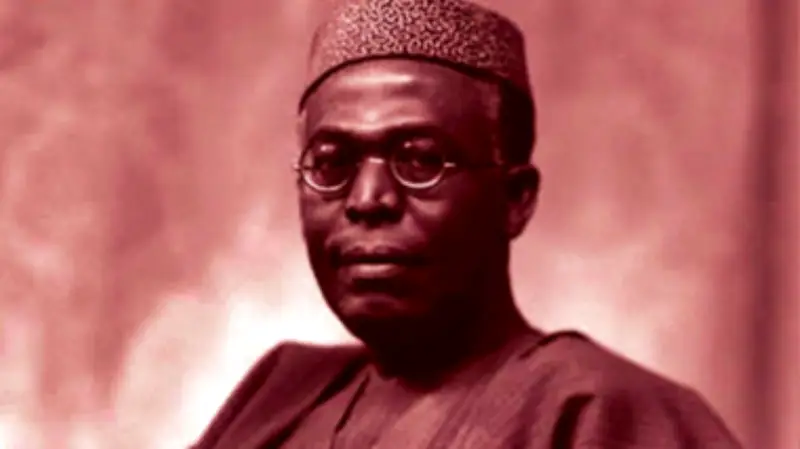
This gambling metaphor contextualizes the ideological contestation between a consummate politician and an astute political scientist on the best ideological orientation for Nigeria's developmental state. In the 1960s and 1970s, significant political and intellectual ferment focused on transforming Nigeria into a state that took development seriously. Chief Obafemi Awolowo, premier of the Western Region and leader of the Action Group and later the Unity Party of Nigeria, was at the forefront of arming Nigeria with an ideological framework for development. The Western Region was his experimental locus, and with a willing civil service, Awolowo transformed it into an infrastructural wonder. He articulated his ideological vision in books like The People's Republic (1968) and The Strategy and Tactics of the People's Republic of Nigeria (1970).
Awolowo's intellectual mind and ideological posturing challenged the political science and intellectual communities, which responded significantly. Several Nigerian Marxists, including Claude Ake, engaged with Nigeria's postcolonial structural and governance frameworks. However, Billy Dudley, a political science professor at the University of Ibadan, adopted contextual political analysis that took Awolowo and party politics seriously, especially during the first and second republics—periods of intense interrogation of Nigeria's national status.
Awolowo's Democratic Socialism
Awolowo was a democratic socialist, convinced that beyond Nigeria's federal character—suited for managing divergent constituents—the country needed a welfarist ideology provided by democratic socialism. This was not whimsical; it was founded on philosophical and political strains. The philosophical dimension rested on what Awolowo called mental magnitude—a framework demanding a charismatic leader with a developed mind, self-discipline, and willful character to gamble on development. The political dimension took root from Fabian socialism, grounded in a gradualist democratic approach to institutionalizing a socialist state. Democratic socialism envisions an egalitarian society through state-led development integrating democratic ethos with limited public ownership, countering neoliberal capitalism. The state jumpstarts equitable resource distribution—key to social justice—by instigating free compulsory education, social security, healthcare, and full employment.
Awolowo's recommendation is classic political philosophy, orienting politics on morality: any political ideology must be tested by how far it leads citizens to the good life. Democratic socialism aims for equitable resource distribution, requiring a leader with spiritual and moral depth to push through its demands within a federal state like Nigeria.
Dudley's Critique
As a political scientist, Dudley recognized the insights of Awolowo's formulation. He supported it to the extent it resisted the competitive market model as the only development pathway. In An Introduction to Nigerian Government and Politics (1982), Dudley acknowledged that while other parties in the Second Republic focused on organizational matters, Awolowo's Unity Party of Nigeria was well on its way with a well-thought-out electoral program and the image of the only party with effective and efficient organization. Yet Dudley was concerned with understanding a viable political order compromised in Nigeria by ethnicity, clientelism, abuse of power, and other variables. Achieving political development and economic growth requires understanding the Nigerian state's structure and its structural failures, especially in democratic progress and consolidation. In contemporary parlance of achieving a democratic developmental state, Dudley's analysis would be pessimistic about how a deeply flawed system could serve structural transformation.
Dudley rejected Awolowo's centralized party system with charismatic leadership and autocratic tendencies, which he saw as anti-democratic. A democratic political context, to activate its potential for political order, must accentuate skepticism as a political virtue. A centralized, charismatic leadership must be obviated by a citizenry cultivating skepticism as an instrument of democratic accountability toward a more stable polity.
Utopian vs. Realistic
Dudley's critique is less optimistic than Awolowo's ideological preference. A political ideology, in Dudley's assessment, is only as good as the political stability foundation it rests on. He recognized the utopian basis of Awolowo's recommendation of democratic socialism within a state plagued by structural contradictions, even in its federalist credentials. After the first coup of 1966, the Nigerian federal constitution became centralized, undermining federal aspirations. While Awolowo argued for a federal system uniting ethnic cleavages, Dudley perceived how federal elements could become opportunities for ethnic domination and oppression. I suspect Awolowo's entire political corpus highlighted the danger of not making federalism work in Nigeria. Thus, though Dudley saw structural challenges, Awolowo saw them too. A utopian vision must feed off a realistic assessment of a political situation.
The Value of Intellectual Engagement
The theoretical engagement between Awolowo and Dudley provides an excellent paradigm of the intellectual relationship that ought to hold between politician and political scientist—an ideological sparring conducive to the state's urgent needs. Nigeria requires both pragmatic and theoretical acumen to make sense of its ideological pathway toward economic growth and development. More significantly, this debate articulates an indictment of the anti-intellectual predisposition of many Nigerian governments and the puerile foundation of policies not theoretically strong. There is a growing tendency to shun academic and theoretical input into political roadmaps. Outside conceptual trickery, Awolowo was not just a consummate politician but a deep political theorist who grounded his understanding of the Nigerian political system in a deep theoretical framework yielding democratic socialism and an egalitarian vision. If he had physically engaged with Dudley's critical intervention, I suspect he would have emerged even better due to his inherent desire to keep learning from oppositional critiques. The understanding of the ideological apex and contour of a democratic developmental state, articulated from the Awolowo-Dudley discourse, could only be better than a mere ideological roadmap without theoretical backbone or a listless political critique lacking practical content. In other words, Nigeria's political order is too significant to be left to politicians or political scientists alone.




