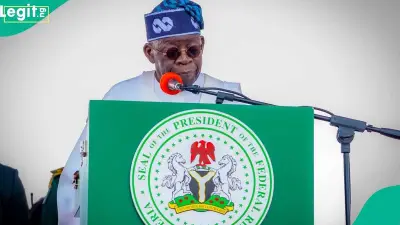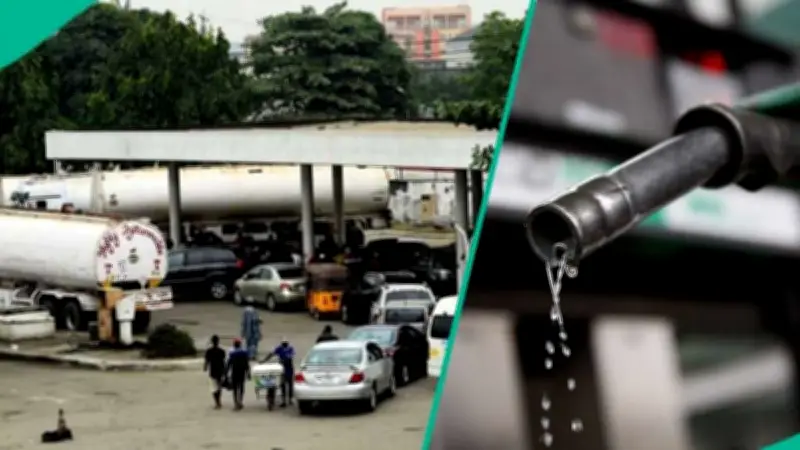
The Federal Government has announced a 30-day discount on petrol sold through the Nigerian National Petroleum Company Limited (NNPCL), with public transport operators receiving priority access under the arrangement. Finance Minister and Coordinating Minister of the Economy, Taiwo Oyedele, made the announcement on Thursday, October 8, 2026, at a press briefing in Abuja focused on fuel prices and subsidy-related matters.
Discount Details and Clarification on Subsidy
Oyedele was clear that the move should not be interpreted as a return to fuel subsidy. He stated: "We are offering a discount on petrol dispensed by NNPC Limited for the next 30 days in the first instance with priority for public transporters nationwide. So, it's not a subsidy, government is just saying we sell to you at cost."
The discount applies exclusively to petrol sold at NNPC filling stations, and the 30-day window is described as an initial period, suggesting the possibility of extension based on outcomes. The priority given to public transporters is intended to ease the burden on mass transit operators, who are often hit hardest by fuel price fluctuations.
Government Targets N1,350 Petrol Landing Cost Ceiling
Beyond the discount, Oyedele revealed that the government is working to place a ceiling of N1,350 per litre on the ex-gantry, or landing, cost of petrol. He clarified that this figure does not represent the expected pump price at filling stations, but rather a cap on the cost of the product before other costs such as distribution, marketing, and margins are added, as reported by ChannelsTV.
The ceiling is designed to insulate consumers from sharp swings in global crude oil prices and naira exchange rate movements. Oyedele explained: "Pump prices should not have to follow every swing in global crude or the exchange rate. The government is negotiating a ceiling of N1,350 a litre on the ex-gantry or landing cost of petrol to keep pump prices stable."
The minister added that the ceiling would be reviewed monthly, with the figures published openly to ensure transparency. This monthly review mechanism is intended to provide predictability for both consumers and industry players, allowing them to plan without fear of sudden price shocks.
Mechanism to Smooth Out Fuel Price Swings
Under the proposed arrangement, if petrol costs climb above the ceiling, refiners and importers would absorb the difference upfront and recoup it later when market conditions ease. Oyedele described this as neither a subsidy nor price control, but a tool for managing price volatility over time.
He explained the logic in straightforward terms: "The reasoning is simple, N1,400 a litre today and N1,400 a litre tomorrow is better than N1,500 a litre today and N1,300 a litre tomorrow." This approach aims to create a buffer against the erratic price movements that have characterised the Nigerian fuel market in recent years.
Oyedele said the government chose to act because existing interventions had not done enough to shield households and businesses from the ripple effects of high fuel and transport costs, according to Punch reports. He noted that sharp fuel price increases tend to push up costs across the economy, while price reductions, when they eventually come, often move much more slowly.
Context and Recent NNPC Price Adjustments
The measures are intended to offer near-term relief to petrol consumers while the government pursues broader stability in the downstream petroleum sector. The announcement comes amid ongoing adjustments in the fuel market, with NNPC having recently reduced the pump price of petrol by N5 per litre at its retail outlets in Lagos from N1,360 to N1,355.
Motorists in Lagos and Rivers now pay N1,355 per litre, making them the cheapest locations on NNPC's updated price list, while Abuja buyers are paying N1,370 per litre under the new arrangement. Yobe has the highest petrol price at N1,435 per litre, followed by Niger State at N1,433, reflecting regional variations in distribution costs.
The combination of the 30-day discount and the proposed landing cost ceiling signals a broader government strategy to manage fuel prices more actively, with the monthly review of the ceiling and the open publication of figures designed to build trust and ensure accountability in the downstream sector.