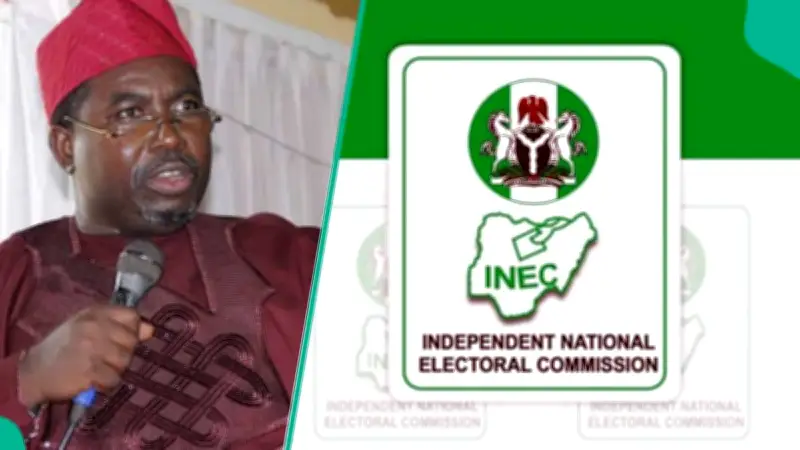
The Independent National Electoral Commission (INEC) has announced it will hold an internal meeting next week to decide on the implications of the September Supreme Court judgment that restored key provisions of the Electoral Act 2026, a ruling that could prevent some political parties from fielding candidates in the 2027 general elections.
Mohammed Haruna, INEC's national commissioner for information and voter education, made the disclosure on Thursday, October 8, during an interview on Trust Television's Daily Politics programme. He acknowledged that the ruling has triggered widespread anxiety among candidates and the public.
INEC Commissioner Confirms Meeting to Review Ruling
Haruna stated: "Definitely, we will meet next week to take a decision on it. I know a lot of people are anxious, not just the candidates themselves; even the public is anxious." He added that the Supreme Court has strengthened INEC's position, noting: "The Supreme Court has strengthened our hands and said we were right to have insisted that any party that wants to contest must submit the list of its membership three weeks before their primaries. So, we really need to sit down and look at it. By next week, we will do that and take a decision."
The commissioner's comments come after a seven-member Supreme Court panel, in a lead judgment delivered by Justice Adamu Jauro, upheld an appeal by INEC and restored sections 77(5), 77(6), 77(7), and 84(2) of the Electoral Act 2026. The Court of Appeal had previously voided these provisions in July, but the apex court ruled they were not inconsistent with the 1999 Constitution.
Parties May Lose Right to Contest 2027 Elections
When asked whether parties could be allowed to change their candidates or submit new names in response to the ruling, Haruna was direct: "It's too late to do anything. The parties won't even be able to contest. It's like you committed an offence and you want to come and benefit."
He pointed to earlier cases in Zamfara and Plateau states as precedents, noting that parties which failed to comply with electoral law were denied the opportunity to benefit from the process. He added that, depending on the commission's review of the law, some parties could be left without governorship candidates entirely.
Restored Provisions and Their Requirements
Under the restored provisions, section 77(5) of the Electoral Act requires that only party members whose names appear in a register submitted to INEC at least 21 days before a primary, congress, or convention may take part in the exercise. Section 77(6) bars any party from using a membership register different from the one it submitted to the Commission. Section 77(7) stipulates that a party which fails to submit its register within the required timeframe cannot field a candidate for the election.
While the judgment does not name or disqualify any specific candidate for the 2027 elections, the restored provisions open the door to legal challenges against any party's nomination process where compliance is disputed.
Context and Previous Reports
Earlier, Legit.ng reported that the Muslim Rights Concern (MURIC) called for the immediate sack of the INEC chairman, Prof. Joash Amupitan. The executive director of the Islamic group, Prof. Ishaq Akintola, posited that Amupitan cannot be trusted. Similarly, the Supreme Council for Shari'ah in Nigeria (SCSN) urged President Bola Ahmed Tinubu to review Amupitan's appointment.
The commission's decision next week will determine the extent to which parties are affected, with the potential to reshape the political landscape ahead of the 2027 general elections.