
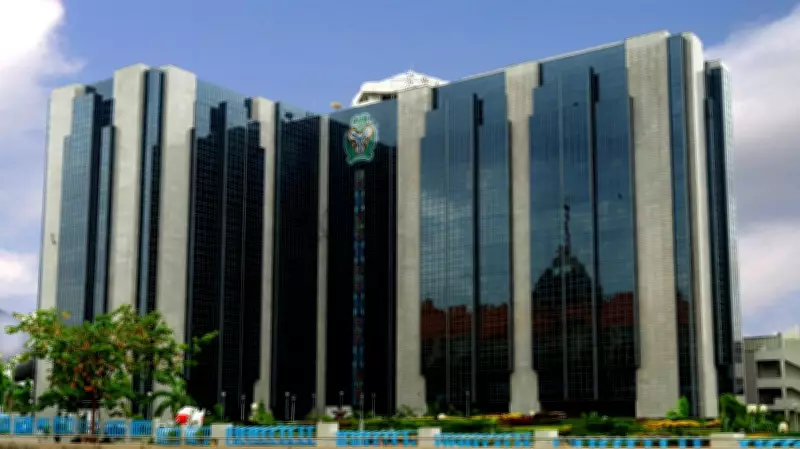
Most Nigerians go about their daily lives without knowing that Nigeria, like an individual with a personal bank account, has a special account called the Federation Account. This constitutional account is meant to receive every revenue collected by the federation before distribution among federal, state, and local governments. It is the financial heartbeat of the Nigerian federation. Yet few citizens know it exists, fewer still understand how it works, and almost no one is held accountable when it fails. And it is failing spectacularly.
What the Constitution Says
Section 162(1) of the Constitution of the Federal Republic of Nigeria, 1999 provides: 'The Federation shall maintain a special account to be called the Federation Account into which shall be paid all revenues collected by the Government of the Federation, except the proceeds from the personal income tax of the personnel of the Armed Forces of the Federation, the Nigeria Police Force, the Ministry or department of government charged with responsibility for foreign affairs and the residents of the Federal Capital Territory, Abuja.' The provision states its intent plainly. Subject to narrow and defined exceptions, all revenues collected by the federation must flow into one central account. Section 162(3) then requires those funds to be distributed among the three tiers of government according to a formula prescribed by the National Assembly. But intent without architecture is not design; it is aspiration. And aspiration, as Nigeria has discovered over 25 years, is not enough.
Where is the Account?
Here is a question that should embarrass us: the Constitution does not actually say where the Federation Account should be kept. It establishes the account but says nothing about which institution should hold it, on what terms, or with what transparency obligations. This is a significant constitutional gap. In practice, the Federation Account is domiciled at the Central Bank of Nigeria (CBN), which serves as the government's banker under the CBN Act, 2007. The Office of the Accountant-General of the Federation (OAGF) manages its books, while the Federation Account Allocation Committee (FAAC) meets monthly to share out whatever has arrived. The question of where the Federation Account should be domiciled is ultimately a constitutional one, not a reflection on the CBN's institutional competence. The CBN has served creditably as the government's banker, and its role in receiving and processing federation revenues has been indispensable. However, the absence of a clear legal framework governing that custodianship creates ambiguities that serve neither the CBN nor the federation well. A proper custody framework, clearly specified in law, would strengthen institutional boundaries, protect the CBN's independence as a monetary authority, and ensure that its fiscal agency role does not expose it to the kind of quasi-fiscal pressures, including Ways and Means financing, that have historically complicated its primary mandate of price stability. Clarifying the law is not a criticism of the CBN. It is a protection for it.
The TSA: A Well-Intentioned Reform That Did Not Go Far Enough
Before examining the full scale of the problem, it is important to acknowledge a significant prior reform effort. During her tenure as Finance Minister, Dr Ngozi Okonjo-Iweala introduced the Treasury Single Account (TSA) as a mechanism to consolidate government revenues and reduce fragmentation across multiple banking relationships. It was a well-intentioned and partially effective intervention. But the TSA is not Section 162. It was created by executive directive, not by statute, and it does not carry the constitutional weight that Section 162 demands. Revenue leakages continued under the TSA framework, and by current estimates Nigeria is losing up to 20 trillion naira yearly in revenues that should reach the Federation Account but never do. The TSA addressed symptoms; it did not cure the constitutional disease. What Nigeria needs is not a better administrative workaround but full implementation of the constitutional obligation itself.
The Scale of the Problem
Nigeria is not a poor country. Between 2023 and 2024, federation revenues rose from N16.8 trillion to an estimated N31.9 trillion, with 2025 figures pointing to continued growth, according to the World Bank's Nigeria Development Update. The numbers are staggering. Yet the scale of what does not arrive is equally staggering. The World Bank's April 2026 Nigeria Development Update reported that in 2025 alone, more than 39 per cent of gross federation revenues, amounting to approximately N14.94 trillion, were consumed by deductions before funds could reach the Federation Account for distribution among the three tiers of government. While roads crumble, hospitals lack equipment, and schools fall apart, nearly two-fifths of what Nigeria generates is absorbed before it can be spent on Nigerians. This is not a new problem. In 2014, then-CBN Governor Lamido Sanusi warned that between $10.8 billion and $20 billion in oil revenues had not been remitted by NNPC over the preceding three years. The problem has since deepened. A FAAC investigation is currently ongoing into allegations that NNPCL under-remitted $42.37 billion, equivalent to approximately N12.91 trillion, to the Federation Account between 2011 and 2017. In 2024, NNPCL, Nigeria's largest single revenue generator, remitted only N600 billion of the N1.1 trillion due to the Federation Account, with the remaining N500 billion withheld by NNPCL reportedly to offset legacy arrears. Beyond oil, the leakages are everywhere. A House of Representatives investigation in 2023 found that over N8.7 trillion had passed through the Treasury Single Account gateway, but that agencies had proliferated unauthorised sub-accounts, creating what the OAGF itself described as 'significant revenue leakages.' The Minister of Finance admitted in 2024 that until August of that year, the federal government could not fully see its own balance sheet. Federal courts, universities, hospitals collect revenues running into billions annually, with no transparent evidence that these revenues are remitted as the Constitution requires.
Why the Money Does Not Arrive
The reasons are structural, not incidental. The Constitution establishes the Federation Account but critically fails to operationalise it. There is no constitutionally designated custodian, no specified remittance timeline, no designated auditor, and no prescribed penalty for non-compliance. This silence has allowed decades of administrative deviation to calcify into normalcy. Revenue collection is further fragmented across dozens of agencies, including the Nigeria Revenue Service (NRS), the Nigeria Customs Service (NCS), the Nigerian Upstream Petroleum Regulatory Commission (NUPRC), the Nigerian Communications Commission (NCC), the Securities and Exchange Commission (SEC), the Nigerian Ports Authority (NPA), the courts, universities, and hospitals, each with different supervisors, different accounting systems, and different cultures of accountability. No single institution has real-time consolidated visibility of what is actually flowing in. Dr Agbakoba is a Senior Advocate of Nigeria (SAN). Okeke is an associate in the law firm of Olisa Agbakoba Law Associates.




