
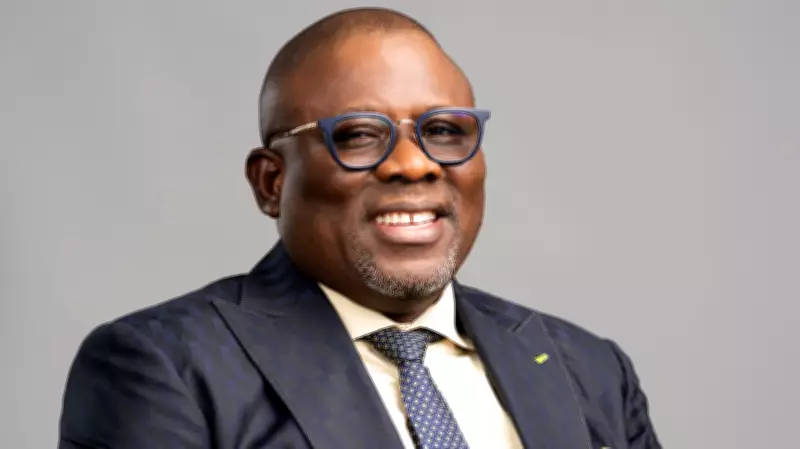
On a warm Saturday evening at Eko Hotels and Suites, the atmosphere was celebratory yet discerning. The occasion, the Silver Jubilee Awards of Independent Newspapers, was not merely a commemoration of 25 years of journalism but a gathering of voices and verdicts on leadership in Nigeria. At the centre of that moment stood Delta State Governor, Sheriff Oborevwori, whose administration has, in less than three years, become a subject of both commendation and recognition.
Governor Clinches Two Major Awards
The governor emerged as one of the night's biggest winners, clinching two notable honours: Outstanding Independent Governor and Best Independent Governor in Urban Renewal for 2025. The awards, framed under the theme 'Game Changers: Breaking Barriers, Shaping Tomorrow,' sought to spotlight leaders whose policies are not just reactive but transformative.
Oborevwori was not physically present to receive the accolades. In his stead, his deputy, Sir Monday Onyeme, stepped forward both as a representative and a witness to the administration's unfolding story. His remarks, delivered with quiet confidence, captured the essence of what the awards symbolised.
"To many Nigerians, especially Deltans, the shift is visible. The governor has changed the narrative since 2023. What we are seeing is not incremental progress—it is a deliberate reimagining of urban life," Onyeme said.
Infrastructure Transformation at Core
That "reimagining" has largely been driven by infrastructure from roads, bridges, and the kind of urban planning that alters how people move, work, and experience their cities. Across Delta's key urban corridors of Ughelli, Warri, Effurun, Agbor and Enerhen Junction, flyover projects have begun to redefine once-congested spaces. What used to be choke points are gradually turning into smoother, more navigable arteries.
But the transformation is not limited to the skyline. Beneath it lies a broader, more grounded effort. According to the state government, nearly 300 kilometres of roads have been delivered within a year. For a state long grappling with infrastructure deficits, that figure is more than a statistic; it is a statement of intent.
Urban renewal, however, is often easier announced than executed. It demands coordination, funding, and political will. It also invites skepticism. Yet, the Independent Newspapers Awards, whose selection process involves public voting alongside scrutiny by a jury and board, as explained by Managing Director Steve Omanufeme, suggest that the administration's efforts are resonating beyond government circles.
For Onyeme, the recognition is both validation and a challenge. "We have not rested, and we will not rest. We were elected to serve, and that responsibility compels us to do more," he said. There is, in that statement, a glimpse into the administration's self-perception – not as one that has arrived, but one still in motion.
Strategic Investment Engagement with EU
Days later, the Delta State government hosted a delegation from the European Union led by Ambassador Gautier Mignot. The meeting was not ceremonial; it was strategic. Speaking through Onyeme, Governor Oborevwori presented Delta not just as a subnational entity within Nigeria, but as a potential hub in a global investment network.
His pitch was layered – natural resources, geographic advantage, human capital, and, crucially, stability. He said: "Delta State is a prime investment destination. It is safe, resource-rich, and open for partnerships."
The language of investment is often filled with superlatives, but in Delta's case, the underlying assets are tangible. The state remains a significant contributor to Nigeria's oil and gas output, but Oborevwori's administration appears keen to broaden that narrative. Solid minerals such as silica and coal, vast arable land for agriculture, and an extensive network of rivers and coastline all feature prominently in the state's economic blueprint.
Perhaps most intriguing is the emphasis on the "blue economy," a concept that leverages water resources for economic growth. With over 160 kilometres of coastline and expansive mangrove ecosystems, Delta is positioning itself for investments in marine transport, aquaculture, and coastal logistics. The vision includes ports, jetties, and water-based transportation systems that could reshape trade flows within and beyond the region.
EU Partnership Framework
For the European Union, the interest is equally strategic. Ambassador Mignot's remarks highlighted an evolving partnership framework, anchored in the Global Gateway Investment Strategy. The initiative seeks to mobilise funding through grants, loans, and institutions such as the European Investment Bank and the European Bank for Reconstruction and Development.
Infrastructure and connectivity remain at the heart of this engagement. One proposed area of collaboration involves extending development along the Abidjan–Lagos corridor, with potential linkages through Nigeria's coastline and inland waterways. Delta State, by geography and ambition, sits squarely within that conversation.
Beyond infrastructure, the dialogue touched on softer but equally critical sectors: education, digital development, and youth empowerment. Internship programmes for young graduates, as mentioned by the EU delegation, align with the state's own emphasis on human capital development.
Environmental and Health Priorities
There is also a recognition of the challenges. Environmental sustainability, particularly in a region shaped by oil exploration, remains a pressing concern. The governor's openness to partnerships in erosion control and environmental management suggests an awareness that growth must be balanced with preservation.
Healthcare, too, emerged as a priority. With many Nigerians seeking medical treatment abroad, the administration is looking to attract investments that could enable world-class services within the state. It is an ambitious goal, one that would require not just capital but systemic reform.
Looking Ahead: Legacy and Continuity
Taken together, the awards in Lagos and the investment discussions in Asaba form two sides of the same narrative. One reflects recognition of what has been done; the other outlines what could be achieved. At the centre of both is a leadership style that favours visibility projects that can be seen, measured, and, ultimately, judged. Flyovers, roads, and investment pitches are not abstract policies; they are tangible markers of governance.
But the durability of that approach will depend on continuity. Onyeme alluded to this when he spoke of the governor's long-term vision: to leave a legacy so distinct that future administrations would be measured against it. It is a bold aspiration, and one that carries its own risks. Expectations, once raised, are difficult to temper. Recognition, once earned, must be sustained.
The Oborevwori administration finds itself in a moment of alignment where external validation and internal ambition appear to reinforce each other. The applause at Eko Hotels may fade, as all applause does, but the pace of transformation in Delta will be maintained and investment promises translated into concrete partnerships with the benefits of these efforts touching the everyday lives of Deltans. The story of Delta State under Oborevwori remains one of motion of a government seeking to build, attract, and redefine, even as it is being watched, measured, and applauded.




