
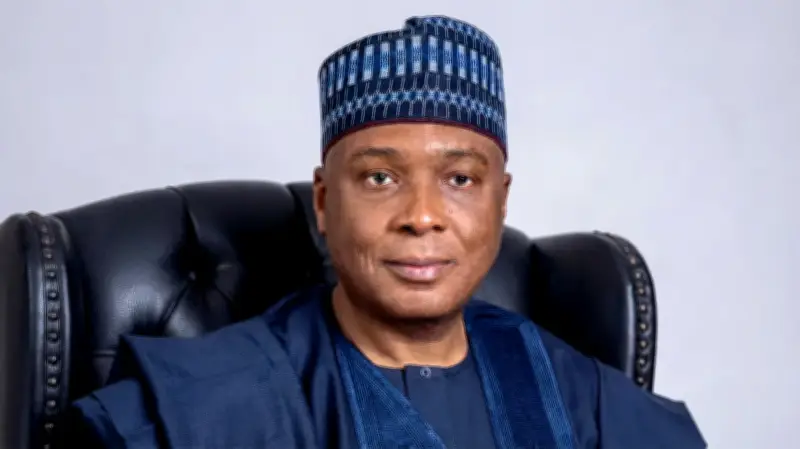
Former President of the Senate, Abubakar Bukola Saraki, has declared that a legislature incapable of rejecting executive proposals ceases to function as a genuine parliament, cautioning that such weakness threatens Nigeria's democracy and national stability.
Saraki Speaks at The Platform Forum
Speaking at The Platform's June Forum held at the Lagos Marriott Hotel, Ikeja GRA, Saraki described the legislature as the “load-bearing wall” of democracy, warning that weakening it would endanger governance, development, and institutional stability. “A legislature that cannot say no is not a legislature at all,” he asserted, adding that routine approval of executive proposals without scrutiny reduces the National Assembly to a ceremonial body.
Separation of Powers Essential
Saraki emphasized that the framers of the Constitution deliberately separated powers to ensure accountability, stressing that friction between the executive, legislature, and judiciary is essential for democratic stability. He noted that the legislature serves as a “pressure valve,” allowing grievances to be addressed through debate rather than conflict or violence.
Power of the Purse
The former Senate President highlighted the National Assembly's central role in controlling public expenditure through the power of the purse, stating that no government spending is valid without legislative approval. He dismissed recurring claims of budget padding, explaining that the legislature is constitutionally empowered to review executive proposals and ensure that national priorities and constituency needs are reflected in the budget.
Warnings on Borrowing and Oversight
Saraki cautioned against violations of appropriation laws, insisting that spending outside approved budgets undermines due process and weakens democratic accountability. He also warned that unchecked debt decisions impose long-term burdens on future generations, emphasizing the legislature's approval role in borrowing. Defending oversight and confirmation powers, he described them as critical tools for ensuring accountability and checking executive authority. He noted that legislative screening of nominees remains a constitutional responsibility, with such decisions falling within the Senate's discretion.
Call for Stronger Institutions
Saraki called for stronger electoral processes, improved legislative capacity, and an end to vote-buying, warning that weak institutions and poor electoral choices threaten democratic consolidation. He concluded that Nigeria's democracy can only be sustained through an independent, capable, and effective legislature that remains close to the people it represents.




