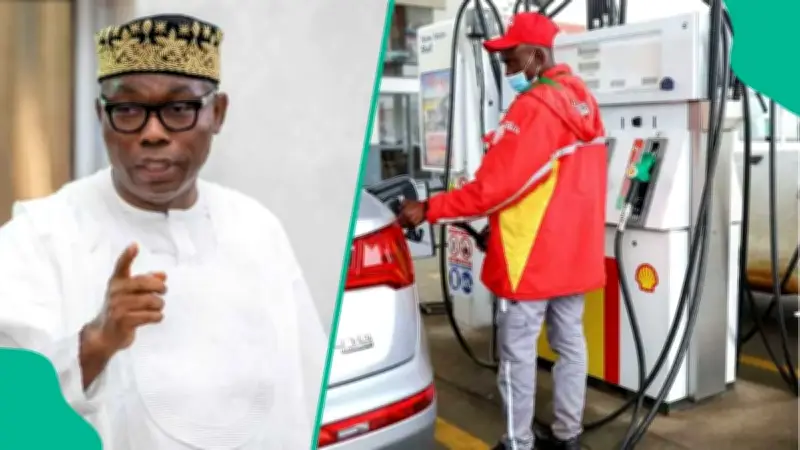
The Social Democratic Party (SDP) presidential candidate, Adewole Adebayo, has pledged to reduce the prices of petrol, cooking gas, and aviation fuel (Jet A1) to a maximum of N200 per litre if elected in 2027. He made this promise during an interview with the News Agency of Nigeria (NAN) in Abuja on Sunday, September 6, 2026.
Adebayo said the proposed pricing policy would take effect within 12 months of assuming office. He argued that the focus should be on increasing local refining capacity rather than continuing to import refined petroleum products at international market prices.
Reviving Refineries and Supporting Modular Units
To achieve the N200 per litre target, Adebayo said his administration would focus on restoring Nigeria's existing refineries while also supporting modular refineries to increase local production of petroleum products. He dismissed concerns about the age of Nigeria's refineries, noting that older refineries in the United States, some more than a century old, remain operational.

According to Adebayo, the SDP would place petrol, cooking gas, and Jet A1 under a pricing framework designed to ensure that none of the products sell for more than N200 per litre. He stated: “SDP will pick cooking gas, petrol and Jet A1; those three, we will put them under a regime where the price does not go past N200.”
Proposed Subsidy Arrangement and Revenue Use
Adebayo also proposed returning to what he described as the original subsidy arrangement, under which 450,000 barrels of crude oil would be set aside for domestic refining. He explained that the crude would be processed locally, and revenue generated from products such as naphtha, heavy fuel oil, diesel, and kerosene would be used to sustain the proposed pricing policy.
The SDP candidate said his government would collaborate with the National Assembly to create a framework for directing proceeds from other petroleum derivatives towards maintaining the scheme.
Rejecting the Subsidy Removal Argument
Adebayo argued that the long-running debate over petrol subsidy had distracted attention from deeper structural problems within Nigeria's petroleum sector. He dismissed claims that the removal of petrol subsidy alone would solve Nigeria's fiscal challenges, describing such an argument as a “red herring.”
He added that under an SDP-led government, Nigerians would not need to worry about petrol subsidy because, in his view, subsidy should not be treated as a government economic programme. The candidate maintained that Nigeria already possesses two key advantages needed to achieve the goal: abundant crude oil resources and existing refining infrastructure.