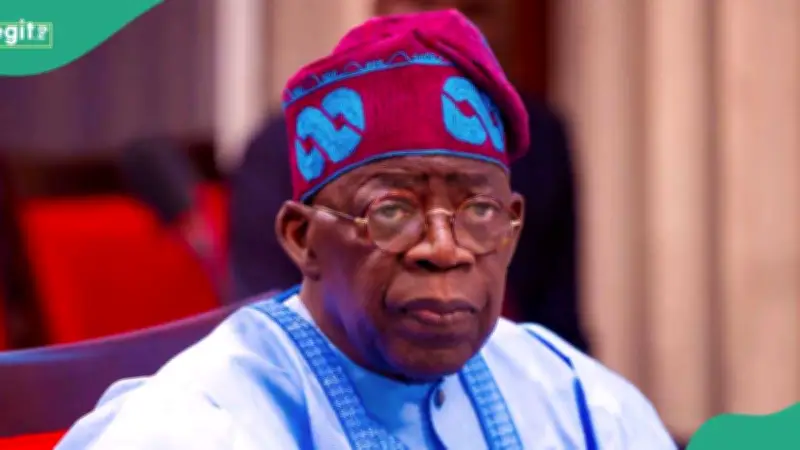
A Nigerian legal analyst, Anyakweh Miracle Amadi, Esq., has argued that President Bola Ahmed Tinubu's policy record since May 29, 2023, positions him firmly for a second term in 2027. Amadi pointed to at least 12 major reforms spanning the economy, security, energy, and infrastructure, which he says could seal Tinubu's re-election bid.
Fuel Subsidy Removal and Forex Unification
Amadi acknowledged that the removal of the fuel subsidy on Tinubu's first day in office triggered an immediate spike in petrol prices, partly worsened by what he described as deliberate hoarding by interests opposed to Nigeria's progress. However, he maintained that the decision ultimately freed the energy sector from corruption and prevented a broader economic collapse.
On foreign exchange, Amadi noted that the Central Bank of Nigeria's unification of exchange rates has ended a system he says previously rewarded political connections over legitimate business needs, making forex accessible at a uniform rate to all Nigerians. He stated this during an exclusive chat with Legit.ng on Thursday, October 22, 2026.
Tax Reform and Economic Indicators
The tax reform framework drew particular attention. The administration reportedly consolidated more than 50 taxes and levies into fewer than 10, while exempting individuals earning ₦800,000 or less annually from income tax entirely. Small businesses with turnover below ₦50 million also pay zero company tax. Amadi cited World Bank recognition of Nigeria as a global reference point for the reforms.
Nigeria's foreign reserves, which stood at approximately $3.5 billion when Tinubu assumed office, have reportedly climbed to around $65 billion, described as the highest figure in 13 years. Foreign direct investment, meanwhile, reportedly surged from $90 million to $850 million within a single quarter. The Nigerian Stock Exchange has gained 137% since May 2023, meaning a ₦1 million investment at inauguration would today be worth over ₦2.4 million.
Inflation Decline and Energy Legislation
Inflation, which peaked at 34.8% in December 2024, has since fallen to 14%, according to figures published by the National Bureau of Statistics and confirmed by the World Bank, IMF, and S&P. On electricity, Tinubu signed the Electricity Act 2026, enabling states to generate, transmit, and sell power independently for the first time in roughly 60 years.
The NIMC Act 2026 also established a unified national identity database, which Amadi says recently helped identify seven Boko Haram commanders concealed among returning Hajj pilgrims. Additional achievements cited include the establishment of six Regional Development Agencies to address longstanding marginalisation concerns, progress on state policing legislation after 66 years of centralised control, and active construction on the Lagos-Calabar Coastal Highway, with two of six sections reportedly delivered.
Analyst's Verdict and Context
"No past president in Nigeria has dared to make these bold decisions touching on reforms and many infrastructures in just 3 years," Amadi said, pointing to a unified identity database, regional development agencies, and state policing plans as evidence.
Meanwhile, Legit.ng reported that former President Olusegun Obasanjo criticised Tinubu's economic reforms at a major summit in London, United Kingdom. Obasanjo linked the naira's sharp depreciation to Nigeria's status as the world's poverty capital, questioning the benefit of a 300% currency devaluation for ordinary Nigerians.