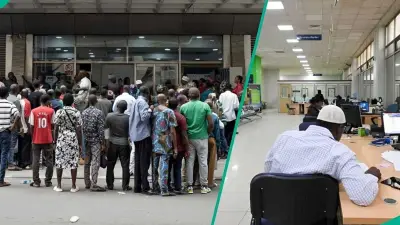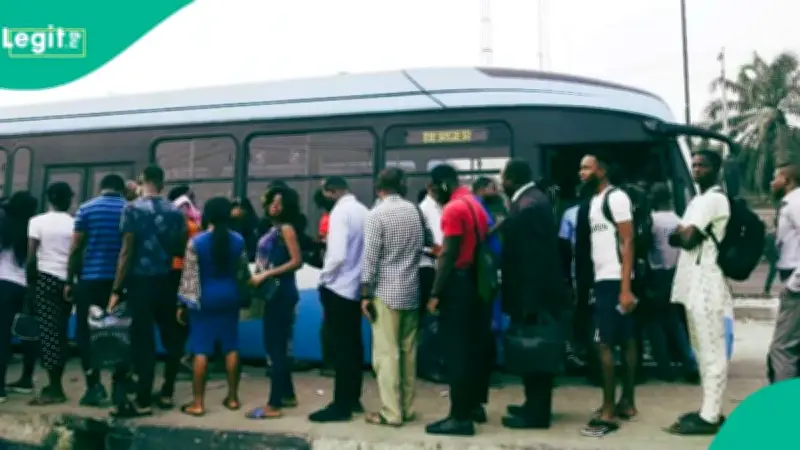
Commuters in Kaduna, Oyo, Enugu, Lagos, and the Federal Capital Territory (FCT) are still waiting for cheaper journeys after the October 1 target for transport fare reductions passed without noticeable relief on surveyed routes. Passengers interviewed by The Guardian on October 2 said they continued to pay existing fares, while operators blamed expensive fuel and the absence of interventions capable of lowering their costs.
Government Promise and Reality Gap
President Bola Tinubu and All Progressives Congress governors agreed in August to pursue lower transport costs, targeting October 1, 2026, for Nigerians to begin benefiting. The plan focused on using compressed natural gas (CNG) and electric vehicles to reduce intra-state transport costs, supported by a joint federal-state implementation committee. It was presented as a programme to translate cheaper energy into lower fares, according to the Guardian.
However, accounts from the surveyed locations suggest those expected savings had yet to reach many passengers. The findings highlight a gap between the government’s transport relief ambitions and commuters’ experiences, with workers, students, and traders still facing substantial daily travel expenses.
Enugu Operators Retain September Rates
At Enugu’s Gariki terminal, journeys to Umuahia still cost ₦6,500 by car and ₦5,000 by bus. Travellers heading to Owerri paid between ₦7,000 and ₦7,500 in Sienna vehicles, while buses charged ₦6,000. Enugu–Onitsha fares remained ₦6,000 by car and ₦4,500 by bus.
For longer journeys, GIGM’s Toyota Hiace service from Enugu to Abuja cost ₦44,020 for online bookings and ₦45,000 offline. The Lagos service remained ₦42,500, matching September rates. Within Enugu, commercial buses retained their fares, while tricycle operators continued charging ₦300 for short trips.
Transport operator Caleb Obi said government support had not arrived. “We are still buying fuel at N1,400 per litre,” he said, arguing that operators could not reduce fares without lower operating costs or effective transport alternatives.
Kaduna Passengers Await Wider Relief
In Kaduna, commuter Monday Ade said the Sabo–Kasuwa fare remained ₦700, while travelling from Samrada Filling Station in Ungwar Romi to Kasuwa still cost ₦500. Commercial driver Mallam Nasir Abu also questioned how operators could charge less while purchasing petrol for between ₦1,450 and ₦1,500 per litre.
The state government, however, said residents were already benefiting from a free public transport programme. Kaduna Line managing director Inuwa Ibrahim said about 60 CNG-powered buses operated daily on designated routes within Kaduna metropolis. That intervention contrasts with the unchanged fares reported by passengers using commercial services.
Oyo, Abuja, and Lagos Commuters Still Pay More
In Oyo, passengers and transport stakeholders similarly reported no reductions. The Secretariat–University of Ibadan journey remained ₦500 by commercial motorcycle and ₦300 by tricycle. Motorcycle fares from Apata to Mokola stood at ₦500, while Bashorun–New Bodija remained ₦400. Union leader Olalere Adetunji said there had been no decrease across the state within the previous 24 hours.
Around Abuja, Bwari passengers said fares to Berger and Wuse Market remained ₦1,800 after rising from ₦1,300 in late September. From Mararaba, fares varied with demand, with trips to the Federal Secretariat reaching ₦2,000 during rush hours. Resident Elizabeth Tyesi said she had seen no noticeable reduction along her route.
In Lagos, federal mass buses still charged ₦500 between Mile 2 and Oshodi, compared with ₦700–₦800 on yellow buses. Oshodi–Mile 12 journeys remained ₦400 on federal mass buses and ₦800–₦1,000 on yellow buses. Train fares were also unchanged.
Governors Consider National CNG Programme
Legit.ng earlier reported that the Nigeria Governors' Forum (NGF) is considering a new national programme that would use CNG to bring down public transportation fares. The state governors are looking for ways to ease the financial burden on Nigerians since the removal of the petrol subsidy. For passengers on these routes, the promised savings remained an expectation, while operators maintained that cheaper transport would depend on meaningful reductions in their running costs.