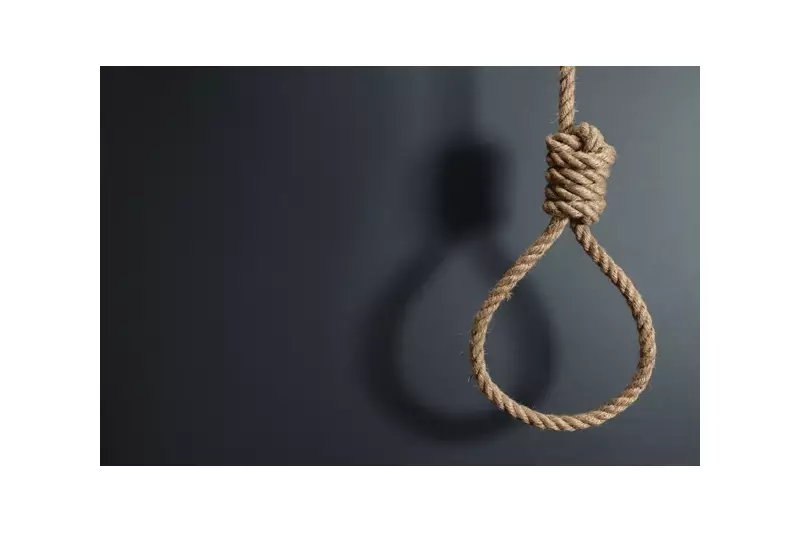
A leading international rights organisation has disclosed that 82 women are currently on death row in various Nigerian correctional facilities, describing it as one of the highest figures in sub-Saharan Africa.
Gender Bias in the Criminal Justice System
Angela Uzoma-Iwuchukwu, the Country Director of ASF France (Lawyers Without Borders France) in Nigeria, made the revelation on Wednesday, December 3, 2025. She spoke at a Capacity-building Session in Abuja focused on Mainstreaming Gender Perspective in the Use of the Death Penalty.
The two-day workshop, reported by the News Agency of Nigeria (NAN), aims to champion the cause of these female inmates. It coincides with the World Women’s Rights Organisation's 16 Days of Activism.
Uzoma-Iwuchukwu argued that the death penalty is not neutral and is applied with significant gender bias. "There are gender biases all across the criminal justice system, starting from the point of arrest, conviction and even incarceration of women who are facing the death penalty," she stated.
She emphasized that many of these women are victims of domestic violence whose circumstances are ignored. "When they react and it leads to maybe homicide cases, the criminal justice system fails to recognise them as victims," she explained.
Poverty and Lack of Legal Defence
The Country Director identified poverty as a core issue preventing fair trials. Many of the condemned women cannot afford competent legal representation, which critically impacts their fate.
"The quality of legal defence that you have would indeed determine whether you will end up on death row or not. A lot of these women, because of poverty... are unable to afford the services of lawyers to ably represent them," Uzoma-Iwuchukwu, a capital defence lawyer herself, noted.
She cited a stark example from Katsina State, where ASF France successfully intervened in the case of a young woman sentenced to death by stoning under Sharia law for pregnancy out of wedlock. "The only evidence they got against her was that she got pregnant out of wedlock but they never asked who got her pregnant," she revealed. The sentence was overturned at the Court of Appeal.
Calls for Action and Broader Impact
Based on these findings, Uzoma-Iwuchukwu made two primary appeals:
- A moratorium on executions for women on death row.
- Official recognition of women as victims, especially survivors of gender-based violence, which should serve as a mitigating factor in their sentencing.
Echoing these concerns, Dr. Chioma Kanu, Executive Director of the Mothers And Marginalised Advocacy Centre, highlighted the wider societal grief caused by unfair executions.
"Behind every inmate is a mother who cries or a wife, or daughter, or sister whose livelihood is affected," she said. Dr. Kanu warned that not every death row inmate is a guilty criminal, pointing to convictions based on forced confessions, missing files, and lack of legal aid.
"We can release an innocent prisoner but we cannot wake the dead," she concluded, calling for justice for victims and security for families.