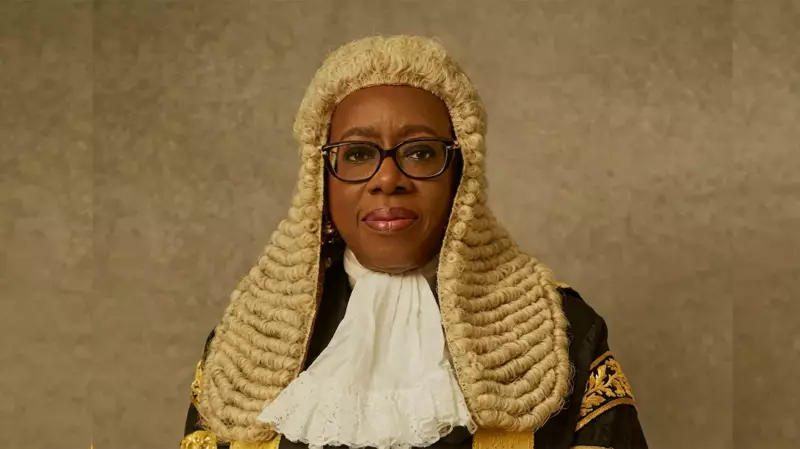
Chief Justice of Nigeria (CJN), Justice Kudirat Kekere-Ekun, faces a critical test of leadership as a new round of judicial appointments to the Federal High Court Bench exposes deep-seated abuse of power, nepotism, and a rigged selection process. This comes amid a scandal involving a 2017 audio clip and allegations of manipulated test scores for shortlisted candidates.
The 2017 Audio Clip and Its Aftermath: A Case Study in Abuse
In May 2017, a viral audio recording allegedly captured a conversation between a male Senator and a female judge. The judge had previously presided over an election petition involving the same Senator. In the clip, the judge demanded payment in US Dollars and requested a public service job for her daughter in a Niger Delta state.
The male voice, believed to be the Senator, appeared eager to comply. The petition against the Senator had been dismissed by the judge's tribunal in 2016. Despite a petition to the Economic and Financial Crimes Commission (EFCC), no significant investigation followed.
Remarkably, both individuals have since prospered. The Senator, after leaving his seat, studied law and was called to the Nigerian Bar in July 2025. The judge was elevated to Chief Judge of a State High Court in the Niger Delta in February 2021.
The daughter referenced in the clip reportedly secured the promised job. Her career as a State Counsel advanced rapidly, leading to a promotion to Assistant Director in the Ministry of Justice in late 2025. In January 2026, she is scheduled for an interview with a National Judicial Council (NJC) committee for a seat on the Federal High Court Bench, allegedly possessing an insider advantage over a more senior candidate.
The Opaque 2026 Federal High Court Appointment Process
The NJC committee, led by a Supreme Court Justice, will interview 28 candidates over three days to fill 14 vacancies. The candidates are from 12 states and the FCT, with four candidates vying for two seats from Nasarawa State.
The Federal Judicial Service Commission (FJSC) conducted the shortlisting, which included a computer-based test (CBT) and an aptitude test. Critically, the scores from these tests are not published. This opacity has fueled major controversies:
- Allegations of Score Manipulation: Unsuccessful candidates accuse judicial authorities of manipulating results and shortlisting candidates who allegedly failed. Claims suggest some shortlisted candidates scored as low as 25-30%, while the highest-scoring candidate was excluded.
- A Flawed "Public Input" Reform: In April 2025, the NJC decided to publish names of "recommended" candidates for public comment on their "integrity, reputation, and suitability." However, this occurs too late in the process, after key decisions are made, effectively foreclosing meaningful public objection.
- Blatant Nepotism and Favouritism: The shortlist is replete with children and protégés of serving or retired senior judges. Examples abound: Kaduna State's candidates are both children of former judges; Abia and Akwa Ibom states have candidates linked to serving judges; Taraba State presents a similar pattern. This widespread practice violates Rule 11(iv) of the Judicial Code of Conduct against nepotism.
A Call for Immediate Action by the CJN
The current appointment cycle presents CJN Kekere-Ekun with a decisive opportunity to halt the systemic capture of the judiciary. The process has become performative, designed to legitimize pre-determined outcomes favoring judicial families—a phenomenon sarcastically termed "filiality via conjugality."
The most urgent and transparent corrective step is for the CJN to order the immediate publication of all candidate scores from the FJSC's CBT and aptitude tests. This would provide tangible evidence of a merit-based process and address allegations of manipulation head-on.
Failure to act will further erode public trust and entrench a hereditary judicial class, making a mockery of the Code of Conduct for Judicial Officers and the integrity of Nigeria's justice system. The CJN must use her authority to liberate judicial appointments from abuse of power and restore credibility.