Court Dismisses Suit to Halt Renewal of Oil Pipeline Surveillance Contracts
A High Court of the Federal Capital Territory has dismissed a legal action seeking to halt the renewal and restructuring of Nigeria's crucial oil pipeline surveillance contracts awarded to Tantita Security Services Nigeria Ltd and other private security firms. The decision represents a significant legal victory for the Nigerian government and its partners in maintaining critical energy infrastructure security.
Legal Proceedings and Court Ruling
The court's decision followed an ex parte motion marked FCT/HC/M/4534/2026, which was filed by the Registered Trustees of the People's Wellbeing Association. In his ruling, Justice Bello Kawu declined to grant the reliefs sought by the claimants, instead ordering an accelerated hearing of the substantive motion on notice, scheduled for April 21, 2026.
The court further directed the applicants to issue and serve all originating and other relevant legal processes on the 4th, 5th, and 6th defendants outside its jurisdiction. This procedural requirement ensures all parties have proper legal notice and opportunity to respond to the claims being made against them.
Parties Involved in the Legal Action
The defendants named in the suit include several key government and corporate entities:
- The Attorney General of the Federation
- The Nigerian National Petroleum Company Limited
- The Nigerian Security and Civil Defence Corps
- Tantita Security Services Nigeria Ltd
- Pipeline Infrastructure Nigeria Limited
- Abokus Integrated Security Services Ltd
Claimants' Requests and Court's Response
In their ex parte application, the claimants had sought multiple reliefs, including an interim injunction to restrain the Attorney General of the Federation and NNPC Limited from further renewing the multi-billion-dollar pipeline surveillance contracts with private security firms pending the determination of the motion on notice.
The applicants had also urged the court to compel the Federal Government to immediately restructure the pipeline surveillance framework and direct constitutionally empowered security agencies to take over the protection of oil pipelines nationwide, particularly in the Niger Delta region. Additionally, they requested that these agencies be mandated to supervise the activities of private security contractors involved in pipeline protection while the suit remained pending.
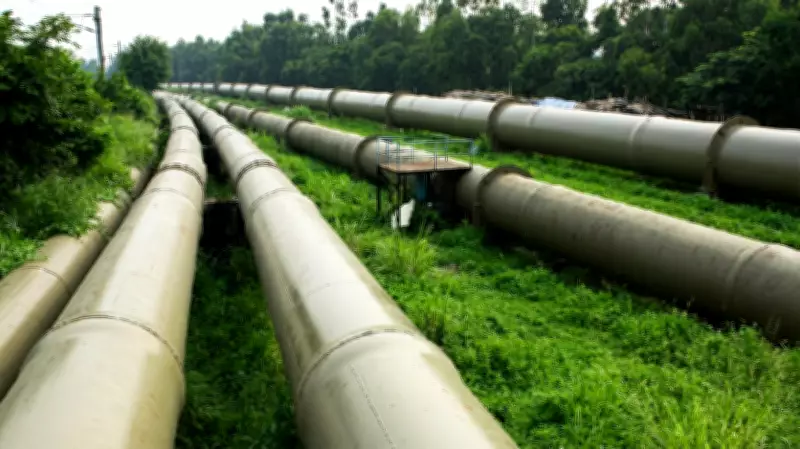
Justice Kawu refused all these requests, issuing a strong warning that granting such relief could be detrimental to national economic stability. The judge noted that halting the contracts could create a dangerous security vacuum, potentially leading to increased oil theft and substantial revenue losses for Nigeria.
Court's Emphasis on National Economic Interests
The court emphasized that pipeline security represents a critical component of Nigeria's economic survival and constitutes an overriding public interest that must be protected. According to Justice Kawu, "no court of law should grant an order capable of plunging the nation into economic crisis."
This judicial position reflects the broader understanding that Nigeria's oil infrastructure requires continuous protection to prevent disruptions that could severely impact government revenue and national economic performance.
Implications of the Court's Decision
As a result of this ruling, the Federal Government and NNPC Limited are at liberty to proceed with the renewal of the pipeline surveillance contracts with the existing security firms. The court further directed that all parties currently involved in pipeline surveillance operations, including Tantita Security Services Nigeria Ltd and Pipeline Infrastructure Nigeria Limited, should continue to discharge their responsibilities in the national interest pending the determination of the substantive suit.
This decision ensures continuity in pipeline protection efforts while allowing the legal process to continue through the scheduled hearing on April 21, 2026. The court's approach balances legal due process with the practical necessity of maintaining critical infrastructure security that affects Nigeria's economic wellbeing.