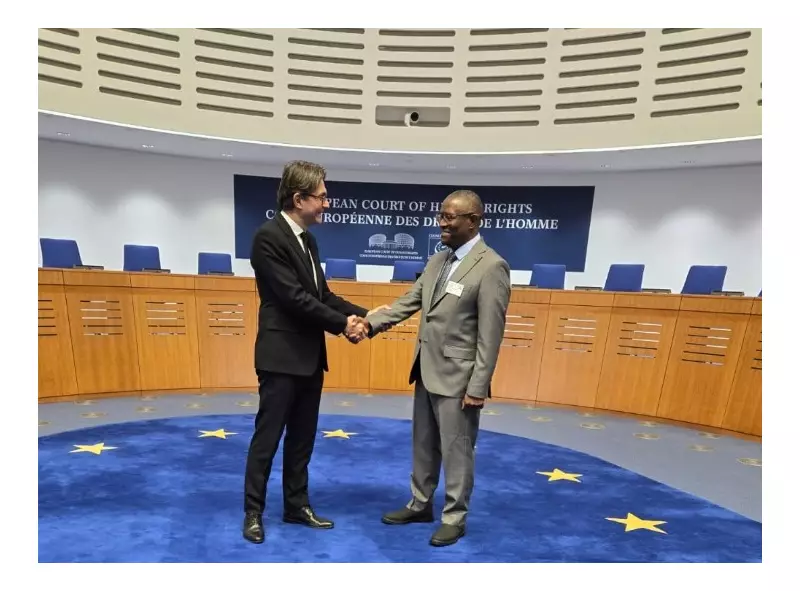
A high-level delegation from the Community Court of Justice of the Economic Community of West African States (ECOWAS Court) has returned from a significant working trip to Europe. The visit aimed to tackle a critical challenge: how to ensure member states comply with the court's human rights judgments.
Learning from European Experience
Led by its President, Justice Ricardo Cláudio Gonçalves, the delegation spent a week, from November 23 to 29, 2025, on a study tour. The primary destination was the European Court of Human Rights (ECtHR) in Strasbourg, France. The delegation also engaged with key institutions in Sweden.
The core mission was to gain practical insights into the mechanisms that make human rights rulings effective. This initiative comes against a backdrop where, despite being funded by regional governments, the ECOWAS Court often sees its decisions ignored by the very authorities that established it.
A Collaborative Effort for Stronger Justice
The visit was not a one-way street. While the ECOWAS team sought to learn from the European model, they also shared their own experiences and challenges from the West African context. The court stated the visit was designed to "enhance the ECOWAS Court’s enforcement mechanisms and significantly improve compliance with its human rights judgments."
This capacity-building exercise was organized by the Raoul Wallenberg Institute of Human Rights and Humanitarian Law (RWI). It forms part of the Institute's broader programme to boost the implementation of decisions from continental and regional human rights bodies across Africa.
High-Level Delegation Composition
The delegation underscored the importance of the visit. It included the Court's top leadership and key departmental heads:
- Honourable President, Justice Ricardo Cláudio Gonçalves
- Vice-President, Justice Sengu Mohamed Koroma
- Justice Gberi-Bè Ouattara
- Justice Dupe Atoki
- The Chief Registrar of the Court
- Director of Research and Documentation
- Selected staff from the Registry, Administration and Finance, and Language Services divisions.
- Two staff members from the Raoul Wallenberg Institute also accompanied the group.
The study visit represents a proactive step by the ECOWAS Court to strengthen its authority and ensure its rulings translate into tangible improvements for human rights in West Africa. The knowledge exchanged with President Mattias Guyomar of the ECtHR and other European experts is expected to inform new strategies for achieving greater respect for the court's decisions.