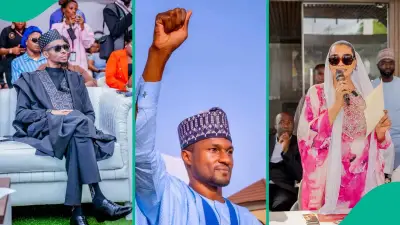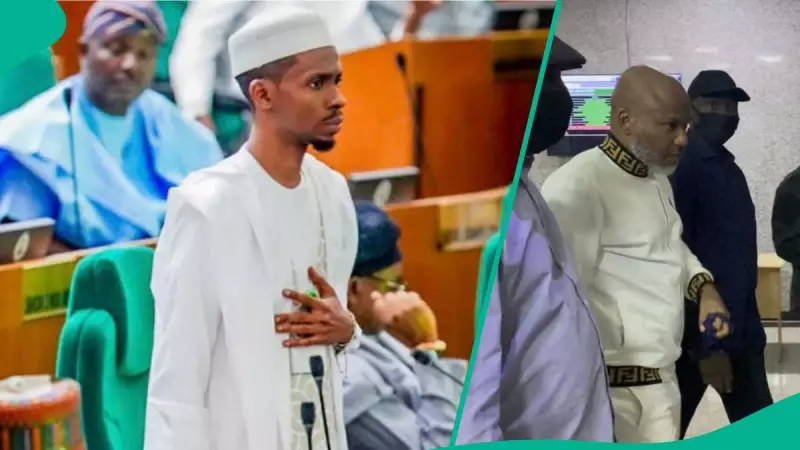
Honourable Muhammad Bello El-Rufai, the member representing Kaduna North Federal Constituency, has issued a strong condemnation of what he perceives as a significant imbalance in Nigeria's judicial system. The lawmaker voiced his concerns during a recent parliamentary plenary session in Abuja.
A Stark Contrast in Sentencing
El-Rufai specifically highlighted the contrasting prison terms given to two individuals convicted of terrorism-related offences. He pointed out that while the leader of the proscribed Indigenous People of Biafra (IPOB), Nnamdi Kanu, received a life sentence, a convicted Boko Haram member, Hussaini Ismail, was handed only 20 years in prison.
"I don't understand why one terrorist gets 20 years and the other gets life," El-Rufai stated. He argued that this disparity fosters a public perception that justice is administered unevenly across different groups and regions in Nigeria. The lawmaker warned that such inconsistencies risk exacerbating the nation's already fragile security situation by undermining public trust in governmental institutions.
Beyond Announcements: The Execution Challenge
While expressing support for President Bola Tinubu's recently announced security initiatives, El-Rufai stressed that the core problem lies not in planning but in implementation. He urged the National Assembly to insist on clear timelines for the execution of these security plans.
El-Rufai also called for urgent improvements in the nation's policing framework. He highlighted the critically low police-to-citizen ratio, noting that one police officer is currently responsible for approximately 600 Nigerians, a figure far worse than the United Nations' recommended ratio of 1 officer to 400 citizens. "We must find the money to fix this," he asserted, advocating for better salaries and welfare packages for security personnel.
Decentralisation and Youth Neglect
The Kaduna legislator reiterated his longstanding advocacy for decentralised policing and the establishment of state police. He contended that security operations cannot be effectively coordinated solely from the federal capital, Abuja, and emphasised the need to involve traditional leaders in local security architectures.
El-Rufai further directed attention to the socio-economic roots of insecurity, particularly in Northern Nigeria. He lamented the neglect of youth, citing widespread unemployment, lack of education, and absence of skills acquisition as factors leaving young people vulnerable to criminality and radicalisation. "We are not sending our children to school. Young people have no employment and no skills because we have neglected them for years," he said.
In a pointed critique, El-Rufai concluded that the political class is failing in its primary duty to protect citizens. He urged the National Assembly to prioritise constitutional amendments to facilitate state police and implement transparent, digitised recruitment processes into security agencies.