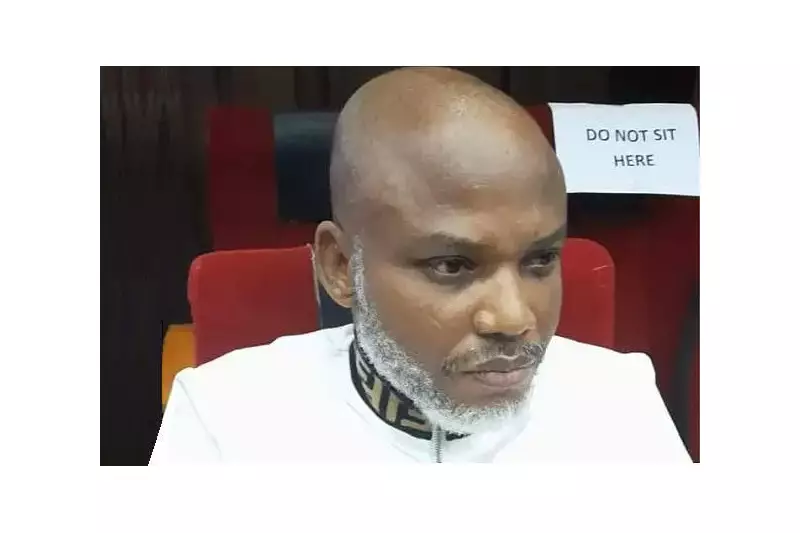
Nnamdi Kanu, the convicted leader of the Indigenous People of Biafra (IPOB), has initiated a new legal move seeking his transfer from the Sokoto Correctional Facility. He argues that his current detention location severely obstructs his ability to challenge his life imprisonment sentence.
Motion Filed Citing Exceptional Hardship
In a motion ex parte filed before the Federal High Court in Abuja, Kanu personally detailed the reasons for his request. The core of his argument is that being held in Sokoto, which is over 700 kilometres away from Abuja, creates an impossible barrier for preparing his appeal.
Kanu was sentenced on November 20 and moved to the Sokoto prison the following day, November 21. This was in line with a court order that he be detained in any Nigerian correctional facility except Kuje. He now contends that this distance violates his constitutional rights.
Logistical Nightmare for Legal Defence
Kanu explained to the court that he is currently without legal representation and intends to personally exercise his right to appeal. The process, however, requires direct interaction with the registries of both the Federal High Court and the Court of Appeal in Abuja.
All potential aides—including relatives, associates, and legal consultants—are based in Abuja. His continued detention in Sokoto, therefore, makes accessing these critical resources for compiling the notice and record of appeal practically impossible.
He has asked the court to order his immediate transfer to a custodial facility within Abuja’s jurisdiction, or alternatively to a nearer centre like Suleja or Keffi, to enable him to pursue his appeal effectively.
Court Rejects Brother's Representation, Adjourns Hearing
The motion was presented in court by Kanu's younger brother, Prince Emmanuel Kanu. He informed Justice James Omotosho that due to the impossibility of Kanu's physical appearance, the motion should be heard in his absence.
Justice Omotosho, however, declined this request. He firmly stated that only a qualified legal practitioner can move such an application in court. "You cannot represent a human being when you are not a lawyer; you can only represent a corporate body," the judge clarified.
He advised that Kanu should engage a lawyer or seek help from the Legal Aid Council. Following this guidance, Emmanuel Kanu requested a hearing date. The judge subsequently adjourned the matter to December 8 for further proceedings.
Judge Clarifies Record Compilation Process
Justice Omotosho also used the opportunity to address what he termed misinformation surrounding the case. He countered a claim by a former lawyer for Kanu that the detainee could not compile his appeal records because of his place of detention.
The judge clarified that a convict does not need to be physically present in court for appeal records to be compiled, though a representative may be required. He reminded the court that "the rights of a defendant are different from the rights of a convict."
This legal development highlights the ongoing tensions between Kanu's defence strategy and the logistical realities imposed by his detention, setting the stage for a crucial hearing on December 8.