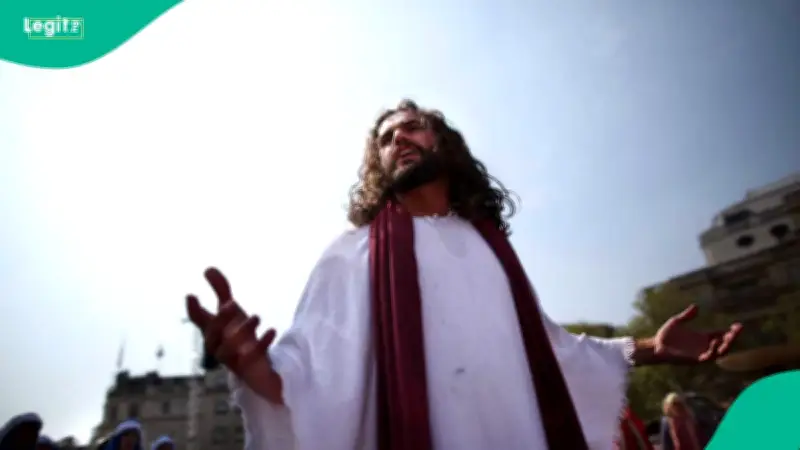
Kenyan lawyer Dola Indidis has filed a case at the International Court of Justice (ICJ) seeking to overturn the conviction and death sentence of Jesus Christ, arguing that the trial by the Romans violated basic principles of justice and his human rights. The case targets Italy and Israel, following the dismissal of an earlier petition filed at a Nairobi court in 2007.
Historical Legal Challenge
Indidis, who formerly served as a spokesperson for Kenya's judiciary, is suing Italy and Israel over the death of Jesus. He brought the matter to the ICJ after a Nairobi court threw out a similar petition in 2007. The case draws fresh attention to how far some legal advocates are willing to go in challenging historical injustices, even when the institutional framework makes a formal resolution virtually impossible.
According to The Nairobian, a local Kenyan newspaper, Indidis argued that Jesus faced "selective and malicious prosecution" that "violated his human rights through judicial misconduct, abuse of office bias and prejudice."
Legal Arguments Presented
According to Times of Israel, his legal argument rests on three main points: that the methods used to question Jesus during the Roman trial were improper; that the evidence relied upon was flawed and likely incomplete; and that carrying out punishment before the trial had formally concluded goes against every recognised standard of justice.
Indidis wants the ICJ to rule that "the proceedings before the Roman courts were a nullity in law for they did not conform to the rule of law at the material time and any time thereafter."
Experts Question Jurisdiction
According to Dailymail, despite the boldness of the filing, legal experts say the case is unlikely to proceed. The ICJ was established to settle disputes between sovereign states, meaning it has no authority to hear a case of this nature. Experts say the court will almost certainly decline to consider it.
The matter draws fresh attention to how far some legal advocates are willing to go in challenging historical injustices, even when the institutional framework makes a formal resolution virtually impossible.
Related Incident
Legit.ng earlier reported that the Israel Defense Forces (IDF) confirmed on April 19 that a soldier was photographed smashing a statue of Jesus Christ in southern Lebanon, sparking global outrage. The image, shared widely online, prompted immediate condemnation and raised concerns about respect for religious symbols.
The photograph has drawn widespread criticism internationally, with many calling for accountability and respect for religious communities. The IDF’s assurance that the statue will be restored is seen as an attempt to ease tensions and reaffirm its stated commitment to protecting civilian and religious sites. The investigation by the Northern Command remains ongoing, with disciplinary measures expected once findings are complete. The IDF has stressed that the soldier’s actions do not reflect its values and has pledged to prevent similar incidents in the future.