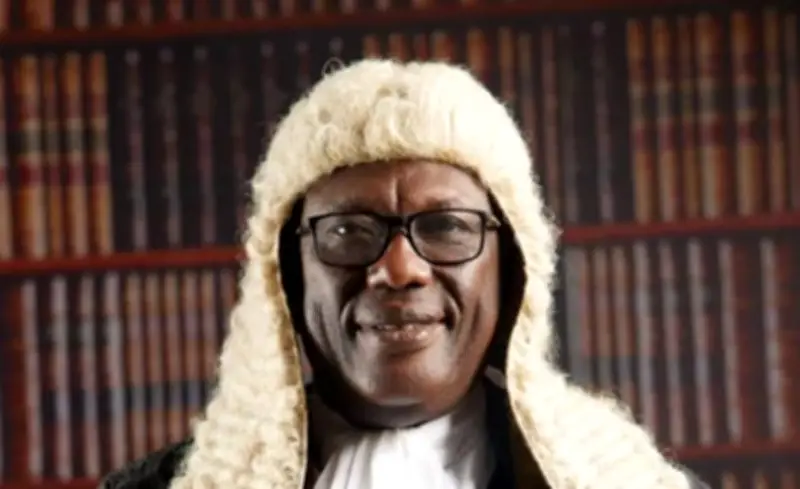
The Legal Practitioners Disciplinary Committee (LPDC) has suspended Joe-Kyari Gadzama, a Senior Advocate of Nigeria (SAN), from legal practice for three years, citing professional misconduct in the long-running Zaki-Biam compensation dispute. The committee also suspended another lawyer, Ocha Ulegede, for two years over related misconduct. The decision, detailed in a 70-page direction dated 29 July, found that Mr Gadzama poached and hijacked clients already represented by another lawyer, acted for judgment creditors who later denied instructing him, and relied on a document that the Court of Appeal had declared forged.
Findings against Gadzama and Ulegede
According to the LPDC, Mr Gadzama violated Rules 1, 27(1) and 29(1)(b) of the Rules of Professional Conduct for Legal Practitioners, 2023. The committee found that he pursued the original N41.8 billion judgment after parties had agreed to an N8 billion settlement adopted as a consent judgment by the Court of Appeal. He also filed suits and continued taking steps in the case even after some judgment creditors expressly disowned him.
Mr Ulegede's suspension followed his institution of two suits seeking N6.1 billion from the N8 billion settlement after the settlement arrangement had been reached. The committee said this conduct exhibited a lack of good faith and violated Rule 1 of the same rules. However, the sanctions differed: Mr Gadzama received three years, while Mr Ulegede received two years.
How the Zaki-Biam dispute began
The dispute traces back to the October 2001 military operation in Zaki-Biam, Benue State, undertaken after 19 soldiers were killed by suspected Tiv militia members. The military invaded communities in Logo, Ukum, Kwande and Katsina-Ala Local Government Areas, leading to deaths and destruction of property. Survivors and families of victims sued the Federal Government, and in July 2007 the Federal High Court awarded them approximately N41.8 billion in damages. The government appealed, but negotiations led to an N8 billion settlement, adopted as a consent judgment by the Court of Appeal.
Disagreements soon arose over who had authority to represent the judgment creditors, how the N8 billion should be recovered and distributed, and how much lawyers were entitled to in professional fees. Chris Alashi, a lawyer, filed a complaint alleging that Messrs Gadzama and Ulegede interfered with his representation of some judgment creditors. Mr Alashi had been briefed in 2008 by the 8th, 9th, 10th, 11th and 12th judgment creditors.
The forged authority document
Central to the case was Exhibit JK2, dated 22 May 2015, which Mr Gadzama relied on as authority to take over the matter and challenge the N8 billion consent judgment. The document was written on the letterhead of Benue Development Movement, an organisation not party to the proceedings. The LPDC found that some judgment creditors whose names appeared on it had not signed it. One purported signatory, Zaki Kaduna Mazan, had died on 11 September 2010—nearly five years before the document was purportedly signed.
The committee noted the Court of Appeal had already declared the document forged. It also compared signatures attributed to Andrew Juntu and found discrepancies, stating: "We believe, this is not a mere coincidence." The committee concluded that the claim that all 14 judgment creditors had instructed Mr Gadzama was unsupported by evidence.
Judgment creditors disown Gadzama
Several judgment creditors swore affidavits denying they had briefed Mr Gadzama. Azenda Igo said he was "thoroughly shocked" when shown a court process filed by Mr Gadzama purportedly on his behalf. He stated: "I never briefed nor instructed the office of Chief J.K. Gadzama, SAN, to file any process and recover the sum of N41.8 billion or any other sum of money arising out of the judgment delivered in my favour."
Another judgment creditor, Mbayemen Masewuan, gave a detailed account of being taken to Mr Gadzama's office in Abuja. She alleged that Benue Development Movement officials told her to abandon her lawyers because Mr Gadzama was "a big and powerful lawyer in Nigeria." She further stated: "That if I do what he wants by leaving (debriefing) my lawyers, he (J.K. Gadzama, SAN) will be paying me the sum of N20,000.00 per month until the money (Judgment Debt) is paid." Mr Gadzama denied these allegations, but the committee found "overwhelming documentary evidence" of client poaching.
Court of Appeal criticism
The Court of Appeal had earlier deprecated Mr Gadzama's conduct, describing his intervention as a "despicable role" and stating that his application was brought "in utmost bad faith." The appellate court noted that Mr Gadzama proceeded despite warnings and disclaimers by some judgment creditors, in a "patent breach" of Rules 27(4) and 29(1) of the Rules of Professional Conduct.
In a separate development, a Supreme Court appeal (SC/214/2017) filed by Mr Gadzama on behalf of judgment creditors was later withdrawn by those creditors themselves. Their Notice of Withdrawal dated 19 December 2017 read: "This appeal was filed without our authority." They said Mr Gadzama's law firm refused to withdraw it, forcing them to act personally.
Gadzama's defence and appeal
Mr Gadzama denied all allegations, maintaining he was properly briefed by some judgment creditors in 2015 to challenge the N8 billion settlement and pursue the original judgment. He argued that comments by Justice Ignatius Agube of the Court of Appeal were obiter and factually incorrect. He also disputed the validity of the Notice of Withdrawal, claiming it had not been authorised by his clients.
On the allegation of receiving N800 million in professional fees that should have accrued to Mr Alashi, Mr Gadzama said the fee was approved by his clients and that he had never received instructions from Mr Alashi to collect money on his behalf. He described the allegation as false and scandalous.
The LPDC, however, found him guilty and ordered his suspension from the Roll of Legal Practitioners. The Chief Registrar of the Supreme Court was directed to make a notation against his name, and the decision was to be communicated to the Chief Justice of Nigeria, the Nigerian Bar Association, and other authorities.
Appeal against suspension
Mr Gadzama has rejected the LPDC's findings and said he has appealed the decision at the Supreme Court. In a statement, he described the allegations as unfounded and expressed confidence that the Supreme Court would consider the legal and factual issues raised and reach a just determination. He argued that the appeal prevents the suspension from taking effect pending the Supreme Court's decision.