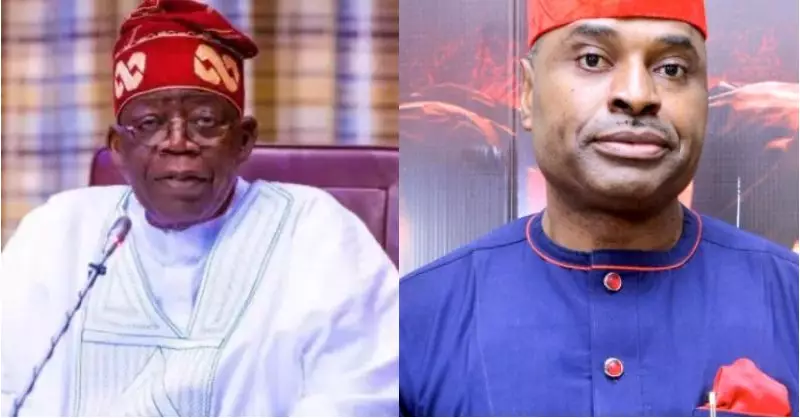
A prominent actor and politician has issued a stark warning about the state of Nigeria's democracy following a recent Supreme Court judgment. Kenneth Okonkwo, a chieftain of the African Democratic Congress (ADC), has strongly criticized the apex court's verdict which affirmed President Bola Tinubu's power to declare a state of emergency in Rivers State.
A Dangerous Precedent for Executive Power
Okonkwo voiced his concerns during an appearance on Channels Television's Sunrise Daily programme. The Supreme Court had ruled that the President possesses the constitutional authority to declare a state of emergency in any state facing a threat of a breakdown of law and order. Furthermore, the court stated that during such a period, the President may suspend elected officials, provided this suspension is for a limited time.
This judgment was delivered in response to a suit filed by states governed by the Peoples Democratic Party (PDP). They had challenged President Tinubu's declaration of a state of emergency in Rivers State, a move that led to the suspension of elected state officials for a period of six months. The Supreme Court had initially reserved judgment on this case in October before making its final ruling.
Jurisdiction Questioned and a Nationwide Threat
Okonkwo's primary criticism hinges on the court's procedural approach. He argued that after striking out the case for lack of jurisdiction, the Supreme Court should have refrained from making any further pronouncements on the substantive issues. According to him, the court's additional comments, despite dismissing the case, create legal uncertainty.
"They said they don't have jurisdiction, so they just stated an opinion," Okonkwo remarked. "It means that what they stated is an opinion, but their opinion still matters in legal issues." He maintained that the apex court should have strictly limited itself to declining jurisdiction without offering opinions that could confuse the nation's democratic processes.
He painted a dire picture of the potential consequences of this legal opinion. "What this means is that the President now has the right to suspend 36 governors at the same time," Okonkwo warned. "He can declare a state of emergency nationwide and rule Nigeria with the military for a limited time."
Constitutional Limits and Democratic Safeguards
While acknowledging the President's constitutional power to declare a state of emergency, Okonkwo insisted that the constitution does not explicitly grant the authority to suspend elected officials. He expressed deep concern that the Supreme Court's pronouncement, even as an obiter dictum (an opinion not essential to the judgment), sets a dangerous precedent that could enable excessive executive power.
"If I were in their position, I wouldn't have done that," he said regarding the court's actions. "As an apex court, they have the right to simply decline jurisdiction and not make any other comments, rather than throwing the nation into confusion."
Okonkwo's critique underscores a growing debate about the balance of power in Nigeria's democracy. His warning suggests that this Supreme Court verdict, focused on the Rivers State emergency, could have far-reaching implications for federal-state relations and the checks on presidential authority across the entire country.