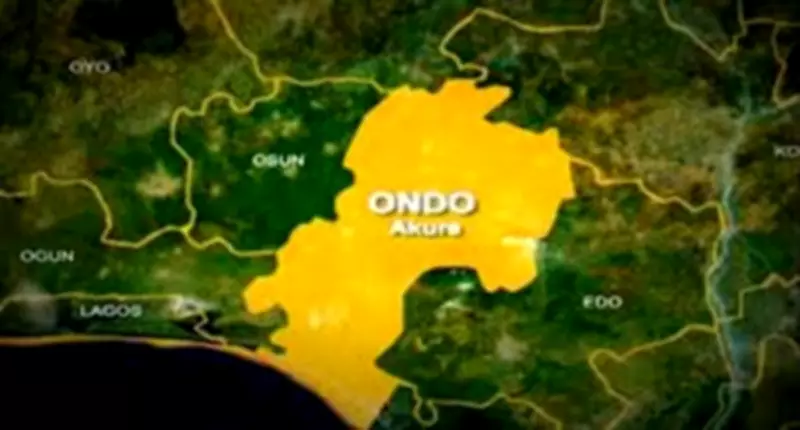
Ondo Attorney General Presents UK Archive Evidence to Affirm Eba Island Ownership
Olukayode Ajulo, the Attorney General and Commissioner for Justice of Ondo State, has presented comprehensive historical, legal, and geographical evidence to counter claims by the Ogun State government over the ownership of Eba Island. In a detailed statement to journalists, Ajulo defended Ondo State's claim, describing the dispute as surprising given official records and decades of administrative control that have consistently recognized the territory as part of Ondo.
Personal Verification Through UK Research
"I speak as one who has served Ondo State with distinction and has seen firsthand the recognition of Eba Island as part of our territory," Ajulo stated. "The Nigerian National Petroleum Corporation and other federal agencies visited the island on multiple occasions and without equivocation recognized it as belonging to Ondo State. Yet, today, Ogun State lays claim to it. What has changed?"
The claims prompted Ajulo to personally verify the historical records surrounding the island's ownership. "I undertook a solo forensic study in the United Kingdom, consulting the British Library, the National Archives at Kew and other repositories of colonial records," he explained. "I examined original treaties, maps, intelligence sketches, cadastral surveys and gazette notices. Each document confirmed that Eba Island is an integral part of Atijere in Ilaje Local Government Area of Ondo State."
Historical and Administrative Background
Ajulo detailed that before the 1914 amalgamation of Nigeria, the island formed part of the Ilaje/Mahin territory within the Lagos Colony. "In 1885, the Amapetu of Mahin signed a protection treaty with colonial authorities, bringing the Mahin Kingdom, including Atijere and Eba Island, under Lagos Colony's aegis," he said.
According to his research, after the amalgamation of Nigeria, the island became part of Ondo Province, specifically the Okitipupa Division, where it was designated a forestry reserve under the Atijere Native Authority. By 1933, Atijere had become the administrative headquarters of the district, hosting the Native Court where chiefs appointed by the Amapetu presided over local governance.
"Eba Island fell squarely under the authority of Atijere Native Court. By 1950, it was incorporated into the Ilaje District Council, with Atijere as its headquarters," Ajulo noted. He added that through various local government reforms, including the creation of Ilaje/Ese-Odo Local Government in 1975 and the later establishment of Ese-Odo Local Government Area in 1997, the island remained part of Ilaje Local Government Area.
Human, Cultural, and Legal Ties
Ajulo highlighted the human and cultural ties between the island and the Ilaje people. "Generations of Ilaje indigenes have lived, fished, farmed and worshipped on Eba Island. They have never once paid allegiance or royalties to Ogun State authorities. River Ufara serves as the natural and eternal boundary between Ilaje land and Ijebu territory. The facts speak for themselves," he emphasized.
He further explained the legal basis for Ondo's claim, citing Section 44(3) of the 1999 Constitution and Item 39 of the Exclusive Legislative List, which vest ownership of mineral resources in the federal government while determining derivation benefits based on territorial location and host communities.
"Ownership cannot be established through press releases, media narratives, or opportunistic assertions; it is anchored in historical title, continuous administration and customary law. No gazette, court ruling or boundary adjustment has transferred Eba Island to Ogun State," Ajulo asserted.
Documentary Evidence and Warnings
Documents from his research included:
- Colonial administrative maps from the Lagos Colony era
- Intelligence reports and provincial sketches after the amalgamation
- Treaty drawings from the 1885 Mahin protection agreement
- Gazette notices and ethnographic maps placing the island within Ondo jurisdiction
- Forestry reserve plans and cadastral surveys confirming Atijere Native Authority oversight
Ajulo warned that competing claims over the island could create tensions along the coastal communities of both states. "Ogun's assertions risk generating communal conflicts and undermining the peace along our shared coastline," he said. "Ondo State will defend its territorial integrity with every lawful weapon in the courts, before the National Boundary Commission and in the court of public opinion."
Call for Resolution and Final Assertion
He urged calm and dialogue while stressing that the matter should be resolved through constitutional and legal processes. "Let there be no shadow of doubt: Eba Island is Ondo State's yesterday, today and forever. The oil beneath it is a divine endowment for the people of Ilaje and for the development of our state," Ajulo concluded, reinforcing Ondo State's unwavering position on the matter.