Pope Leo Delivers Powerful Condemnation of War During Palm Sunday Address
In a striking and direct Palm Sunday address, Pope Leo issued a profound condemnation of war, declaring that God rejects the prayers of leaders whose "hands are full of blood." The pontiff's remarks came as the conflict involving Iran entered its second month, with the Vatican expressing growing alarm over the escalating violence.
Rejecting Violence in the Name of Jesus
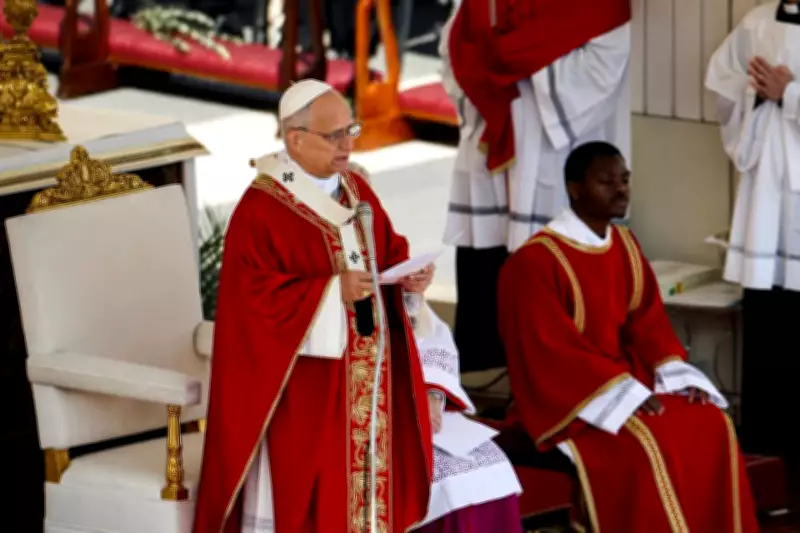
Speaking before tens of thousands of faithful gathered in St. Peter's Square under bright sunshine, Pope Leo emphasized that Jesus, whom he described as the "King of Peace," cannot be invoked to justify acts of war or violence. "This is our God: Jesus, King of Peace, who rejects war, whom no one can use to justify war," the Pope stated unequivocally to the crowd marking the beginning of Holy Week.
He elaborated further, asserting that God "does not listen to the prayers of those who wage war but rejects them, saying, 'Even though you make many prayers, I will not listen: Your hands are full of blood.'" This biblical reference underscored the moral and spiritual consequences of engaging in armed conflict.
Context of the Iran Conflict and Vatican's Stance
Although Pope Leo did not name any specific leaders or nations directly, his comments were widely interpreted as a response to the ongoing war involving Iran. In recent weeks, the Vatican has intensified its criticism of the conflict, with the Pope repeatedly calling for an immediate ceasefire and condemning military air strikes as indiscriminate and devastating.
The pontiff's latest appeal drew on the example of Jesus in the final hours before his arrest and crucifixion, highlighting that force was never part of his divine message. "(Jesus) did not arm himself, or defend himself, or fight any war," Pope Leo explained. "He revealed the gentle face of God, who always rejects violence. Rather than saving himself, he allowed himself to be nailed to the cross."
Growing Alarm Over Religious Justification for War
The unusually direct nature of Pope Leo's remarks reflects the Vatican's deepening concern over the conflict, particularly as some political figures have increasingly employed religious language to defend military actions. By explicitly stating that God does not heed the prayers of war-makers, the Pope aimed to counter any attempts to sanctify violence through faith-based rhetoric.
This Palm Sunday address not only reinforced the Catholic Church's longstanding advocacy for peace but also served as a moral clarion call to global leaders, urging them to prioritize dialogue and reconciliation over armed confrontation. The message resonates strongly in a world where conflicts continue to claim innocent lives and destabilize regions.