The Supreme Court of Nigeria's recent verdict affirming President Bola Tinubu's constitutional authority to declare a state of emergency and suspend elected officials has sent shockwaves through the nation's political landscape. While legally settling the dispute over the March 2025 emergency rule in Rivers State, the judgment has opened a Pandora's box of anxieties about the balance of power, democratic norms, and the potential for executive overreach as the country marches toward the 2027 general elections.
A Split Decision and Its Immediate Fallout
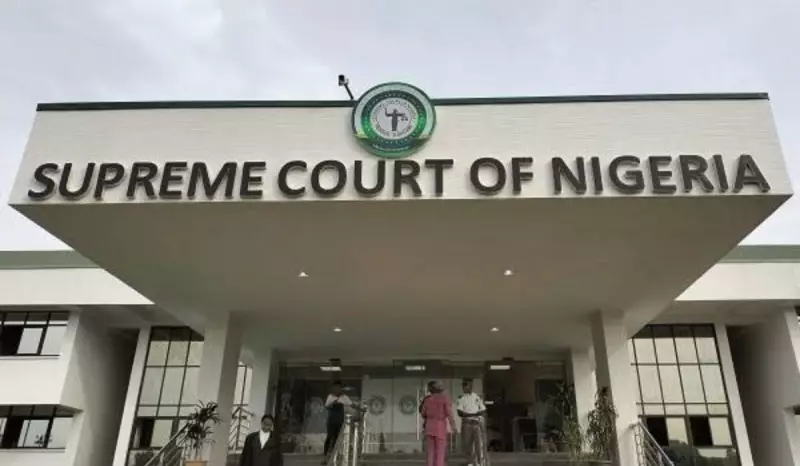
In a landmark ruling delivered on 16 December 2025, a seven-member panel of the apex court reached a split decision. The majority judgment, delivered by Justice Mohammed Idris and supported by five other justices, held that President Tinubu acted within his powers under Section 305 of the 1999 Constitution when he declared an emergency in Rivers State on 18 March 2025 and appointed a sole administrator, effectively suspending Governor Siminalayi Fubara, his deputy, and the state legislature.
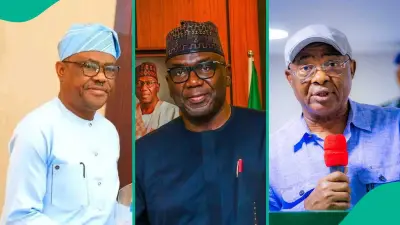
However, the lone dissenting voice, Justice Obande Ogbuinya, rejected the suspension of elected officials, a position that did not prevail. The case was originally brought by some Peoples Democratic Party (PDP) governors who argued the President acted ultra vires by dismantling democratic structures in the oil-rich state.
Legal and Political Interpretations Diverge Sharply
The ruling has triggered a torrent of conflicting interpretations from stakeholders across the legal and political spectrum. Mr. Peter Ameh, National Secretary of the Coalition of United Political Parties (CUPP), criticized the judgment, stating it was largely decided on jurisdictional grounds and left critical due process questions unresolved. He argued it "buries federating units" and represents an irresponsible centralization of power that could be exploited politically.
"The term 'breakdown of law and order' was also not defined, leaving room for political manipulation," Ameh noted, warning that the ruling tilts the balance of power decisively towards the federal executive and could have a chilling effect on opposition parties ahead of 2027.
Conversely, supporters of the verdict see it as a reinforcement of constitutional order. Bankole Oluwajana, a lawyer and former APC National Vice Chairman, asserted the judgment "could not have been otherwise," praising President Tinubu's prompt action for preventing a full-blown crisis in Rivers State. He dismissed critics as "mere opposition voices seeking attention."
Broader Implications for Nigerian Federalism and Democracy
Analysts are deeply divided on the long-term consequences. Dr. Festus Adedayo, a lawyer and former media adviser, warned that the judgment could haunt Nigeria's democracy, as future presidents might rely on it to sack sub-national governments at their whim. He lamented the delayed timing of the verdict, noting that the six-month emergency had already expired by September 2025, rendering the case largely academic.
Dr. Emma Jimo, a political science lecturer, offered a different perspective, stating the judgment adequately addressed due process and affirmed the constitutional checks-and-balances role of the presidency for federal stability.
Legal practitioner Abdullahi Wahab pointed out that the ruling strengthens the President's authority but raises unanswered procedural questions. He suggested the National Assembly could provide more clarity on Section 305 to prevent absolute power.
The debate has spilled onto social media, with users like Egi Nupe arguing that media reports misrepresented the judgment, claiming the Supreme Court did not explicitly grant the President power to suspend state institutions. This highlights the confusion and partisan interpretations surrounding the complex legal pronouncement.
As Nigeria looks ahead, the Supreme Court's verdict on the Rivers State emergency rule is more than a closed legal chapter; it is a potent precedent that has fundamentally unsettled the polity and reshaped the nation's power dynamics, setting the stage for intensified political and legal battles in the years to come.