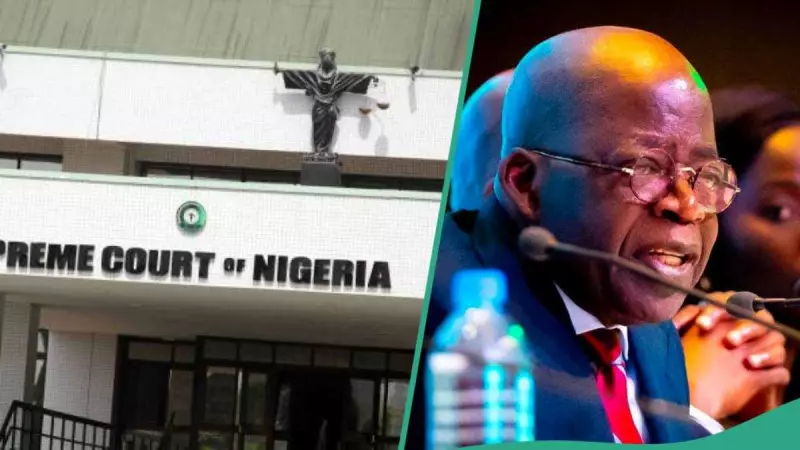
The Supreme Court of Nigeria has publicly called out the federal government for its failure to implement a landmark judgment granting full financial autonomy to the country's 774 local government areas. The apex court made this significant call while delivering its verdict on a separate lawsuit filed by the Osun state government against the federal government.
Court Dismisses Osun's Suit, Upholds LG Autonomy
Justice Mohammed Idris, who delivered the ruling, upheld a preliminary objection raised by the Attorney General of the Federation. The objection challenged the Supreme Court's jurisdiction to hear the suit filed by Osun state, which sought to compel the federal government to release withheld allocations meant for local governments within the state.
The court firmly dismissed the application from the Osun state government. In its reasoning, the Supreme Court stated that local governments are autonomous entities capable of suing and being sued in their own right. Consequently, the Osun state government lacked the legal standing to institute a case on behalf of the 30 local government councils in the state.
Justice Idris ruled that the Local Government Councils (LGCs) themselves were the proper parties to challenge any action by the federal government. He also dismissed the argument presented by the Osun state Attorney General that the suit was filed in the public interest.
Background of the Osun-FG Dispute
The legal conflict between Osun state and the federal government has its roots in the political transition following the 2022 election of Governor Ademola Adeleke. Upon taking office, Governor Adeleke sacked local government chairmen who were elected on the platform of the All Progressives Congress (APC).
This decision was initially backed by a court order but was later overturned by the Court of Appeal in Ondo state. The state government has consistently denied this appellate court's decision, leading to an ongoing stalemate over the control and funding of the local councils, which triggered the suit now dismissed by the Supreme Court.
Recap of the Landmark 2024 Autonomy Judgment
The Supreme Court's call for implementation refers back to its historic judgment delivered in July 2024. In that ruling, the court granted full financial autonomy to all 774 local governments across Nigeria.
The 2024 judgment declared it unconstitutional for state governors to withhold funds or fail to conduct elections for local government chairmen and councillors. A key outcome was the abolition of the joint state-local government accounts, which had given state governors significant control over council funds.
Furthermore, the apex court empowered the federal government to withhold statutory allocations from any local government where democratic elections for chairman and councillors have not been held, effectively banning the appointment of caretaker committees by governors.
Timeline for Implementation and Federal Government's Stance
The Presidency, under President Bola Tinubu, has previously indicated that the practical implementation of the Supreme Court's autonomy judgment would commence by the end of January. Sunday Dare, a spokesperson for the President, explained that the delay was to allow necessary mechanisms to be put in place, a process he stated has now been completed.
The Supreme Court's latest remarks serve as a powerful judicial reminder to the executive branch to follow through on this critical constitutional matter, which aims to strengthen grassroots democracy and governance across Nigeria.