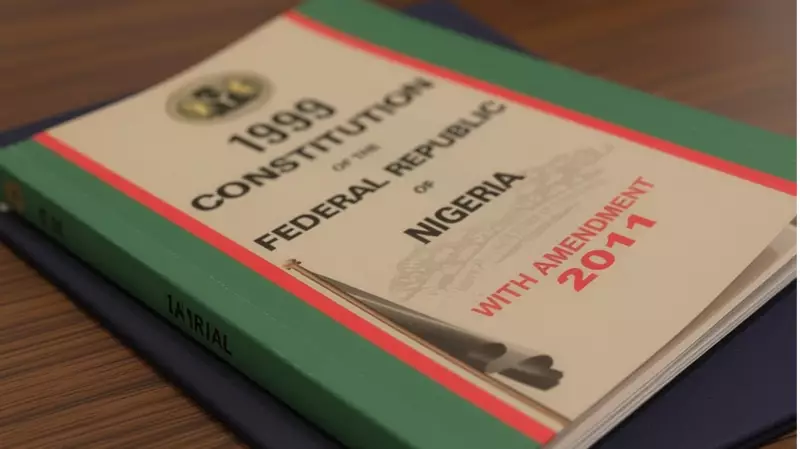
In a scathing critique, Senior Advocate of Nigeria (SAN), Ebun-Olu Adegboruwa, has raised alarm over a recent Supreme Court judgment, arguing it dangerously expands presidential powers and undermines Nigeria's federal structure. The analysis, published on 30 December 2025, centers on the court's interpretation of Section 305 of the 1999 Constitution, which governs the declaration of a state of emergency.
The Core Jurisdictional Issue and a Missed Opportunity
Adegboruwa begins by questioning the Supreme Court's approach. He notes that after declining jurisdiction in a specific case, the court proceeded with what it called a 'considered discussion' of Section 305. The SAN argues that the matter should have ended once jurisdiction was denied, as a court lacks power for further intervention without it.
He posits that the controversial declaration of a state of emergency in Rivers State, made without consulting its people, provided a valid cause of action for any other state to seek judicial protection. This precedent, he believes, should have empowered states to challenge potential arbitrariness and civilian dictatorship from the federal center.
Supreme Court's 'Considered Discussion': Cementing Discretionary Power
The article meticulously examines the Supreme Court's reasoning. The apex court highlighted that Section 305 authorizes a presidential proclamation under specific conditions like war or breakdown of public order. However, it crucially noted that, unlike constitutions of countries like India and Pakistan, Nigeria's 1999 Constitution does not expressly allow the President to assume or displace state institutions.
The court stated this omission was deliberate, reflecting a commitment to federalism and state autonomy. Yet, Adegboruwa observes, the court also emphasized that the Constitution is silent on the "extraordinary measures" that may follow an emergency declaration, calling this silence intentional. It concluded that the President holds discretion to determine necessary measures, subject to constitutional limits and judicial review.
"The 'considered discussions' embarked upon by the Court invariably cemented the discretionary powers of the President," Adegboruwa writes. He suggests the court's sophistry effectively rubber-stamped the President's action, providing wider discretion and even a "guideline on how to perfect it" for future cases.
Historical Precedents of Judicial Acquiescence
The SAN draws parallels with other troubling events where judicial intervention was perceived as delayed or ineffective. He references the controversial removal of a Chief Justice of Nigeria via an ex-parte order and the swearing-in of a replacement, a situation the judiciary "danced around." He also cites the suspension of a governor, deputy, and state assembly members, where the judiciary "kept blowing the smoke until the fire... was completely extinguished."
He contrasts the Rivers State case with emergencies in Plateau, Ekiti, Adamawa, and Yobe states, accusing the court of sitting on the fence and maintaining "judicial neutrality in the face of a monumental constitutional aberration."
The Supreme Court did include a caveat in its conclusion, stating that presidential discretion is not unfettered, measures must be temporary and proportionate, and any permanent displacement of democratic institutions would be an aberration. It also clarified that outside a valid emergency, the President has no power to interfere with state institutions.
However, Adegboruwa's central warning remains stark: the ruling, through its elaborate discussions, may have inadvertently provided a constitutional shield for the very arbitrariness it sought to caution against, leaving Nigeria's federal balance in a precarious state.