The Supreme Court of Nigeria has adjourned the hearing of the protracted legal dispute over the Kano Emirate seat to April 19, 2027, a date that falls just two months after the scheduled general election. This decision, announced on Monday, April 20, 2026, after preliminary arguments from all parties, has raised questions about potential political motivations behind the timing.
Background of the Kano Royal Tussle
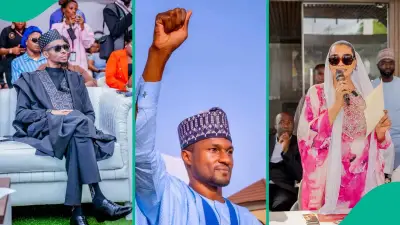
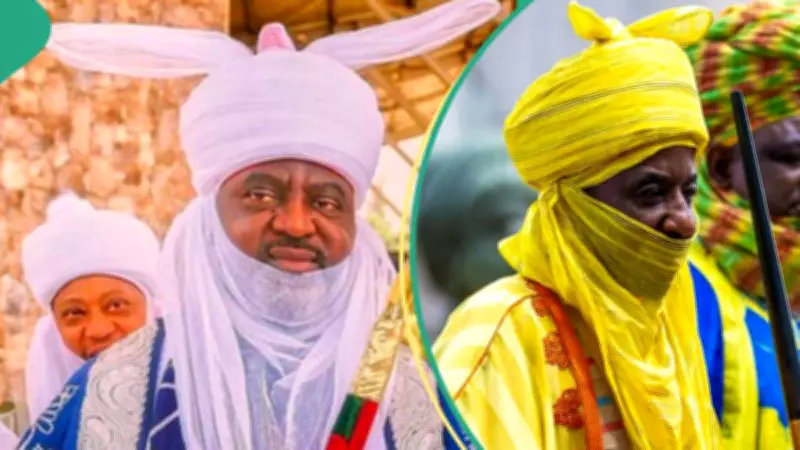
The conflict centers on two claimants to the emirate throne: Emir Muhammadu Sanusi II, who was initially removed by the administration of former Governor Abdullahi Ganduje through a constitutional amendment, and later reinstated by Governor Abba Kabir Yusuf's government, which also altered local government and chieftaincy rules. The other claimant, Aminu Ado Bayero, was installed by Ganduje but subsequently dethroned by Yusuf. The political landscape has shifted as Yusuf and Ganduje now belong to the same party, adding a layer of complexity to the case.
Analyst Dispels Political Influence Claims
Political analyst Omotayo Yusuf, in an exclusive interview, dismissed the notion that the election is the primary reason for the adjournment. He emphasized the historical significance of the Kano Emirate, a first-class traditional stool, which typically requires years of litigation to reach a conclusive judgment. "I do not think that the general election is the hook on which the Supreme Court is hanging its decision," Yusuf stated. "Due to the historical angle, knowledgeable people postulated that for a first-class seat like the Kano Emirate, it will take years of litigation to make any concrete final decision."
He acknowledged that political dynamics cannot be entirely ruled out, given how Kano's political leaders have shifted allegiances, but maintained that the delay is more attributable to the sensitivity of the traditional institution. "It is not to rule out the political angle, but I think it will drag on for years until a concrete decision is made," he added.
Broader Implications
The adjournment comes amid heightened political tension in Kano State, with the general election approaching. The Supreme Court's decision to postpone the hearing until after the polls has fueled speculation, but Yusuf's analysis suggests a focus on legal thoroughness over electoral timing. The case continues to draw national attention, highlighting the interplay between traditional institutions and modern governance in Nigeria.
In related news, Emir Muhammadu Sanusi II has also been vocal on national issues, recently criticizing President Bola Tinubu's borrowing policies following the removal of the fuel subsidy. His remarks have sparked mixed reactions among Nigerians, further underscoring the emir's influential role in public discourse.