Supreme Court Overturns Lower Court Ruling on Emefiele's Assets
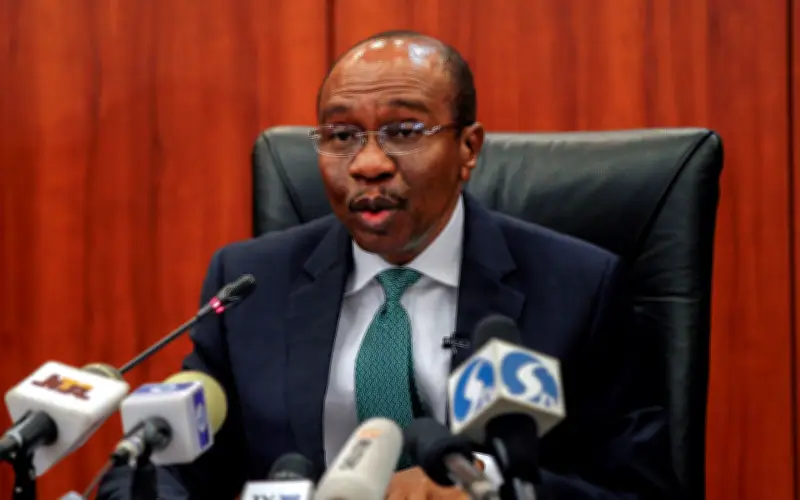
The Supreme Court of Nigeria has reinstated the interim forfeiture of several properties belonging to former Central Bank of Nigeria (CBN) Governor Godwin Emefiele. The apex court, in a unanimous decision delivered on Friday, July 17, 2026, set aside the judgment of the Court of Appeal which had earlier quashed the forfeiture order granted by the Federal High Court in Lagos.
The properties affected include prime real estate located in Lekki and Ikoyi areas of Lagos State, as well as a property in Agbor, Delta State. The Economic and Financial Crimes Commission (EFCC) had secured the initial forfeiture order in 2023, alleging that the assets were acquired with proceeds of unlawful activities during Emefiele's tenure as CBN governor.
Background of the Forfeiture Case
The EFCC approached the Federal High Court in Lagos in 2023, seeking an interim forfeiture of the properties. The commission argued that the assets were linked to money laundering and other financial crimes. The trial court granted the order, but Emefiele challenged it at the Court of Appeal, which reversed the forfeiture in a ruling delivered in 2025.
Dissatisfied with the appellate court's decision, the EFCC appealed to the Supreme Court. The commission contended that the Court of Appeal erred in law by setting aside the forfeiture order without proper consideration of the evidence presented.
Supreme Court's Verdict and Reasoning
In the lead judgment read by Justice John Okoro, the Supreme Court held that the Court of Appeal acted outside its jurisdiction by delving into the merits of the case at the interim stage. The apex court emphasized that interim forfeiture orders are temporary measures designed to preserve assets pending the final determination of the case.
Justice Okoro stated: "The Court of Appeal ought not to have overturned the interim forfeiture order without allowing the trial court to fully hear the parties on the substantive application. The interim order is merely preservative in nature, and its discharge at this stage was premature and prejudicial to the EFCC's case."
Impact of the Ruling
The Supreme Court's decision effectively restores the status quo ante, meaning the EFCC can now take possession of the properties pending the conclusion of the criminal trial against Emefiele. The properties include a duplex in Lekki Phase 1, a mansion in Ikoyi, and a residential building in Agbor.
Legal experts have described the ruling as a significant victory for the EFCC in its ongoing fight against corruption. The commission has been investigating multiple allegations of financial impropriety against Emefiele, including the illegal diversion of N30 billion from the CBN's anchor borrowers' programme.
Emefiele's Legal Team Responds
Emefiele's counsel, Mike Ozekhome (SAN), expressed disappointment with the Supreme Court's decision. He stated that his client would explore all legal options, including a possible review application. "We respect the Supreme Court but believe the ruling overlooks critical procedural flaws in the EFCC's application. We will continue to defend our client's rights," Ozekhome said.
The EFCC, through its spokesperson, welcomed the judgment, describing it as "a reaffirmation of the judiciary's commitment to holding public officials accountable." The commission reiterated its determination to ensure that assets acquired through illicit means are recovered for the benefit of the Nigerian people.
Broader Implications for Asset Recovery
This ruling is expected to bolster the EFCC's asset recovery efforts, which have faced legal challenges in recent years. The Supreme Court's clarification on the scope of interim forfeiture orders provides a clearer legal framework for such proceedings.
As the case returns to the Federal High Court, all eyes will be on the substantive hearing, where the EFCC must prove that the properties were indeed acquired with proceeds of crime. The outcome of that hearing could have far-reaching consequences for Nigeria's anti-corruption campaign.