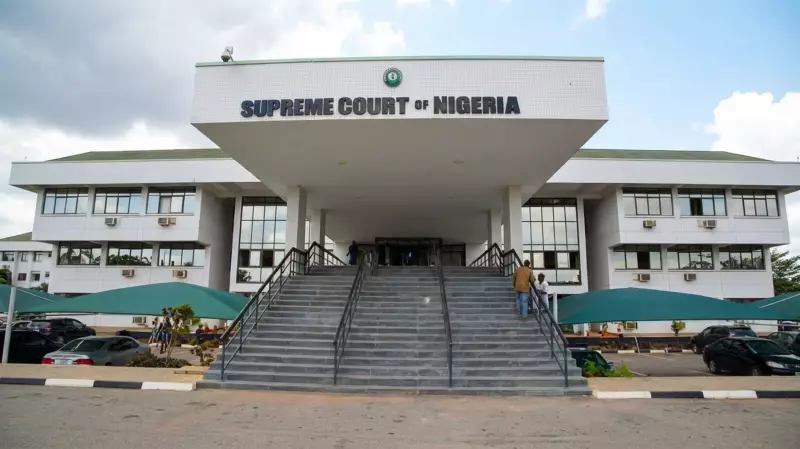
In a landmark ruling delivered on Friday, 6th December 2025, the Supreme Court of Nigeria struck out a major lawsuit concerning the financial autonomy of local governments. The case, initiated by Osun State against the Federal Government over withheld funds, was dismissed in a split decision.
Court's Majority Decision and Legal Standing
The apex court, in a decisive six-to-one majority judgment, held that the Attorney General and Commissioner for Justice of Osun State had no legal right to file the case on behalf of the state's 30 local government areas. Justice Mohammed Baba Idris, who delivered the lead judgment, clarified the proper legal channel. He stated that the democratically elected local government officials, having been duly inaugurated, are the proper persons with the jurisdiction to sue or be sued directly.
Justice Idris emphasized that since there was no presented evidence showing that the Osun Attorney General was formally briefed or instructed by the local councils, he should not have instituted the legal action on their behalf. This procedural point formed the core reason for striking out the suit.
Strong Condemnation of Federal Government's Action
Despite dismissing the suit on procedural grounds, the Supreme Court bench delivered a stern rebuke to the Federal Government. The court unequivocally declared that the Federal Government was wrong in withholding the statutory allocations meant for the local governments in Osun State.
Justice Idris stated that this action by the Federal Government constituted a grave breach of the 1999 Constitution. He described the Federal Government's hand as "soiled" for unjustly seizing the funds. The court admonished the Federal Government to strictly ensure that all future allocations are channeled directly into the accounts of the local government councils, as required by law.
Furthermore, the court dismissed contempt allegations leveled by the Attorney General of the Federation against Osun State. In a striking reversal, the justices found that the AGF was himself in greater contempt for failing to disburse the funds as mandated by the constitution.
The Lone Dissenting Voice
Justice Emmanuel Akomaye Agim offered a solitary dissenting opinion, disagreeing with the six justices in the majority. Justice Agim argued that the Osun State Attorney General did indeed possess the legal right to institute the case on the matter.
He strongly criticized the Federal Government's action of withholding the funds, describing it as being in "bad taste." Justice Agim warned that such actions by the federal authority were capable of crippling the day-to-day activities and governance at the crucial local government level, harming grassroots development and service delivery.
This ruling underscores the ongoing tension and complex legal battles surrounding fiscal federalism and the autonomy of local governments in Nigeria. While the specific case from Osun was dismissed, the Supreme Court's strong language condemning the withholding of funds sets a significant precedent for similar disputes across the country.