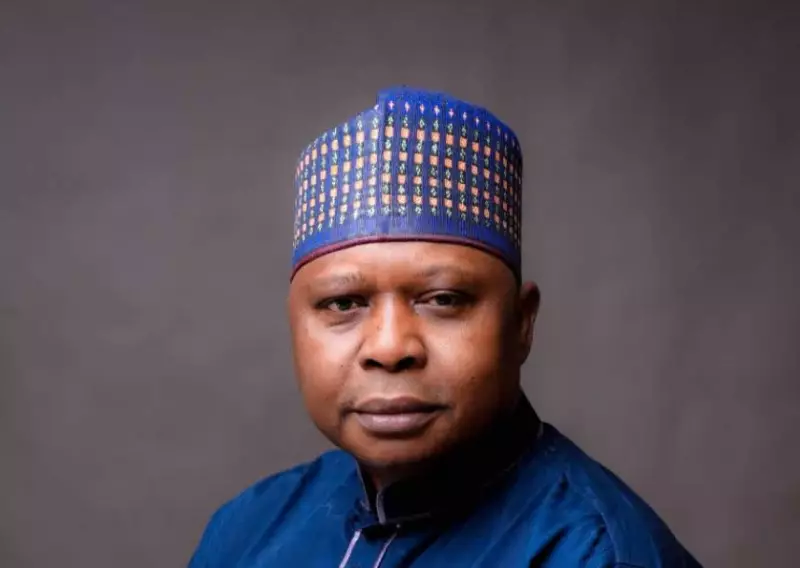
The internal crisis rocking Nigeria's main opposition party, the Peoples Democratic Party (PDP), has taken a fresh legal turn. The faction loyal to Kabiru Turaki, SAN, has formally requested that Justice Joyce Abdulmalik of the Federal High Court in Abuja recuse herself from presiding over a suit filed against its leadership by the camp of the Federal Capital Territory Minister, Nyesom Wike.
Grounds for Recusal: Apprehension of Bias
In a motion on notice filed by a team of lawyers led by Chief Chris Uche, SAN, the Turaki-led leadership sought two primary prayers from the court. The first is an order for Justice Abdulmalik to recuse herself from the suit, citing circumstances that give rise to a reasonable apprehension of bias. The second prayer requests that the case be remitted to the Chief Judge of the Federal High Court for reassignment to another judge.
Uche argued that the right to a fair hearing before an impartial tribunal is a constitutional guarantee under Section 36(1) of the 1999 Constitution (as amended). He stated that his clients have a well-founded fear of bias based on the judge's handling of the suit, marked FHC/ABJ/CS/2501/2025.
The senior lawyer revealed that his clients had previously petitioned the Chief Judge of the Federal High Court, Justice John Tsoho, requesting that no PDP internal dispute cases be assigned to Justice Abdulmalik and two other judges due to past antecedents and perceived partisanship. Despite this objection, the matter was assigned to her court.
Curious Patterns and Ex Parte Orders
Uche presented twelve grounds for the application, highlighting what he described as curious patterns. He noted that the suit was filed on November 21, 2025, and by November 25, Justice Abdulmalik had made ex parte orders against the defendants. He argued that the format and template of these orders were strikingly similar to those previously used by Justice Omotosho of the same court in a related matter against the same defendants.
"While giving the impression on paper that the prayers in the motion were being refused, the judge granted even more far-reaching orders against the defendants," Uche contended, suggesting this similarity exceeded coincidence.
He further argued that the orders, made at an interim stage when there was no real urgency, directly touched on and determined the main substance of the suit. This, according to him, deepened the legitimate apprehension that his clients would not receive a fair and impartial hearing.
The Core of the Legal Battle
The substantive suit was initiated by the Wike-led faction, represented by its acting National Chairman, Alhaji Mohammed Abdulrahman, and the factional National Secretary, Senator Samuel Anyanwu. The plaintiffs, through their lawyer Dr. Onyechi Ikpeazu, SAN, seek several injunctions, including:
- An order stopping the police and DSS from allowing the Turaki-led leadership access to the PDP's national secretariat at Wadata Plaza, Abuja.
- An order restraining INEC from accepting any other office address from the Turaki faction.
- An injunction preventing the Turaki group from parading themselves as PDP representatives.
The plaintiffs also seek a declaration that INEC, the Inspector-General of Police, the FCT Police Commissioner, and the DSS are bound to enforce previous court judgments delivered by Justices Omotosho and Lifu.
In a separate but related suit marked FHC/ABJ/CS/2520/2025, the Turaki-led PDP is seeking an order directing the police to vacate the party's national headquarters at Wadata Plaza.
Court Adjournments and Next Steps
When the first suit came up for hearing, lawyers for both parties informed Justice Abdulmalik that they had not yet received all filed processes. Consequently, the judge adjourned the matter to January 14, 2026, to allow parties to regularise their processes and for the hearing of pending applications.
The second suit filed by the Turaki faction was also adjourned. Justice Abdulmalik directed all parties to file their processes and fixed January 16, 2026, for the hearing of all pending applications and the substantive matters.
This latest development underscores the deepening legal entanglement within the PDP, as competing factions leverage the judiciary in a fierce battle for control of the party's structure and assets. The outcome of the recusal application could significantly influence the trajectory of this high-stakes political dispute.