
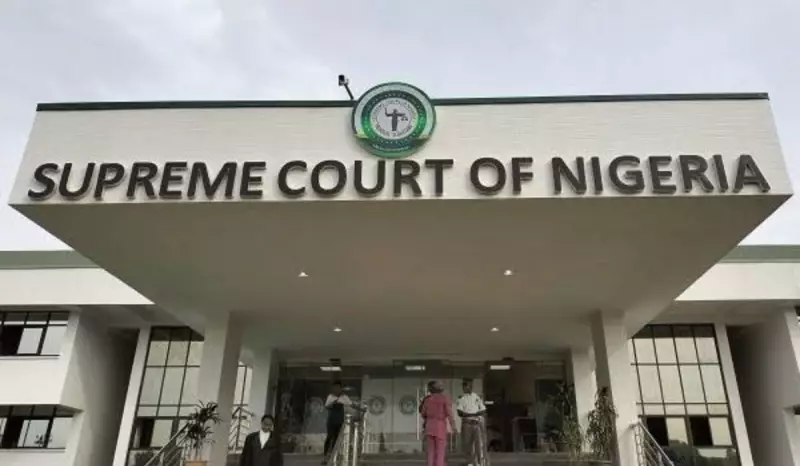
More than a year and a half after a landmark Supreme Court judgment, Nigeria's state governors continue to resist full financial autonomy for local governments, exploiting deep-seated ambiguities within the nation's constitution. The July 2024 ruling, which mandated direct allocations from the Federation Account to the 774 Local Government Areas (LGAs), has seen uneven and largely superficial compliance, leaving the third tier of government under the firm grip of state executives.
Widespread Non-Compliance and Persistence of Joint Accounts
Despite the apex court's clear position in July 2024, declaring the State-Local Government Joint Account (JAAC) unconstitutional, the practice remains entrenched across the federation. Investigations reveal that most of the 36 states have not demonstrated full compliance with the directive for councils to receive their monthly allocations directly.
The Central Bank of Nigeria (CBN) had outlined a procedure requiring councils to open dedicated accounts to facilitate direct disbursement from the Federation Accounts Allocation Committee (FAAC). However, there is no concrete evidence that any of the 774 LGAs has successfully opened such an account with the CBN.
In Enugu State, for instance, no local government maintains the required CBN account. Funds are still channeled through the state's Joint Allocation Accounts Committee. Governor Peter Mbah has publicly denied deducting from council funds, a claim supported by an anonymous chairman. Yet, the same 17 council chairmen recently granted a power of attorney to the state's Board of Internal Revenue to collect and manage their revenues.
The pattern repeats nationwide. In Imo State, allocations are paid to the governor, who then releases funds only for salaries and minimal costs. Kwara, Lagos, Cross River, Osun, Ondo, Ogun, and Ekiti states all still operate under the JAAC framework. In Kaduna, while the government claims to release full allocations, it cannot confirm if councils have independent CBN accounts. A Bauchi State chairman dismissed inquiries on the subject as "disrespectful."
Constitutional Loopholes Fueling Gubernatorial Resistance
At the heart of the stalemate are unresolved contradictions within the 1999 Constitution of Nigeria. Governors are leveraging these gaps to justify their continued control over local government finances and administration.
Section 7(1) of the Constitution guarantees a system of democratically elected local governments but simultaneously empowers state assemblies to legislate on their structure, finance, and functions. This provision has been interpreted by state governments as subordinating LGAs to state control.
Furthermore, Section 162(6) establishes the State Joint Local Government Account, while subsections (7) and (8) give state authorities the power to determine how funds are shared. Although the Supreme Court's judgment sought to override this by mandating direct payment, governors argue the constitutional recognition of the joint account remains, creating a legal grey area.
Other weaknesses include the Fourth Schedule, which assigns functions like primary education and local roads to councils but provides no sanctions when states usurp these roles. Additionally, Section 8 allows states to initiate the creation of new LGAs, fueling the argument that they are mere creations of the states.
The control mechanism is cemented by State Independent Electoral Commissions (SIECs), established by Section 197. Since SIECs are appointed and funded by state governments, council elections often result in one-party sweeps, ensuring chairmen owe their loyalty to the governor.
Stakeholders React and Warn of Consequences
The delay in implementing the court order has drawn sharp reactions from various quarters. President Bola Tinubu, whose administration initiated the suit through the Attorney-General, recently issued a stern warning to governors. He threatened to use an Executive Order to bypass states and send allocations directly to LGAs, stating he had "the knives and the yam" to cut the funds before FAAC calculations.
Legal experts have condemned the resistance. Analyst Tope Temokun described the non-compliance as anti-party, anti-constitutional, and anti-people, noting that governors across party lines have united to maintain the status quo. He emphasized that judicial pronouncements alone cannot dismantle decades of centralized control without legislative reinforcement.
Elder statesman Chekwas Okorie expressed worry over the federal government's inability to enforce the judgment 17 months after securing it. Meanwhile, APC stalwart Jamiu Ekungba cited the need for extensive training for local council managers to handle the volume of money autonomously, though he disagreed with governors using this as an excuse for delay.
The financial stakes are enormous. Verified data shows that between January and November 2025, a total of N4.9 trillion was disbursed from the Federation Account to the 774 local governments. However, there is no evidence this money went directly to council coffers.
Observers warn that continued non-implementation undermines grassroots development, violates a Supreme Court order, and raises serious questions about constitutional compliance and intergovernmental accountability as the nation approaches the 2027 general elections.




