
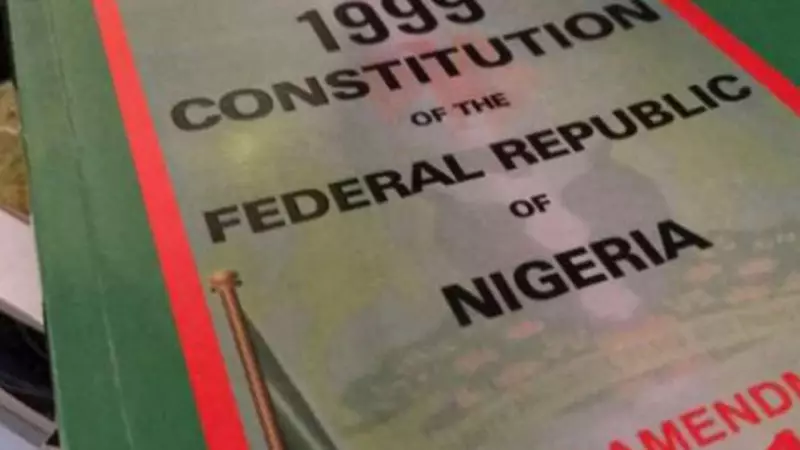
The structure of local government administration in Nigeria remains mired in a deep-seated crisis, rooted in decades of arbitrary creation and political manipulation. This fundamental issue, which worsened significantly under military regimes, continues to defy resolution due to the rigidity of the 1999 Constitution, forcing the nation to endure its consequences.
The Historical Proliferation of Councils
The journey from a modest number of native authorities to the current bloated structure reveals a pattern of expansion. Before independence in 1960, Nigeria had 240 native authorities, distributed as 144 in the North, 55 in the West, and 47 in the East. By 1979, this figure had grown to 303 local governments across the federation.
The transformation of specific states highlights the scale of the proliferation. For instance, Lagos State operated with eight local governments in 1979, including Lagos-Island and Ikeja. Today, it has 20 as listed in the constitution. Similarly, the old Kano State, which had 20 councils in 1979, has since been split into Kano and Jigawa states, which now boast a combined 73 local governments.
Other states followed this pattern of fragmentation and multiplication. The old Imo State (22 LGs in 1979) split into Abia (18 LGs) and Imo (28 LGs). Rivers State (10 LGs) divided into Rivers (23 LGs) and Bayelsa (8 LGs). Ondo State's division birthed Ondo (18 LGs) and Ekiti (16 LGs). Even states like Ogun, which were not split, expanded from 10 to 20 local governments.
The Military Era and the 1996 Expansion
The most significant bulk creation occurred under military rule, a period some critics label as an era of "Military Nepotism." The number of local governments jumped from 589 in 1989 to the current 774. The last major creation exercise was orchestrated by the late General Sani Abacha in 1996.
General Abacha appointed a panel chaired by Chief Arthur Christopher Izuegbunam Mbanefo, a Chartered Accountant who later served as Nigeria’s Ambassador to the UN. The panel's secretary was Dr. Adamu Fika, now Chairman of the National Assembly Commission. Other notable members included Mrs. Adefemi Abeke Taire, Chief Kunle Oluwasanmi, Mr. El-Nathan from Adamawa, Alhaji Kofar Katsina, Chief Audu Ogbeh, and General Peter Ademokhai (rtd.).
The Root of the Conflict and a Proposed Solution
The crisis persists because the number of local governments directly impacts revenue allocation from the Federation Account. States with more councils receive more funds, creating constant tension and demands for new creations. This financial incentive ensures the conflict remains alive.
As a potential way out, analysts like the author suggest revisiting the fiscal federalism model in the 1963 Republican Constitution. Sections 140 and 141 of that constitution detailed a revenue-sharing formula based on regions and a Distributable Pool Account, allocating specific percentages to the Northern, Eastern, Western, and Mid-Western regions. Advocates argue that such a region-based system, rather than one tied to the number of local governments, could reduce conflict.
However, with the 1999 Constitution being notoriously difficult to amend, Nigeria seems stuck with a dysfunctional structure. The arbitrary expansion from 240 native authorities to 774 local governments stands as a testament to political engineering that has complicated governance, strained resources, and entrenched a lingering crisis at the grassroots of Nigeria's democracy.




