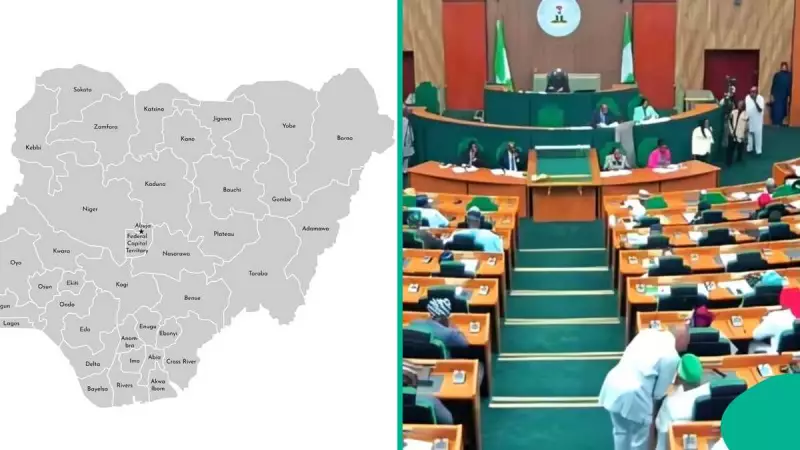
The year 2025 marked a significant period of constitutional debate and potential restructuring in Nigeria, as the National Assembly gave serious consideration to the creation of new states. Out of a substantial number of submissions, a select group of proposals gained notable legislative traction, signalling a growing national conversation about fairness, equity, and regional representation.
From 31 Proposals to 7 Front-Runners
The journey began in February 2025, when the House of Representatives Committee on Constitution Review, chaired by Deputy Speaker Benjamin Kalu, received a total of 31 proposals for new states. This flood of submissions set the stage for a year of intense deliberation, with the stated aim of enhancing administrative efficiency and fostering stronger regional voices within the federation.
By the close of the year, the field had narrowed considerably. Only seven of these ambitious bills managed to successfully scale the crucial second reading hurdle in the House of Representatives. This procedural step is a key indicator of a bill's viability and demonstrated growing momentum behind the push for a constitutional amendment to reshape Nigeria's geopolitical map.
The Seven Advancing State Creation Bills
The proposals that progressed represent diverse regions and historical aspirations across the country.
In the South-West, the move for Ibadan State to be carved out of Oyo State advanced on October 9, 2025. The bill, sponsored by Representative Abass Adigun, was debated and received sufficient support to move forward.
Similarly, the quest for Ijebu State from Ogun State saw its bill pass second reading on October 23, 2025. Sponsored by Olufemi Ogunbanwo and others, proponents highlighted the region's historical and economic significance as grounds for statehood.
A notable multi-state proposal also emerged. In March, a consolidated bill by Oluwole Oke seeking the creation of three states—Oke-Ogun, Ijebu, and Ife-Ijesa—passed its second reading, reflecting broad calls for decentralisation in the South-West.
The North-West region saw progress with the bill for Tiga State, proposed to be created from Kano State with Rano as its capital. Sponsored by Rep. Ghali Mustapha Tijani (HB.1308), its advancement addressed calls for more localised governance in a densely populated area.
The South-East region was particularly active, with two distinct proposals moving forward. The bill for Orlu State (HB.1430), sponsored by Ikweagwuonu Ugochinyere, passed second reading in March, aiming to tackle concerns over political marginalisation.
Another South-East initiative, the Etiti State proposal sponsored by George Ibezimako Ozodinobi with Okigwe as the proposed capital, also scaled the second reading in March 2025. This bill sought to carve a new state from the existing five in the region to boost development.
Broader Momentum and a Unanimous Approval
The legislative activity culminated in a significant development in October 2025. Following a two-day retreat in Lagos where 55 state creation proposals were reviewed, the joint Senate and House committee on constitutional review took a decisive step. It unanimously approved the creation of one new state for the South-East region.
Deputy Speaker Benjamin Kalu framed this approval as a matter of "justice, fairness and equity," echoing the core arguments that fueled the debates throughout the year. This decision, while specific to one region, underscored the serious consideration being given to restructuring the federation.
Furthermore, the longstanding campaign for Anioma State in northern Delta State was reignited publicly by Senator Ned Nwoko, who shared advocacy material on social media, reminding the public that demands for new states are deep-rooted in historical and cultural aspirations.
The year 2025 demonstrated that the conversation on state creation in Nigeria had moved beyond mere agitation into the formal halls of legislative process. With seven proposals advancing in the House and a regional approval from the constitutional review committee, the foundation was laid for potentially transformative debates in the coming years, centered on the principles of equity and administrative efficiency.