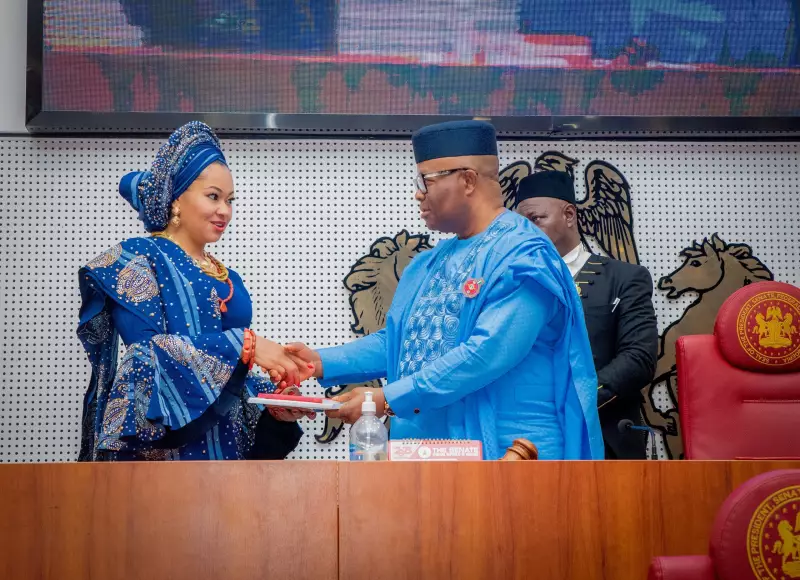
Senate President Godswill Akpabio has taken the legal fight over the suspension of Senator Natasha Akpoti-Uduaghan to the Supreme Court. This move comes after a significant defeat at the Court of Appeal, which threw out his case due to serious procedural errors.
Appeal Court Delivers Blow Over Technical Breaches
The Abuja Division of the Court of Appeal struck out the Federal Government's brief of argument in the appeal related to defamation aspects of Senator Akpoti-Uduaghan's suspension. The ruling, delivered on 28 November 2025, declared the brief fundamentally defective and incompetent for failing to comply with the Court of Appeal Rules.
The appellate panel identified multiple violations that rendered the submission invalid. These included the use of an unauthorized font size and incorrect line spacing. Crucially, the brief also exceeded the statutory 35-page limit without obtaining the court's permission to do so. The justices emphasized that these were not minor technicalities but substantive breaches that affected the very competence of the appeal. Consequently, the entire brief was struck out.
Akpabio's Supreme Court Challenge and Fair Hearing Claim
In response, Senator Akpabio has filed an appeal at the Supreme Court, criticizing the appellate court's decision as unlawful. He argues that the Court of Appeal violated his constitutional right to a fair hearing. His central claim is that the court should have granted him leave to correct the defective brief or allowed him to exceed the page limit.
He is urging the apex court to nullify the appellate proceedings and permit him to refile his arguments in proper form. However, legal experts have countered this argument, noting that the right to fair hearing does not excuse litigants from following procedural rules, especially when those rules are applied uniformly to all parties. They point out that Akpoti-Uduaghan's legal team complied fully with the same regulations, weakening any claim of unfair treatment or discrimination.
Political Undertones and a Clash of Authority
Beyond the courtroom, the Senate President's intense personal involvement in the case has drawn considerable scrutiny from political and legal observers. Many describe his posture as uncharacteristic for a presiding officer of the National Assembly, suggesting deeper political motives behind the legal dispute.
Sources within the legislature indicate the case reflects prolonged tensions between Akpabio and the Kogi Central senator. Akpoti-Uduaghan, a first-term lawmaker, has gained national prominence for her assertive style and willingness to challenge the Senate leadership. This independence is seen by some insiders as a disruption to the established power dynamics within the chamber.
"This is no longer just a legal disagreement," a senior parliamentary source revealed. "It has become a struggle over authority and control." Analysts view the Appeal Court's ruling as a major setback for Akpabio, particularly because it resulted from avoidable procedural mistakes rather than the case's substance.
The loss has fueled speculation that the Supreme Court appeal is an attempt at political damage control. Within circles of the ruling party, there is reportedly growing pressure on the Senate leadership to curtail Akpoti-Uduaghan's rising influence and public profile.
Senator Akpoti-Uduaghan has maintained a measured response, expressing confidence in the judiciary and stressing that due process must be upheld. Her legal team has characterized the Supreme Court appeal as a final attempt to overturn a decision made in strict accordance with the law.
Meanwhile, civil society groups have issued warnings against any attempt by political office holders to influence judicial outcomes, stating that such actions would undermine judicial independence and democratic governance. As the Supreme Court prepares to hear the matter, the dispute has evolved from a procedural appeal into a broader national test concerning the rule of law, the separation of powers, and the limits of authority within Nigeria's democratic institutions.